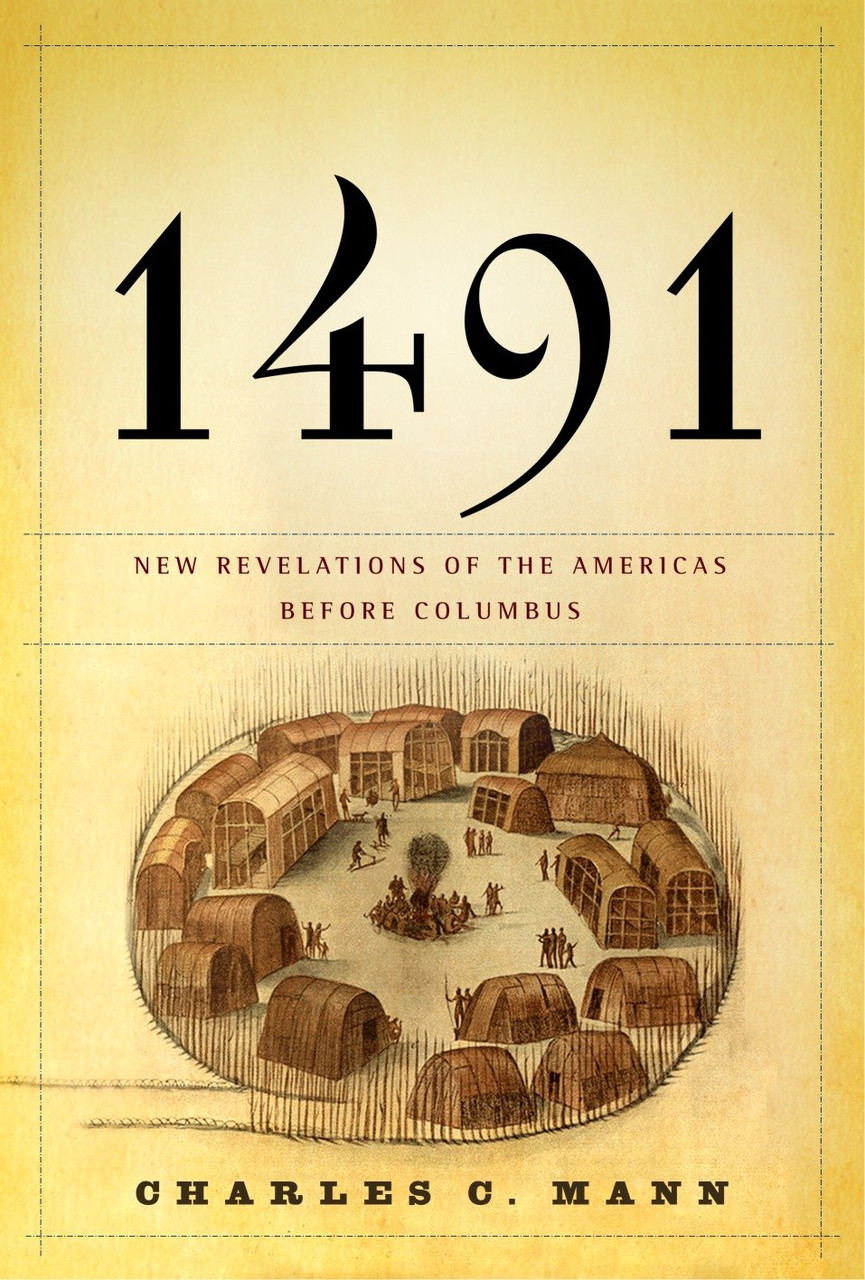
1491: New Revelations of the Americas Before Columbus
I think we know now that what they taught us in school was…hmm…not always accurate. 1491 is the first book that opened my eyes to just how not accurate. Reporting from archaeology, anthropology, genetics, and ecology, Charles C. Mann upends the European narrative of the Americas as sparsely inhabited wilderness “untrammeled by man,” to quote the US Wilderness Act. In fact, tens of millions of people lived in the Americas, built cities, engineered landscapes, managed forests with fire, created fertile soils like Amazonian terra preta, and developed complex civilizations from the Amazon to the Mississippi Valley. Two decades after it was first published, advances in mapping and sensing have revealed even more signs of humans on the land than the book suggested. If you want one read to expand your take on the once-called New World, this is it.
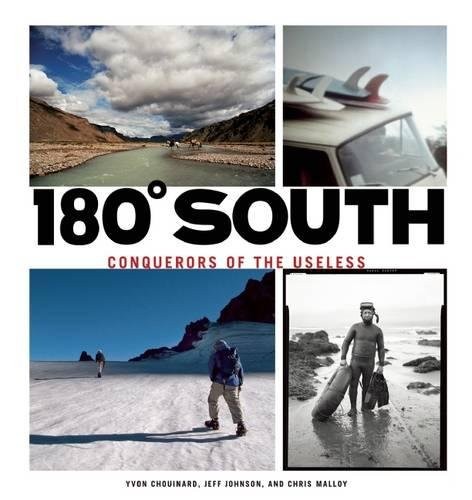
180º South: Conquerers of the Useless
The 1968 journey to Patagonia by Yvon Chouinard and Doug Tompkins is the stuff of legend, and from it epic tales and giant companies were sparked. Four decades later, Jeff Johnson retraced their travels for Chris Malloy’s 2010 film, 180° South, and this companion book documents his journey to the edge of the world. It’s part surf trip, part climbing expedition, and very much a meditation on wilderness, simplicity, and purpose. Its core message? True exploration is less about conquering mountains than learning to protect them.
1Q84
You know Murakami’s going to be weird, you just don’t know if you’re going to like the flavor of weird he’s about to present. Well, I loved the acute oddness of 1Q84. What’s more romantic than one moon hanging in the sky? Two moons! The book—and it’s a long one—weaves together the lives of Aomame, a fitness instructor and assassin, and Tengo, a math teacher and aspiring novelist, after they slip into a parallel version of the year 1984. Mysterious Little People manipulate events, and a religious cult holds unsettling power. The book blends mystery, magical realism, and philosophical reflection…typical Murakami, even though nothing Murakami writes is typical.
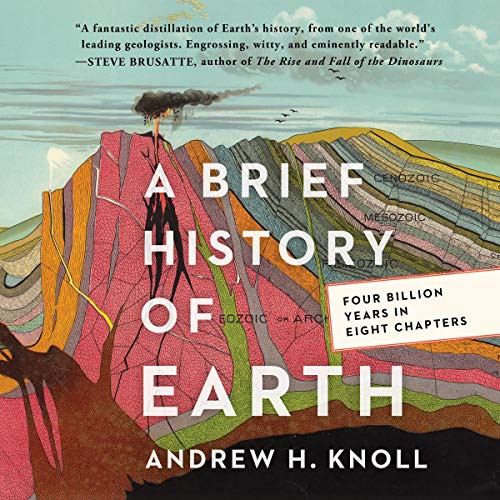
A Brief History of Earth
I can’t read much deep-time stuff before it puts me to sleep. I read this. Knoll is a Harvard paleontologist who built his career on the Precambrian, the three billion years of microbial life that came before anything you can see with the naked eye, and here he compresses the whole planet into eight chapters and about 250 pages. He begins with the chemistry of a molten world and moves through the making of oceans and continents, the first cells, the flood of oxygen that made large life possible, the sudden arrival of animals, the greening of the land, and the extinctions that emptied the record and started it over.
A Field Guide to Getting Lost
Solnit built this out of nine essays circling a single idea, which she takes from a line she found in Plato’s Meno dialogue: How do you go looking for something when you don’t know what it is? Four of the nine are titled “The Blue of Distance” and they run through the book as a refrain, tracking that blue at the far edge of mountains and water, the color of the thing you want and can’t reach. Around them, she moves through the Spanish conquistador who walked across the continent and lost his own culture on the way, captives who refused rescue, punk clubs and the Desert Southwest, country songs, the deaths of friends, and a tortoise shell she keeps. She treats being lost as a discipline rather than an accident, something you can get good at.
A Guardian and a Thief
It’s set in Kolkata, India, a few decades out, under flood and heat and a food shortage that has markets selling seaweed and synthetic fish. Ma runs a shelter, cares for her elderly father and her two-year-old daughter, and has finally gotten the climate visas that will take the three of them to Ann Arbor, where her husband is doing medical research. The bags are packed. Then a young man named Boomba, who followed her home from the shelter because he guessed correctly that she was taking food from it, comes through the house at night and leaves with her purse and the passports inside it. The week that follows runs in two lines, Ma hunting the thief and Boomba trying to keep his own family fed, and Majumdar gives each of them enough justification that the moral ground becomes slippery indeed.
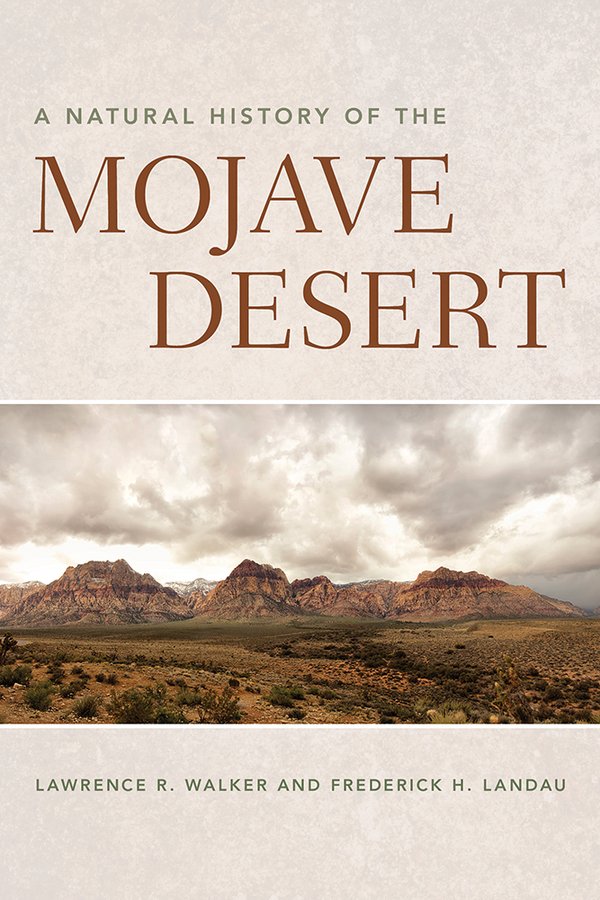
A Natural History of the Mojave Desert
This is the only modern natural history of the Mojave, which makes it the standard by default, but it’s also thorough, engaging, and well-written. There’s the geology and how the basins and ranges got there, climate and why so little rain arrives, soils and desert pavement and cryptobiotic crust, the plants from creosote clones thousands of years old to the Joshua tree, the animals and how each solves water, then the human history and the current pressures — grazing, off-road use, solar development, invasive grasses feeding fires the desert never evolved with.
A Natural History of the Senses
Ackerman is a poet who reports like a naturalist, and she built this as five long sections, one per sense, with a short final piece on synesthesia. She starts with smell because it is the oldest sense and the one wired straight into memory, then works through touch, taste, hearing, and vision. Inside each, she moves freely between the physiology and everything humans have built on top of it: how the nose actually reads a molecule, the perfume trade, the spice routes that redrew maps, why we kiss, what makes a whale’s song carry, the reason chocolate does what it does. She reports much of it firsthand, and the writing is deliberately sensuous.
A Naturalist’s Guide to Canyon Country
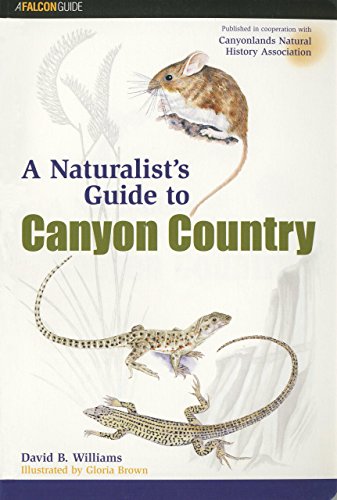
David Williams spent nine years in Moab, working as a ranger at Arches and teaching for the Canyonlands Field Institute, and this is the field guide that came out of it, illustrated in line drawings by Gloria Brown. It covers the northern Colorado Plateau, eastern Utah, and western Colorado, with pieces of Arizona and New Mexico, an area holding nine national parks and monuments. More than two hundred seventy plants and animals are covered, from prickly pear against claret cup to striped against spotted skunk tracks, along with the birds, reptiles, insects, and the cryptobiotic crust underfoot. A geology section runs alongside, explaining how uplift and erosion cut the fins at Arches and the spires in the Needles.
A Sand County Almanac
You know it from “land ethic,” but you’ll remember it for his incredible observations of nature. Aldo Leopold was a forester who spent his early career killing predators for the government, then changed his mind, and this book is the record of that turn. It came out in 1949, a year after he died from a heart attack fighting a grass fire on a neighbor’s farm. The first section is a month-by-month calendar of a worn-out Wisconsin sand farm he bought in 1935 and spent the rest of his life replanting, written from a shack that had been a chicken coop. The middle section collects sketches from forty years across the Southwest, the Midwest, and Mexico, including “Thinking Like a Mountain,” about watching the light go out of a wolf’s eyes and understanding what removing her would do to the range. The last section makes the argument the rest has been building toward: A landowner has ethical obligations to the soil, water, plants, and animals, not just property rights over them.
A Swim in a Pond in the Rain
George Saunders taught a class on the nineteenth-century Russian short story at Syracuse for twenty years, and this book is that class on the page. Seven stories in translation, three by Chekhov and the rest by Turgenev, Tolstoy, and Gogol, each printed in full and then taken apart. With “In the Cart” he stops you after every page and asks what you now expect and why, walking the story forward the way a reader actually meets it. The essays that follow argue about structure, escalation, and what makes a story feel true rather than engineered. He is candid that the answers are provisional, and he keeps returning to craft as a moral matter, on the theory that how you handle a character on the page is not separate from how you regard people.

A Walk in the Park
The Grand Canyon runs two hundred seventy-seven river miles and has no trail from one end to the other, so walking it means about seven hundred fifty miles of route-finding along ledges between the rim and the river, in country where water can be a day apart. Fewer people had done it than have walked on the moon.
Fedarko, a former Outside editor who had quit to guide on the Colorado, took it on with his friend the photographer Pete McBride, who sold him on it as a walk in the park. They set out badly overloaded and underprepared, couldn’t hold the pace of the experienced hikers guiding them, and both had to be evacuated in the first weeks. They went back in sections over the following year, and veteran canyon hikers taught them how to move through it. Members of the eleven tribes with ties to the canyon walked stretches with them.
Against the Grain
Everybody knows the story: People figure out farming, settle down, build cities, and civilization takes it from there. Scott, an anthropologist and political scientist at Yale who spent his life studying how regular people dodge governments, points out the timeline doesn’t work. Four thousand years pass between the first domesticated grain and the first real cities. People knew how to farm and mostly didn’t bother, because hunting and foraging fed them better and were less work. When states finally do show up, they run on grain, and Scott thinks that’s the tell. Grain ripens on a schedule and grows up where anyone can see it, so a tax collector can swoop in, count it, and take a cut. Roots and tubers hide underground on nobody’s calendar.
He goes further, suggesting the walls around the first cities might have been there as much to keep the workers in as to keep raiders out, and the record backs him up. People in those early settlements were shorter, sicker, and worked harder than the foragers outside. Which is his final point: The “barbarians” beyond the walls weren’t the losers of this story. Much of the time, they were eating better and living their best lives. In yo face, Tax Man.

Against the Machine
Kingsnorth used to be a green campaigner, walked away from all that, and now lives on a smallholding in western Ireland, where he went and got himself baptized Orthodox. This book is twenty years of him chewing on one bone. He calls it the Machine, and he doesn’t mean your phone. He means the whole setup — industry, tech, markets, the endless upgrade — running on its own logic and eating anything that’s local, old, or handed down. He runs the thread from the first mills to AI and says look, we didn’t build a tool, we let something loose, and now it’s building us. Berry, Ellul, and Mumford are his people. I find him annoying as hell and quite often right. The ending is where he loses a lot of readers, including me, because he doesn’t offer practical solutions, he offers God. Yeah, no. Still, it was a bestseller and might push you to reconsider some of your sacred cows.
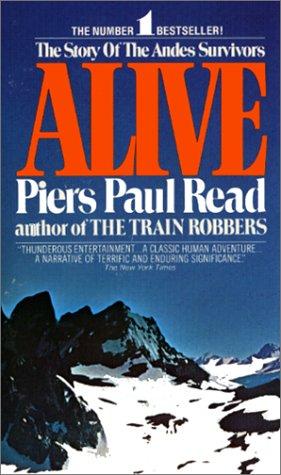
Alive
You know the story. Maybe you saw the movie. In October 1972, a chartered plane carrying a Uruguayan rugby team, their families, and friends clipped a ridge in the Andes and went down at 11,500 feet on a glacier. Seventy-two days later, sixteen of the forty-five aboard came out alive. They had almost no food, no cold-weather gear, and a transistor radio on which they heard the search called off after eight days. Read, a British novelist, got the survivors to talk to him and he wrote it straight: the avalanche that buried them in the fuselage weeks in, the decision to eat their dead and how they argued it into something they could live with, and finally, two of them walking out west over the mountains for ten days to bring help. He gives you the group as it actually worked, who led, who broke, who kept the water melting, and he leaves judgment out of it.
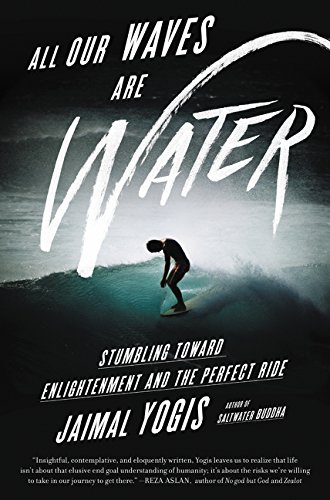
All Our Waves Are Water
Yogis follows Saltwater Buddha here, picking up in his early twenties with a broken heart and no direction. He goes to a monastery in Dharamsala and meets Sonam, a Tibetan refugee, and hatches a half-baked plan to get him to America and back to his family. It fails, and watching Sonam absorb that failure teaches him more than the meditation does. From there, he surfs Indo, sits with Franciscans in New York, walks Jerusalem, and stalls out on a Mexican beach where good waves, tacos, and nothing to do turn out not to fix anything either. The two friends meet again by a coincidence he couldn’t have engineered. It’s a surf book and a religion book at once, and he’s honest about how little he resolves.
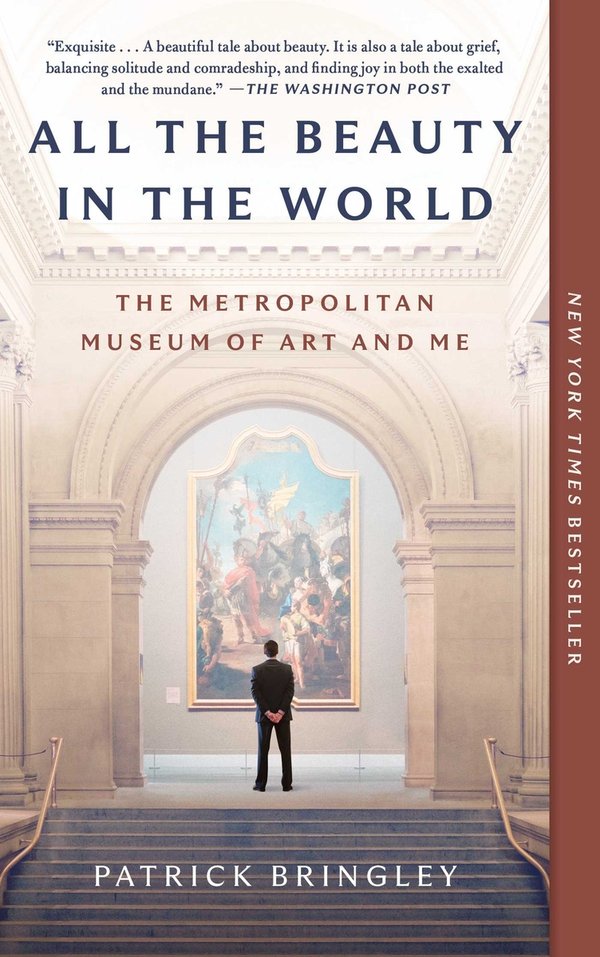
All the Beauty in the World
Bringley was working a desk job at The New Yorker when his older brother Tom died of cancer in his twenties. After that, he had no taste for a career; he only wanted to stand still. So he took a job as a guard at the Metropolitan Museum of Art and stayed ten years, in a blue suit, on his feet, in the same rooms all day. The book is what he saw from that post: The paintings, sure, and he’s good on those, but mostly the other guards, who come from everywhere and know the building better than the curators, and the visitors doing whatever people do in front of art. It’s a book about attention and what happens when you give something eight hours instead of eight seconds.
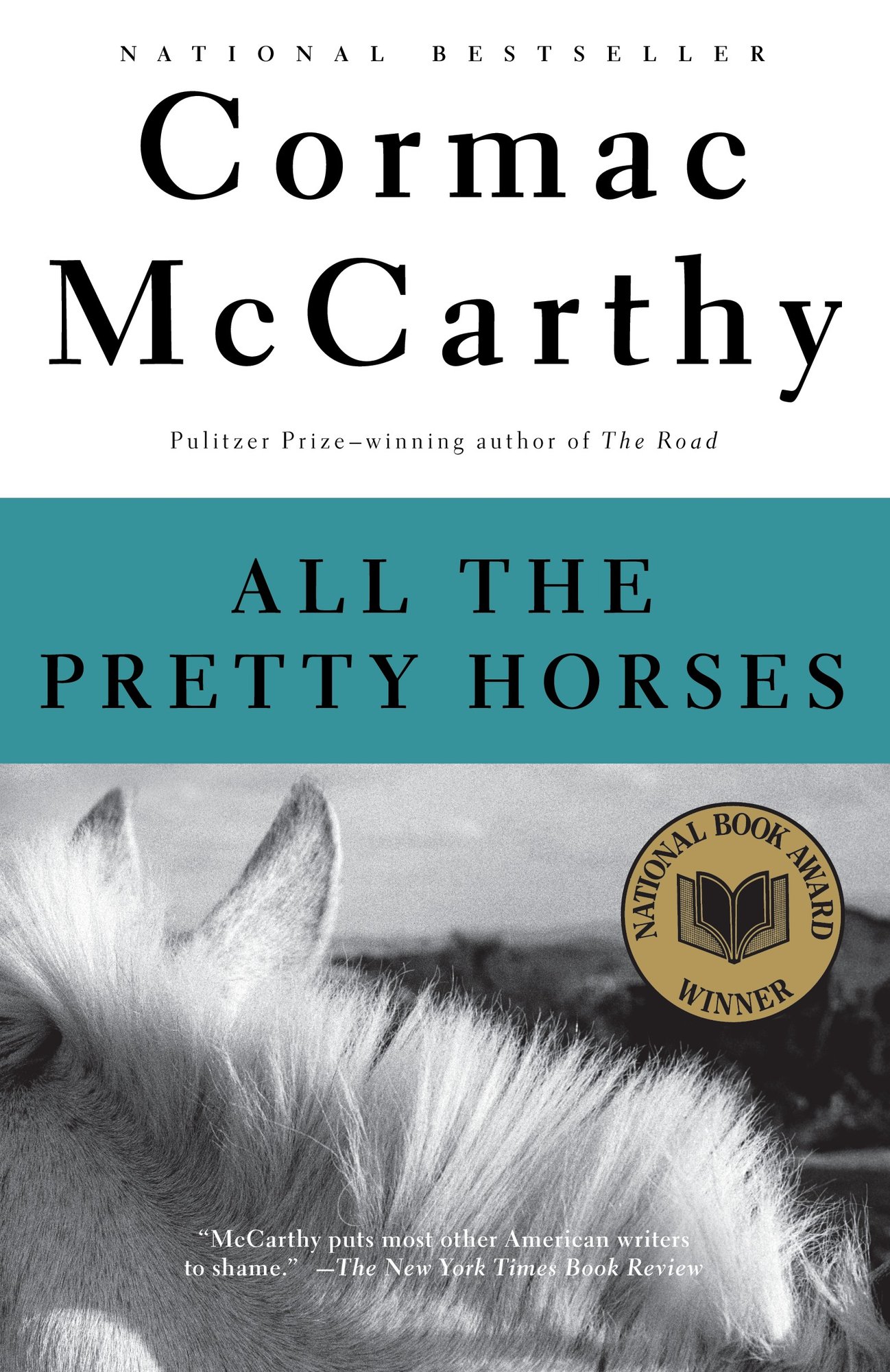
All the Pretty Horses
John Grady Cole is sixteen when his grandfather dies and the ranch he expected to inherit gets sold out from under him. It’s 1949, and the cowboy life he wants has already ended in Texas, so he and a friend saddle up and ride south into Mexico looking for it. They pick up a younger kid on the way, a liar with a good horse, and that decision costs everybody. They find work breaking horses on a big hacienda in Coahuila, and John Grady is so good at it that the owner takes notice, which is the trouble, because so does the owner’s daughter. What follows is prison, a knife fight, and a long ride back with nothing. McCarthy writes the horses and the country in long, unpunctuated runs of prose and the dialogue bare, much of it in Spanish, untranslated. It won the National Book Award in 1992.
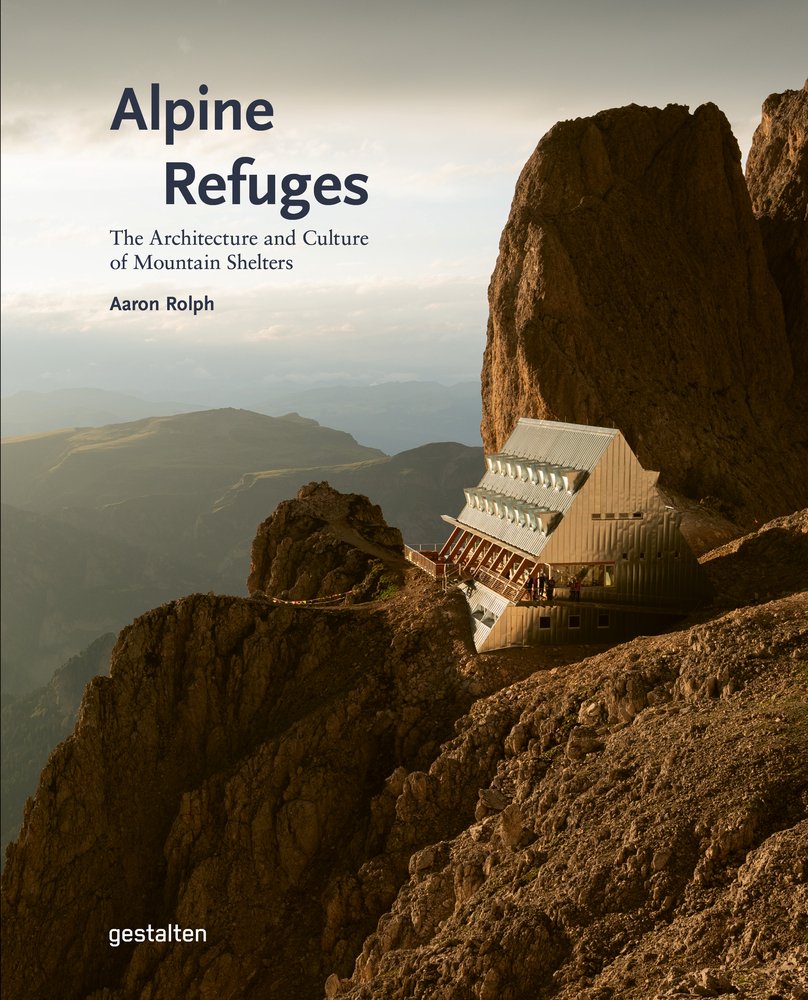
Alpine Refuges: The Architecture and Culture of Mountain Shelters
In the hands of Europeans, a mountain hut is more than shelter. It’s an expression of centuries of culture and intimate knowledge of life in the continent’s highest peaks. The photo-dense Alpine Refuges offers a tour of some of these site-specific architectural gems, thirty-four in all, from the tiny and modernist Bivacco Gervasutti in Val Ferret, Italy, to the stunningly situated Rifugio Passo Santner farther east in the Dolomites. “An effort was made to include a global selection of mountain huts,” author Aaron Rolph writes, but only two are outside Europe and just one is in North America, Canada’s Jim Haberl Hut. It’s a reminder of what higher ambitions and a head start can get you: a bucket list of radical roofs to place over your head.
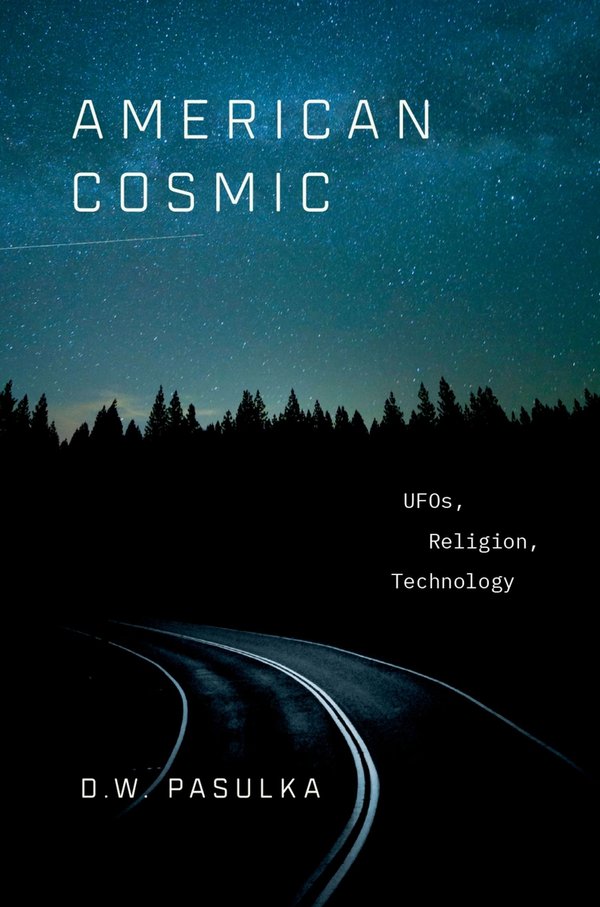
American Cosmic
Pasulka teaches religious studies in North Carolina and wrote her first book on purgatory. Digging through old Catholic accounts, she kept hitting things that sounded oddly familiar: orbs of light, luminous beings, spinning suns, discs in the sky. She spent six years researching UFO belief, not asking whether any of it is real but watching a kind of religion assemble itself in real time, with its own prophets, relics, pilgrimage sites, and converts. The people she finds aren’t cranks. They’re aerospace engineers, biotech guys, Silicon Valley money, all keeping quiet at work. Two of them, whom she calls Tyler D. and James, drive her out to a no-fly zone in New Mexico to hunt for pieces of a craft, with the last forty minutes done blindfolded so she can’t find it again. Agree or not, her viewpoint is refreshingly novel in a canon populated by true believers with something to sell (mostly that UFOs are real).
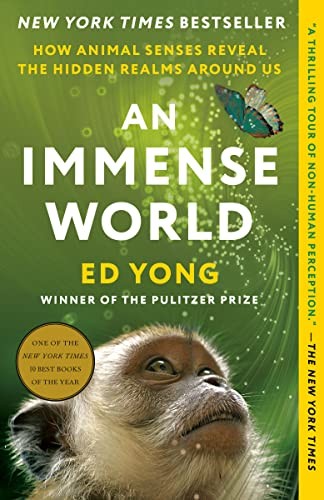
An Immense World: How Animal Senses Reveal the Hidden Realms Around Us
An Immense World delivers miracles on every page. A fly’s vision updates six times faster than a human’s, perhaps rending its perception of our movements in slow motion. Cows’ gazes appear unfocused because they see in a horizontal band and register activity in front, next to, and behind them at the same time. A mallard has panoramic vision and so sees “the world simultaneously moving toward it and away from it.” Ed Yong’s exploration of the strange, awesome universe of animal senses will completely reshape your view of the planet and fellow inhabitants, beginning with the concept of umwelt, which in German means environment or surroundings but refers to how senses shape an organism’s experiences and interpretation of the world. It is an astonishing, lively, and entertaining book, and an important one, too: Yong shows that the limits of our perception affect everything and that imagining the umwelten of others encourages us to be more sensitive and less damaging earthly citizens.
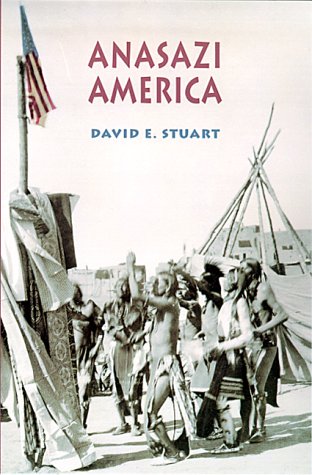
Anasazi America
Everybody wants the ruins of Chaco Canyon to be a mystery. Stuart, an anthropologist at New Mexico who’s spent his career there, knows it isn’t. Chaco was a boom town. There were great houses five stories high, dead-straight roads running for miles across seemingly nothing, macaws and turquoise brought up from Mesoamerica via trade, timber hauled in from mountains a hundred miles off. Somebody was running a doozy of an operation. He argues societies go one of two ways: Powerful ones grow fast and spend everything to do it, while efficient ones grow slow and hang on. Chaco went powerful. Then the rain quit in the 1130s and the whole thing collapsed inside a generation. What Stuart most cares about is who was left standing when the dust settled: Farmers who scattered into little villages, planted a bit of this and a bit of that, and shared what came in. Those are the Pueblo people of today, still there. Then he points the same framing at modern New Mexico and it doesn’t take much to see where that’s going.
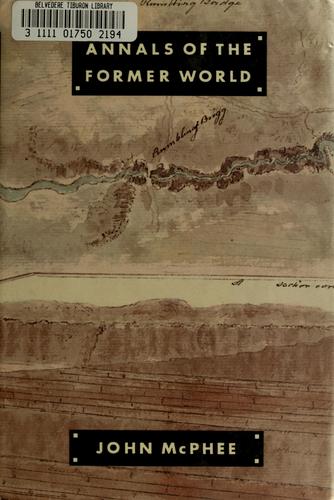
Annals of the Former World
McPhee spent twenty years riding shotgun with geologists up and down Interstate 80, pulling over at roadcuts, and this is his four books on the subject plus a fifth chunk stacked into one. It won the Pulitzer in 1999. He starts in Jersey with Ken Deffeyes and heads west, to Nevada, where the whole basin and range is quietly pulling itself apart. Wyoming with Dave Love, a rancher’s kid turned geologist who knew that country the way you know your own yard. California, which is mostly a pile of rock that drifted in and stuck. Then the old, cold stone under the Midwest that hasn’t done much of anything in a billion years. Each book is one geologist thinking out loud while McPhee keeps up. It’s a whole lot of rocks, maybe too many for some, but your understanding of deep time will linger long after you’ve forgotten basalt from gneiss.
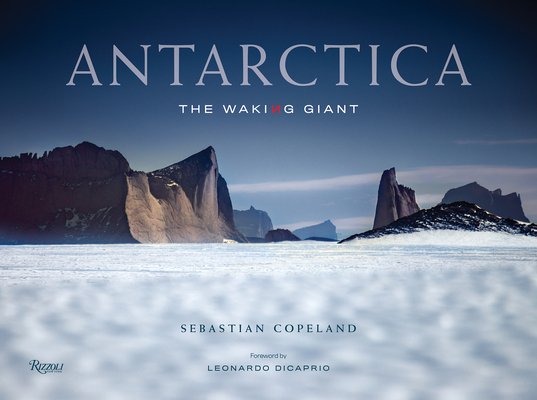
Antarctica: The Waking Giant
If anyone can transport us into the soul of the White Continent, it’s photographer Sebastian Copeland. A professional polar explorer, Copeland has made several human-powered expeditions in frozen extremes, including the first transcontinental crossing of Antarctica from east to west via two of its poles, traveling on skis with kites for twenty-five hundred miles. Drawing from his on-foot experiences as well as seasons on a scientific research icebreaker, Antarctica: The Waking Giant is more than a decade in the making, and Copeland earned his pictures the hard way: breaking ribs, losing parts of his toes to frostbite, scuba diving under icebergs. The book holds one hundred fifty incredible photographs, from the vast, otherworldly interior to the wildlife-rich coasts, where whales break the surface and migrating birds and penguins mob the shorelines. In our rapidly changing, melting world, Copeland’s work is both celebration and warning, a potent reminder that no matter the distance, we are all in this together.
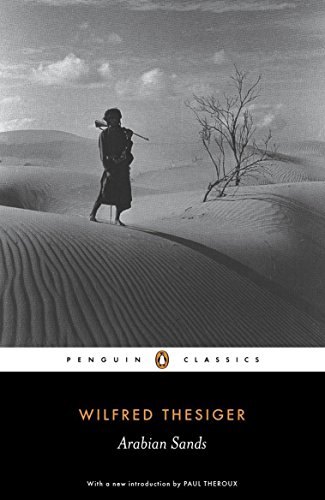
Arabian Sands
Thesiger crossed the Empty Quarter twice in the late 1940s, on camels, with a few Bedu who’d have gotten there a lot faster without him. His nominal job was scouting locust breeding grounds for the British, locusts being the scourge of agriculture, but everybody knew that was an excuse for him to be out there. What he found was a way of living he rated above anything back home: Guys who owned nothing, went hungry as a matter of course, and would still hand a stranger the last of the food. Two young Rashid — bin Kabina and bin Ghabaisha — run through the whole book. He wrote it knowing the oil crews were coming, the trucks were coming, and he says so flat out, and says too that he had no business grieving a life the Bedu might be glad to leave. Still, he did.
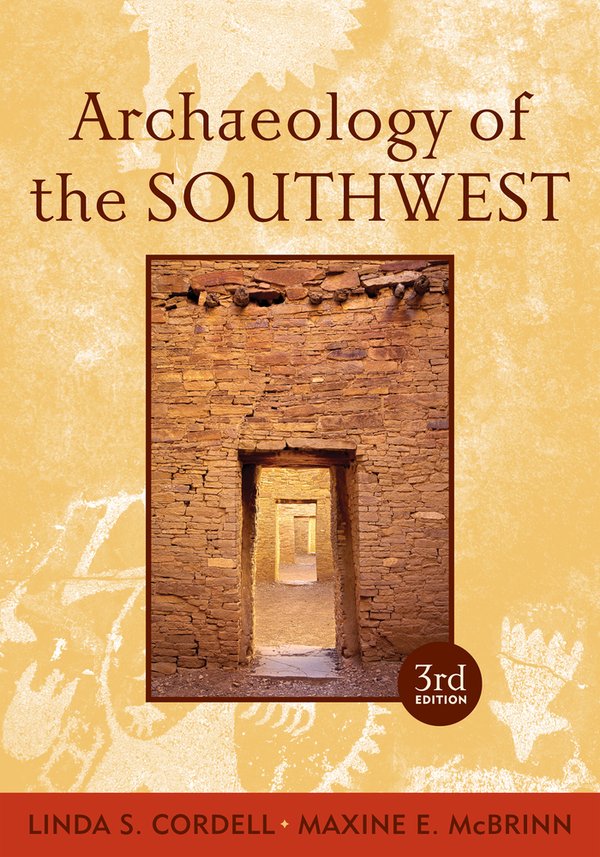
Archaeology of the Southwest, Third Edition
If you get serious about Southwest archaeology, this is the book that ends up on your shelf, and the third edition from 2012 is the current one. Linda Cordell taught at New Mexico and Colorado and was about as central to the field as anybody gets; Maxine McBrinn came on for this edition, and Cordell died the year after it came out. It runs the whole enchilada: what the country is and who’s been living in it, how you date a site and read what’s in the dirt, the first people, 13,000 years back. Corn showing up and changing everything. Chaco, the Hohokam canals, Casas Grandes. The big shuffles of the 1200s and 1300s when everybody picked up and moved. Then the Spanish, and on to now. It doesn’t just tell you what happened, it tells you who’s fighting about it and hands you the footnotes to go look. It’s a textbook. Sometimes reads like one. Not a problem, just know it going in.
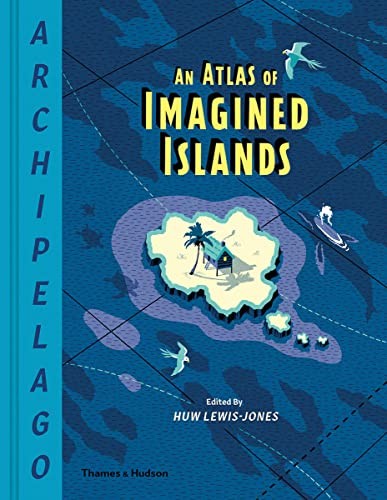
Archipelago An Atlas of Imagined Islands
Huw Lewis-Jones put this together for the 300th birthday of Robinson Crusoe. The setup is simple: He handed a bunch of illustrators from all over the world the same assignment Defoe gave himself — you washed up somewhere, now draw it. Name the island. Map the coves and the peaks. Show what lives there and what got left behind. Coralie Bickford-Smith, Chris Riddell, Marion Deuchars, Hervé Tullet, Aušra Kiudulaitė, a couple dozen more, and every one goes a different direction. Lewis-Jones ties it together with the real history of imagined islands, back to the Venetian sailors who bound their island maps into books they called isolari, and Utopia and Atlantis before that. He calls the whole condition islomania, which is a real word for wanting badly to be on an island. It’s a flip-through book more than a read-through.

Arctic Dreams
Barry Lopez spent five years going north — on the ice with Inuit and Iñupiat hunters, on ships, in camps with biologists — and came back with the book that made his name. It won the National Book Award in 1986. It’s not a trip report. He works the whole place at once: light, and how it plays tricks on a man’s sense of distance; muskoxen, polar bears, narwhals, and the ringed seal that everything up there eats; the Thule people who crossed the top of the continent; then the string of Europeans who sailed into that country with the wrong maps in their heads and mostly died of it. Underneath all of it is one question, which is what a landscape asks of you and whether you have the chops to answer. It’s some of the best writing anybody’s done about the Arctic and it kicked off in me a fascination with the far north that has yet to abate.
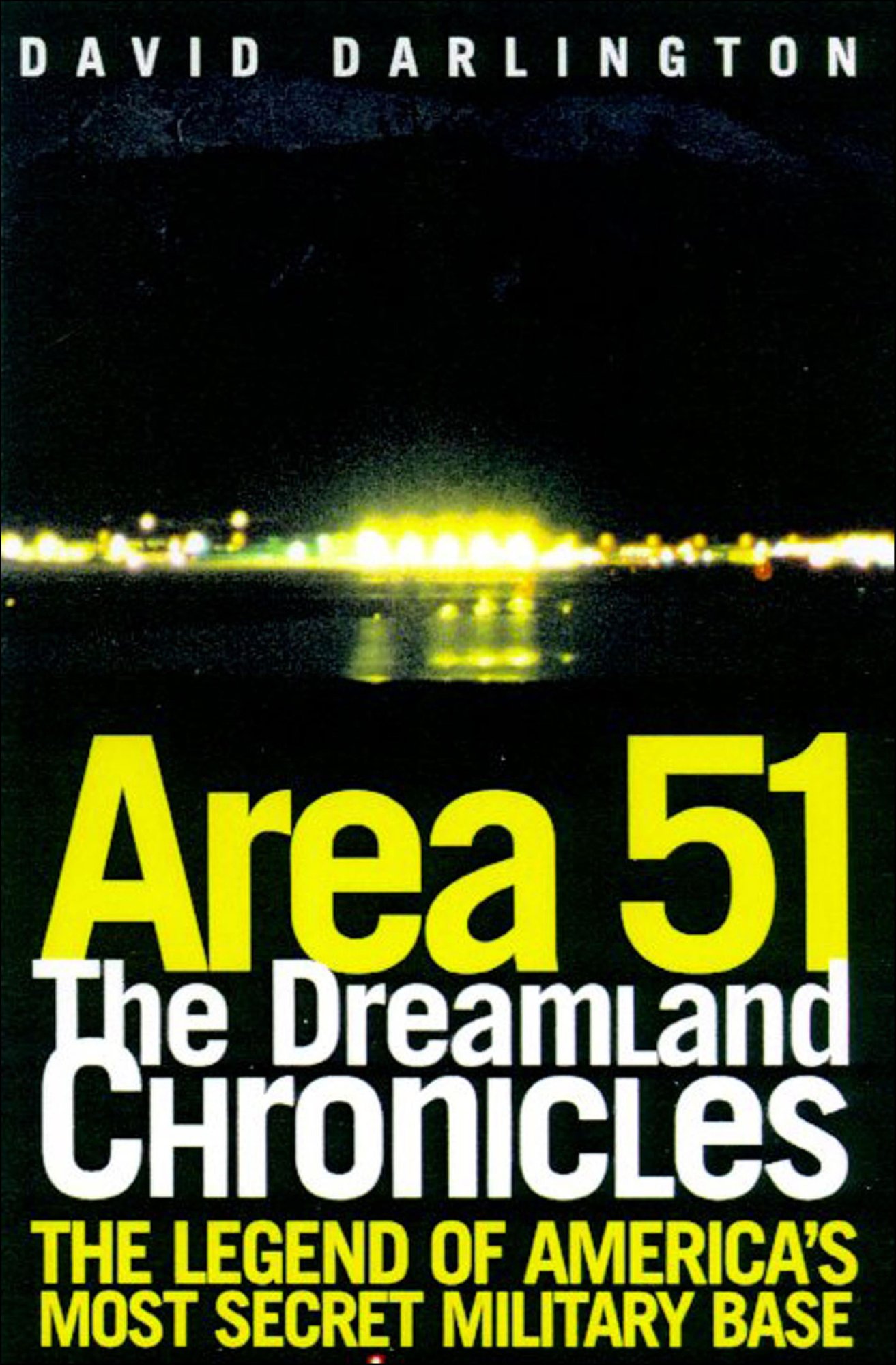
Area 51: The Dreamland Chronicles
Darlington went out to Rachel, Nevada, in the mid-nineties and hung around long enough to write the book about the people, not the saucers. The base is real and the history is straight: The CIA built it in the fifties because nowhere in the Lower 48 was emptier. The U-2, the Blackbird, and the stealth fighter all first flew out of there. Everything else about it is deniable. So you get the Interceptors, guys who sit out on ridgelines with scanners logging black airplanes. You get Glenn Campbell, not the singer, who moved to Rachel and made himself the resident authority on a place nobody admits exists. You get Bob Lazar and the alien-reverse-engineering story. You get the Cammo Dudes in white trucks watching the watchers, and the Air Force grabbing the last public ridges people were using to see in. And running under all of it, the workers who sued over burning toxic waste at a base the government wouldn’t confirm was there, which is the part that should make you mad. It came out in 1997, so there’s nothing recent in it, and it’s still the best of the Area 51 books.
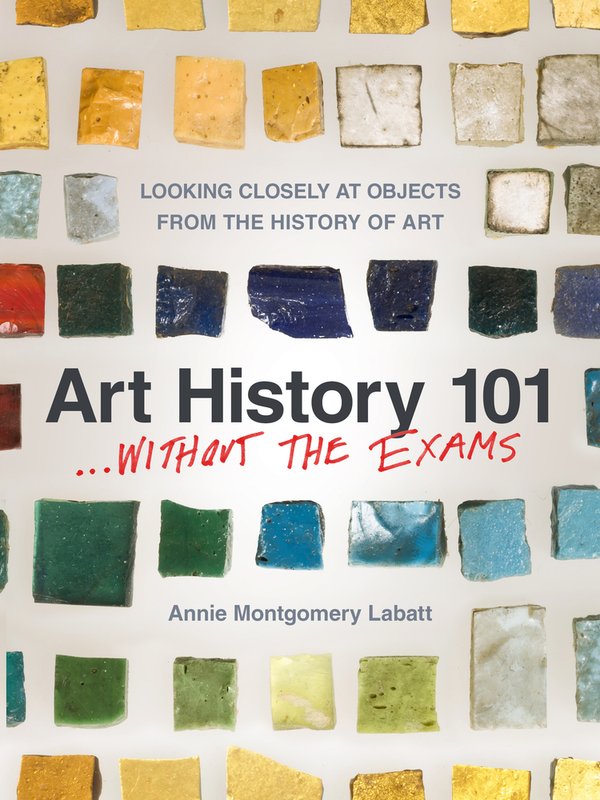
Art History 101 Without the Exams
Annie Labatt taught art history at Texas, did a Rome Prize and a stint at the Met, and between 2013 and 2015 she gave twenty Friday-night lectures at the San Antonio Museum of Art. This book is those talks. One object per chapter, twenty of them, spread over 14,000 years — the painted bulls at Altamira, the mosaics at Ravenna, a Seljuk incense burner out of twelfth-century Iran, a Byzantine funeral chapel, then Botticelli, Caravaggio, Monet, Sargent. Her questions aren’t the ones you got in school. Who owned this thing and how did they look at it? Where was it actually sitting? How did it end up behind glass in a museum halfway around the world? How did it get famous in the first place? It’s a book about slowing down in front of one object instead of marching through a survey course, and it’s written for people like me (and maybe you) who just want to know more.
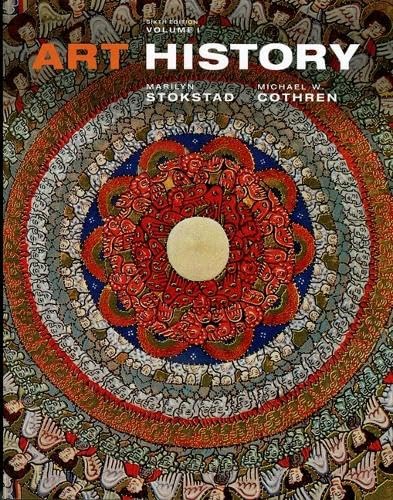
Art History, Volume 1, 6th Edition
This is the survey doorstop, the one that gets assigned. Marilyn Stokstad wrote the first edition in the nineties at Kansas, and she did something the old standbys hadn’t: She quit treating art history as a straight line from Greece to Paris and pulled in Asia, Africa, the Islamic world, and the Americas as their own stories, plus a lot more women. Michael Cothren, a medievalist at Swarthmore, came on for the fourth edition and has carried it since; Stokstad died in 2016, right around when this one landed. Volume 1 is the first half, cave paintings through the fourteenth century — Lascaux, Egypt, Greece, Rome, early Buddhist and Hindu India, Tang and Song China, West African bronzes, Maya and Moche, Islamic Spain, and the whole Romanesque and Gothic run. It’s the sixth edition, 2017, and the tone is the selling point. It’s warm. It explains things instead of assuming you already know. Used copies go cheap because the seventh is out.
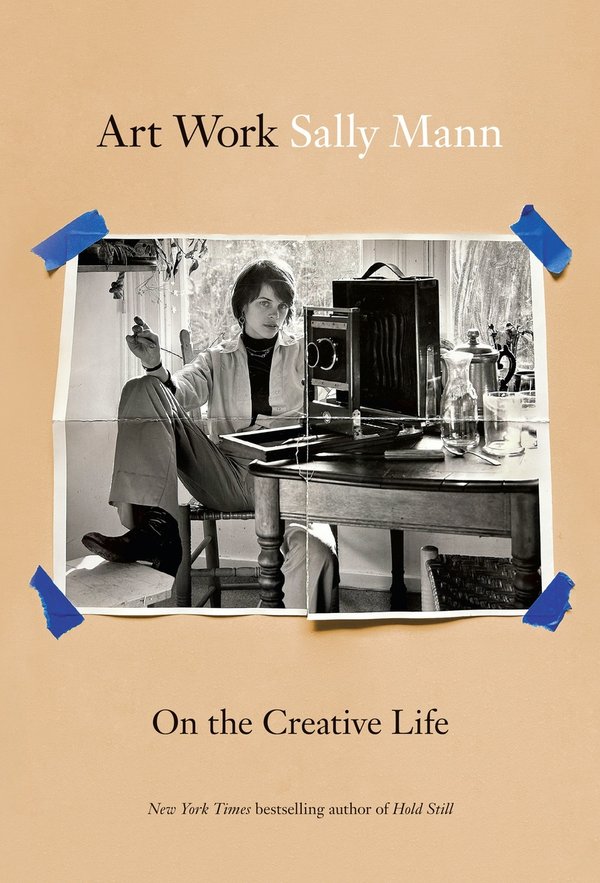
Art Work
Sally Mann has been making pictures on the same Virginia farm for fifty years, and this is the book about how the work actually gets made. Not theory. The nuts and bolts of a life spent at it. She’s funny about her own failures, which is most of the appeal — the early success that nearly wrecked her, the years of rejection, the pictures that didn’t work and why, the luck she can’t take credit for, and the plain grind of showing up in the darkroom again. She hauls out old journal entries and letters and lets you see her at her worst. Advice runs through it, some of it practical, some of it she admits is useless to anybody but her. It came out in 2025, after Hold Still, and it’s aimed at anybody making anything, not just photographers.
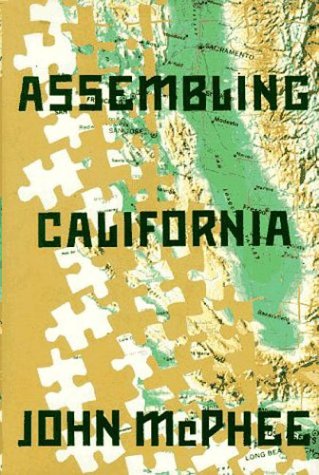
Assembling California
McPhee’s California book, and the fourth of the Annals volumes. He drove I-80 across the state with Eldridge Moores, a Davis geologist who read ancient seafloor for a living, and the story they told is that California isn’t one place. It’s a wreck pile. Islands, seamounts, and slabs of ocean crust rafted in on moving plates over millions of years, jammed against the edge of the continent, and stuck there. Moores could stand on a ridge in the Coast Range and point at rock that used to be the bottom of an ocean nobody has a name for. There’s a long stretch on the Gold Rush, where the gold came from and what hydraulic mining did to the rivers, and McPhee happened to be in the Bay Area when Loma Prieta hit in 1989, so the earthquake lands in the middle of the book with the ground still moving.
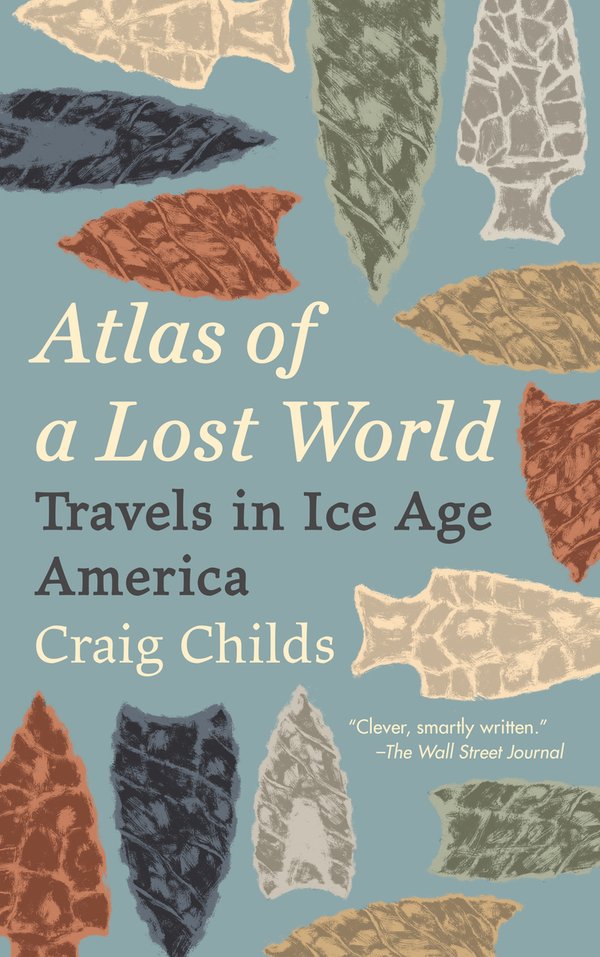
Atlas of a Lost World: Travels in Ice Age America
Craig Childs went looking for the first people in the Americas by walking the ground they walked, back when the map looked nothing like it does now. Sea level was four hundred feet lower, an ice sheet sat on Canada, and mammoths, short-faced bears, and lions were the neighbors. So he went to Alaska and dragged his family across mudflats where the land bridge used to be. He hauled a weight approximating what somebody would have carried. He dove the Aucilla River in Florida with archaeologists pulling mastodon bones out of the muck. He walked Mojave playas and Wisconsin ice and Baja beaches, and he slept out in all of it. Along the way he laid out the fight over how people got here and when, which keeps getting older every time somebody digs.
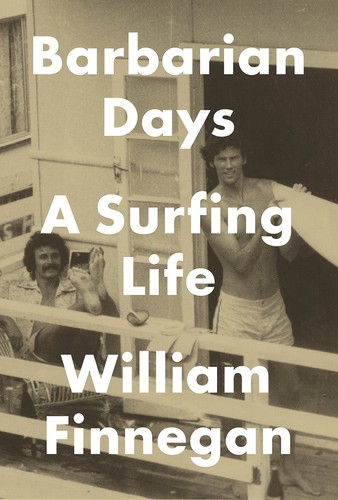
Barbarian Days: A Surfing Life
Finnegan covered wars for The New Yorker and spent his whole life not telling people he was a surfer, because it sounded ridiculous coming from a serious reporter. Then he wrote this and won the Pulitzer. It starts with a thirteen-year-old haole kid getting beat up at school in Honolulu and discovering the water could be an equalizer. From there, he hitches around the Pacific in 1978 with a buddy on no money, stumbles onto an empty perfect left off an uninhabited island in Fiji (Tavarua) that’s now a resort with a waiting list, teaches in apartheid Cape Town, and freezes at Ocean Beach in San Francisco chasing giant winter swell. And then, in his forties, he lands on Madeira, a Portuguese island far out in the Atlantic where the surf is deep-water heavy. He returned for years, waiting on the right day at Jardim do Mar, and scored.
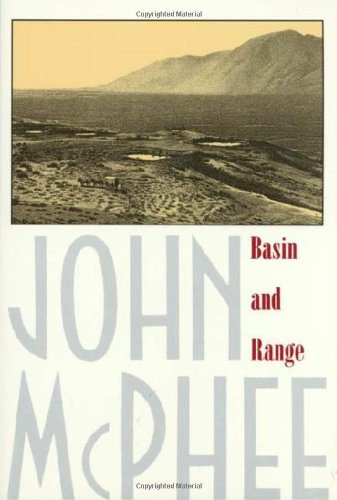
Basin and Range
McPhee’s first geology book, 1981, and the one that started the whole run. He rides I-80 across Nevada with Ken Deffeyes, a Princeton geologist with a beard and a scheme to make money pulling silver out of hundred-year-old mine tailings. What they’re looking at is the Basin and Range, four hundred miles of the West where the crust is pulling apart, cracking into blocks, some tipping up into mountains and some dropping into valleys, over and over from Salt Lake to the Sierra. The book alternates between the road and the history of geology itself — Hutton figuring out the earth was ancient, Lyell, then plate tectonics blowing the field open in the sixties. And it’s where McPhee planted the phrase deep time in everybody’s head.
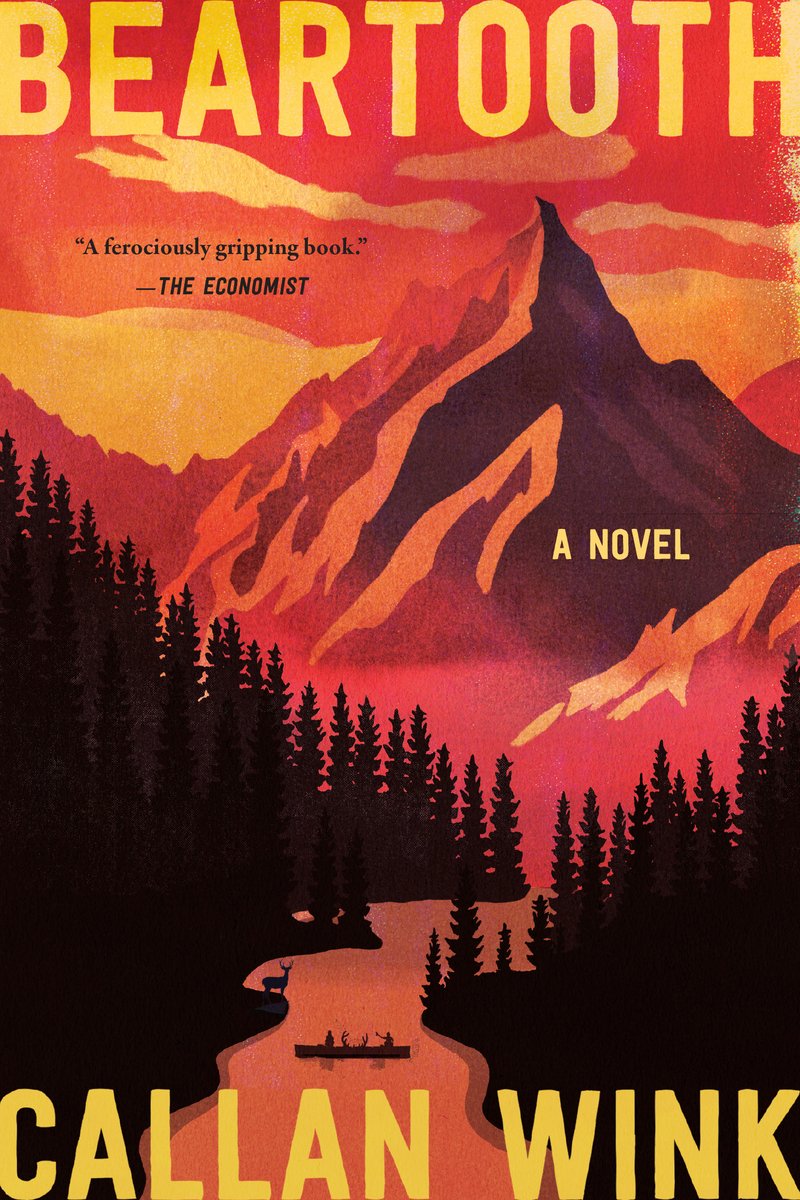
Beartooth: A Novel
In this second novel from author and fly-fishing guide Callan Wink, twenty-something brothers Thad and Hazen are hanging on, barely, in their rustic log house on the banks of the Yellowstone River, just outside the national park. They’re saddled with debt from their deceased father’s medical bills, the roof leaks, they share an ancient pickup truck, and earning money chopping firewood for locals isn’t cutting it. Outdoorsmen from birth, they’ve turned to poaching bears and selling the gall bladders and other body parts to a sketchy, menacing character called the Scot. The Scot wants, and offers, a poaching run in the park. Bigger payday, bigger crime. Hazen wants it, Thad doesn’t, and their tension drives a fascinating study of sibling relationships and hardscrabble life at the edge of “America’s best idea.”
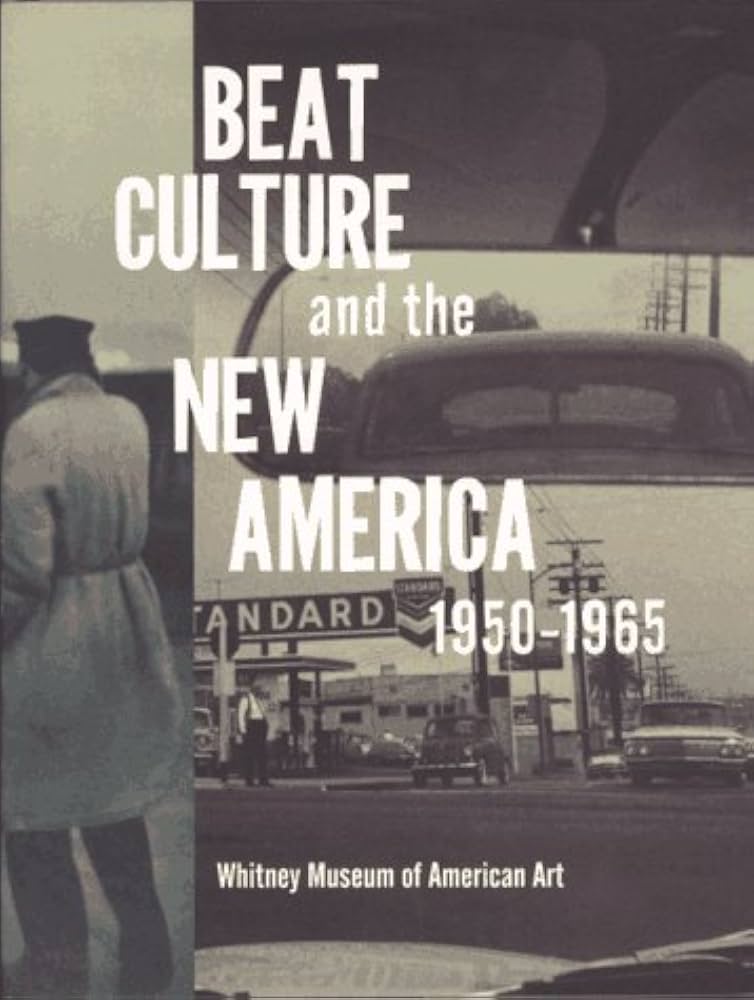
Beat Culture and the New America
In 1995, the Whitney Museum of American Art hung a show arguing that the Beats weren’t just a few novelists and a poem — they were a whole visual and cultural movement; this is the catalog for that show. The book runs about 280 pages with ten essays and 250-some illustrations. The reach is what makes it worth reading. Kerouac, Ginsberg, and Burroughs are in there, sure, but so is Bruce Conner’s assemblage, Jay DeFeo’s giant painting, Wallace Berman, George Herms, Kienholz, Jess, Larry Rivers, Robert Frank’s pictures, Brakhage and Mekas and the underground film scene, bebop, Lenny Bruce, the obscenity trials, North Beach and the Ferus Gallery in LA. It came with a chronology and a bibliography that are still useful. The show got knocked around by critics who thought the museum was making a marketing package out of a bunch of outsiders, which was true, but the book stands apart. It’s out of print but worth finding.

Beautiful Rocks and How to Find Them
Alison Jean Cole is a lapidary in Portland who cuts stone for a living, guides rockhounding trips, and puts out a very cool zine called Thunderegg. Most rock guides hand you a list of famous sites by state and that’s how those sites get stripped clean. She does the opposite. She teaches you to read a geologic map, figure out what the ground under you is made of, and go find your own spot. It’s applicable anywhere in the US or Canada. She’s solid on ethics too, covering what you can legally take off public land, what to leave, and how not to wreck a place for whoever shows up next. There’s a good section on figuring out what you actually like instead of grabbing everything shiny. Fifty-eight color photos, 208 pages, and it’s a how-to-think book more than a where-to-go book. My favorite kind.
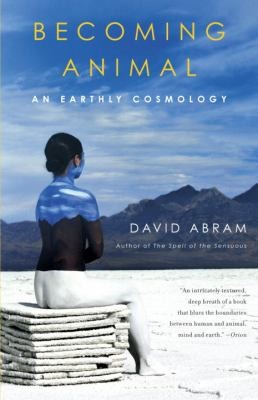
Becoming Animal
David Abram put himself through school doing card tricks, which is how he ended up hanging around traditional healers in Indonesia and Nepal. He figured they’d talk shop about magic. Instead he found their real work wasn’t with people at all — it was keeping things square with the land, the birds, the weather. His beef in this book is that we’ve turned nature into an idea instead of our home, our refuge, and our sustenance. So he goes at it sideways, with chapters on shadow, on stone, on wind, on the plain fact of breathing. There’s a bit where he crawls into a cave in the dark that’ll stick with you for years. It’s slow on purpose, so plan for it.
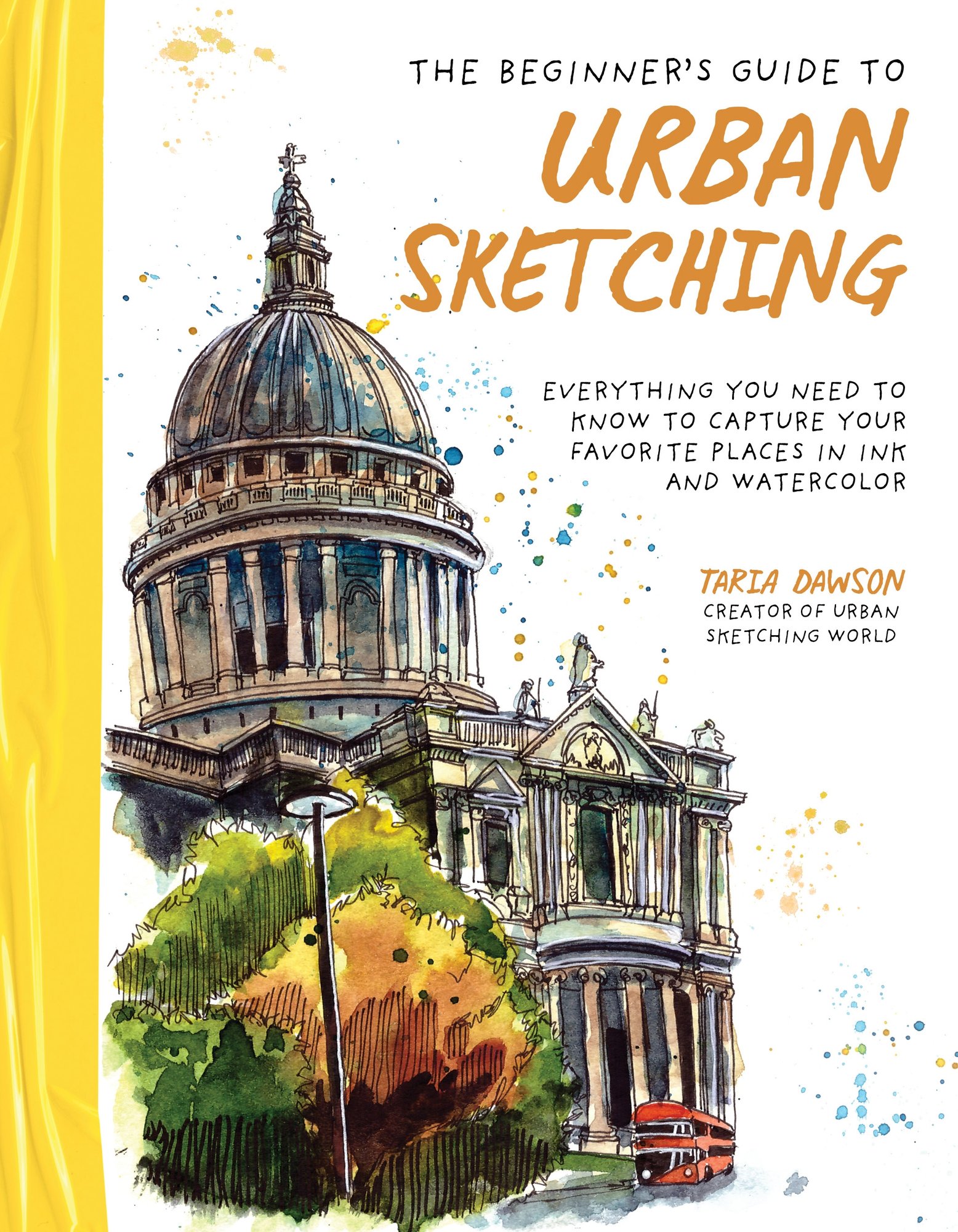
Beginner’s Guide to Urban Sketching
Dawson runs the Urban Sketching World blog and a YouTube channel out of Johannesburg, and she teaches this the way she talks — relaxed, minimal supplies, no gatekeeping. The lessons build: Individual objects, then food on a table, then a café interior, then a street with buildings and people in it, each chapter ending with a full sketch-a-scene walkthrough from blank page to finished ink and watercolor. She’s aiming at the person who thinks they can’t draw and wants a record of their own ordinary week, not a portfolio. That’s me.
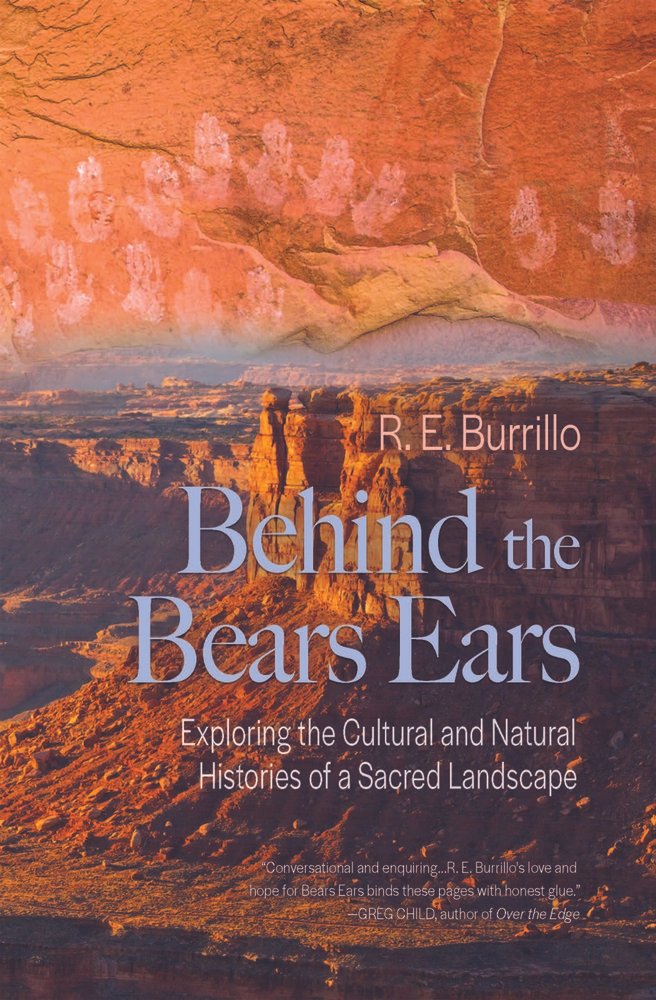
Behind the Bears Ears
Burrillo took the long way to Cedar Mesa — upstate New York, then New Orleans tending bar for five years trying to be a writer, then seasonal work in Glacier and two summers on the North Rim, which is where the Colorado Plateau sank its hooks into him. He went back to school at Northern Arizona and Utah and became an archaeologist. This is 12,000 years of southeastern Utah, from the first people through the Basketmakers and Ancestral Puebloans to the Ute, Navajo, and Paiute who are still there. He’s good on how looting and pothunting shaped the region, and on how the study of archaeology itself got built out of this ground and the bad behavior that came with it. Then the national monument fight after Trump gutted it by eighty-five percent. Burrillo helped write the technical guts of the lawsuit that followed, so he’s not pretending to be neutral. He’s funny, too, which you might not expect from an archaeologist.
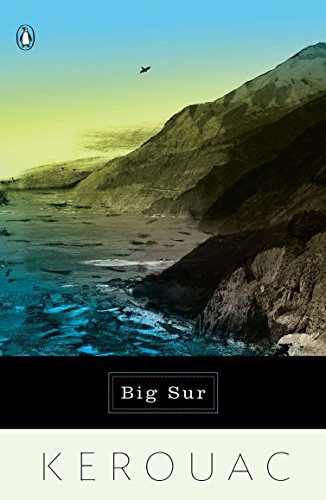
Big Sur
Kerouac wrote On the Road, and it made him famous, and the fame ate him alive. By 1960, he was thirty-eight, drinking himself apart, with strangers showing up at his mother’s house wanting the King of the Beats. Lawrence Ferlinghetti offered him a cabin in Bixby Canyon to dry out in, and this is that. He goes down there, and for about three days the creek and the fog and the redwoods do exactly what he hoped. Then the solitude turns on him. He runs back to San Francisco, drinks, picks up with Neal Cassady’s girlfriend, comes back to the canyon with a crowd, and finally comes apart in the dark with the surf pounding and his mind going. He wrote it in ten nights on a roll of teletype paper.
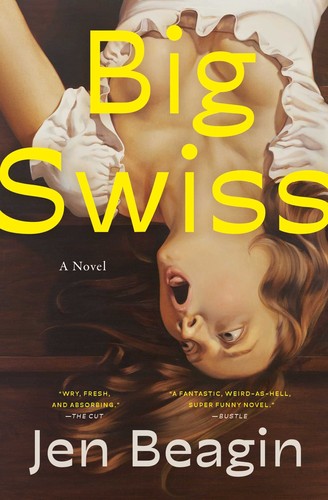
Big Swiss
Greta is forty-six, broke, and living in a half-ruined Dutch farmhouse in Hudson, New York, with a beekeeper and a bunch of bees in the walls. She has a job transcribing the sessions of a local sex-and-relationship coach, which means she spends all day typing out strangers’ secrets. One client gets to her: a Swiss gynecologist, twenty-eight and married, brisk and unbothered, whom Greta privately calls Big Swiss. Then she recognizes her voice at the dog park, says hello, and doesn’t mention she’s been listening to this woman’s therapy for months. What starts there is funny and doomed in equal measure, and it works because both women are dodging something bad in their pasts and lying about how much it touched them. Beagin writes filthy deadpan dialogue and yay for that.

Birnam Wood
Birnam Wood is a guerrilla gardening collective in New Zealand — a few dozen people who plant crops on land nobody’s watching, roadsides, dead lots, farms gone fallow, sometimes with permission and sometimes not. Mira runs it, and after five years it’s still broke. Then a landslide cuts off a town on the South Island and strands a big farm, and she figures that’s five thousand acres nobody’s watching. Except someone is. An American billionaire, Robert Lemoine, who made his money in surveillance drones, has bought the place and told everyone he’s building a doomsday bunker. He catches Mira on the property and, instead of running her off, offers to bankroll her whole operation. What he’s actually doing up there is the engine of the book, and Catton lets everybody talk themselves into the deal for reasons that make sense at the time. It’s a thriller that also skewers everyone in it, and it turns brutal at the end. Loved it? Loved it.
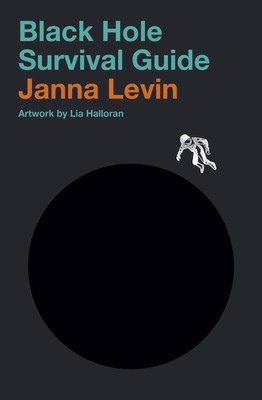
Black Hole Survival Guide
Levin is a cosmologist at Barnard, and this is a short one, about one hundred fifty pages with drawings by Lia Halloran, meant to be read in a sitting. Her opening move is the one that got me: A black hole isn’t a thing. It’s a place. There’s no object down there, no dense ball of stuff — it’s empty space bent so hard that every road out points back in. From there, she walks you through what would actually happen to you going over the edge of a big one, which is not much at first, since you’d sail across the horizon without noticing, and the shredding comes later. Meanwhile, anybody watching from outside sees you slow down and freeze and fade and never quite arrive. She covers Hawking radiation, the fact that they leak and eventually die, and the argument over whether what fell in is gone for good. No equations. Just her talking. It’s amazing.
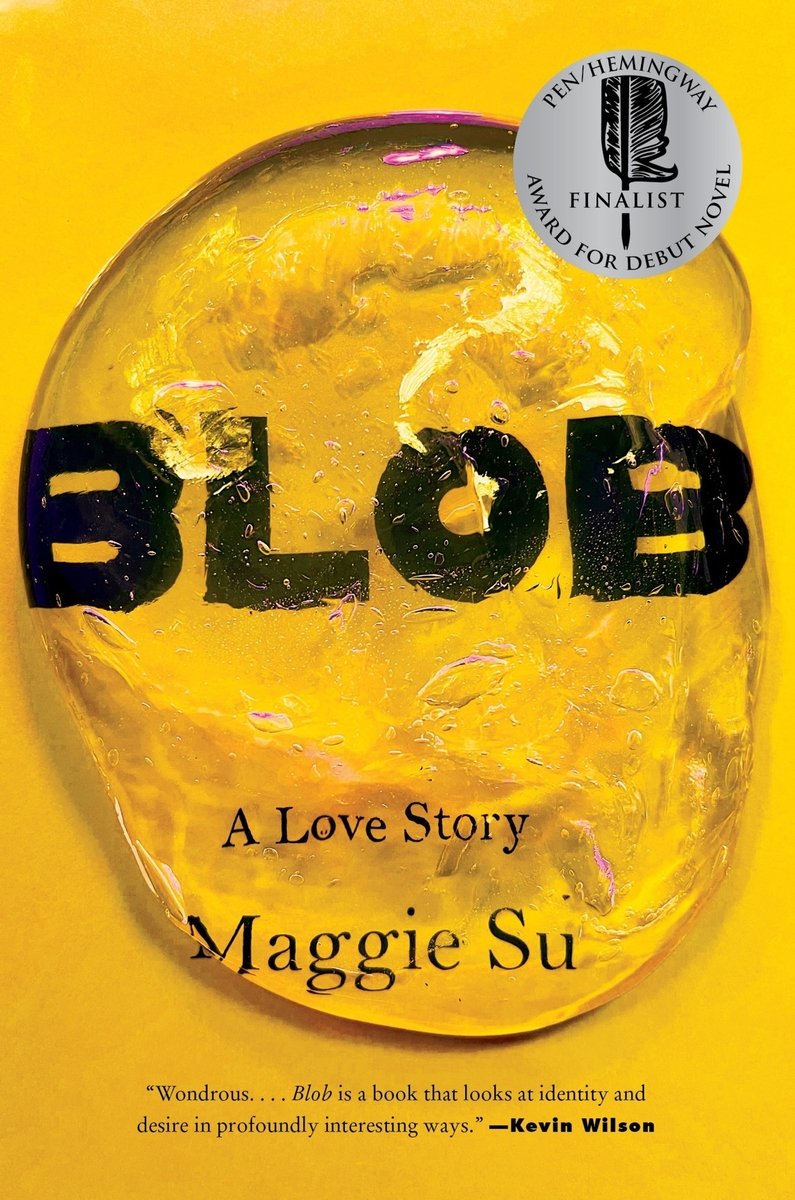
Blob
Vi Liu is 24, half-Taiwanese, dumped by her boyfriend, dropped out of school without telling her parents, and working the front desk at a motel in the Indiana college town she grew up in. She doesn’t even have the energy to be a hot mess—she’s lukewarm-turning-cold one. Outside a bar one night, she finds a beige gelatinous thing on the ground with eyes and a mouth. She takes it home. It eats. It breathes. It learns. So she starts shaping it — literally, with her hands — into a white guy assembled out of movie stars, and calls him Bob. For a while, it works. She has somebody to take care of, somebody the world approves of, somebody with no history to argue over. Then Bob gets a personality of his own and walks out the door, and she’s no longer in control (as if she ever was).
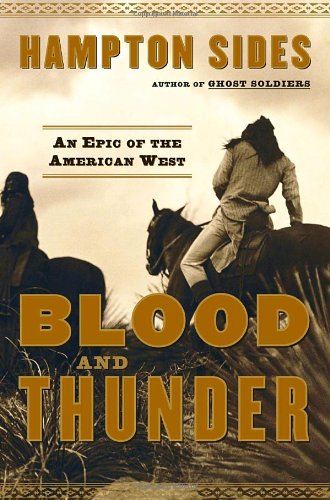
Blood and Thunder: An Epic of the American West
Kit Carson was a small, illiterate, soft-spoken trapper who couldn’t read the dime novels that made him a legend while he was still alive. Sides uses him as the thread through the whole conquest of the Southwest — the Mexican War, the taking of New Mexico and California, and then the Navajo campaign, where Carson burned the fields and orchards at Canyon de Chelly and marched thousands of Diné three hundred miles to a dead camp on the Pecos. Hundreds died on the way. The book doesn’t let him off and doesn’t flatten him either. He hunted the same people he’d lived among, had Native wives, spoke the languages, and did what he was ordered to do. Diné leaders like Narbona and Manuelito are given their own weight rather than a walk-on. It flies by like a novel. Equally horrified and fascinated, I couldn’t put it down.
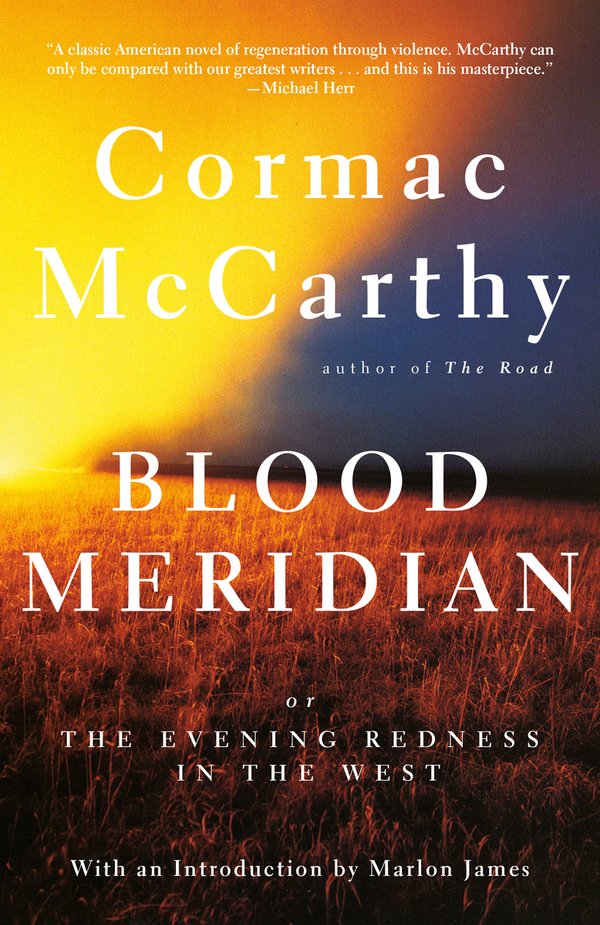
Blood Meridian: Or the Evening Redness in the West
A runaway kid out of Tennessee, fourteen years old, drifts down into Texas in 1849 and falls in with the Glanton gang — real men, scalp hunters the Mexican states paid by the head to kill Apaches, who figured out pretty quick that any dark hair pays the same. McCarthy built the book off a memoir by one of them, and the route they ride is the actual borderland. Riding with them is Judge Holden, seven feet tall, hairless, fluent in everything, who sketches artifacts in a ledger and then destroys them, and who talks about war the way a preacher talks about God. It’s about as violent as a book gets, and not one bit of it is fun. The prose is biblical, unpunctuated, and enormous. Plenty of people call it the great American novel and plenty of people can’t finish it. I’m in the first camp.
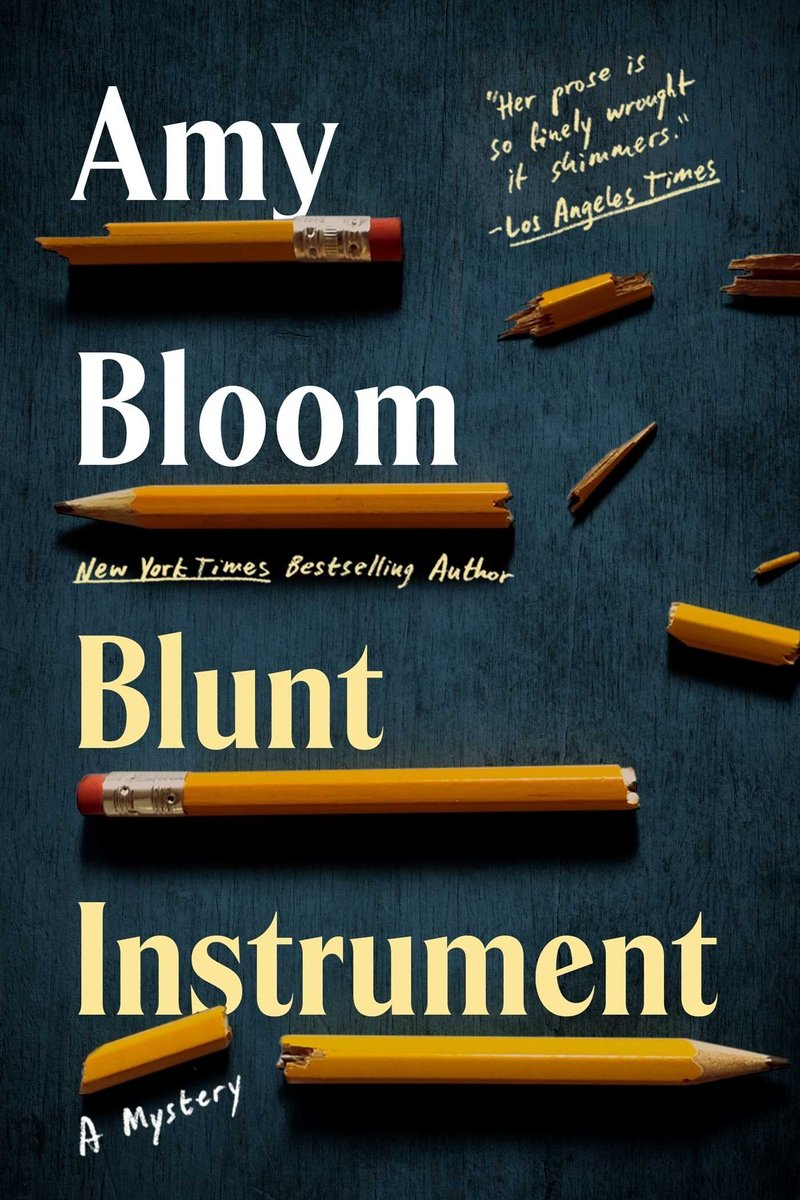
Blunt Instrument
Amy Bloom spent a career on literary novels and memoir, taught writing at Wesleyan, works as a psychotherapist, and decided to write a detective novel. An old professor at a fancy East Coast university gets bludgeoned in his office with a bronze bust of Nathaniel Hawthorne. Nobody liked him much — the professor, not Hawthorne — so the suspect list runs longer than the guest list at his funeral. The school would rather not have cops and reporters crawling around and they bring in Dell Chandler, a failed English professor, pushed out of academia under a cloud, who’s now working as a self-taught private eye, having learned the trade as a kid in her uncle’s agency. She knows exactly how these departments work and who hates whom and why. The mystery holds up fine, but the fun is the voice and the skewering of campus life.
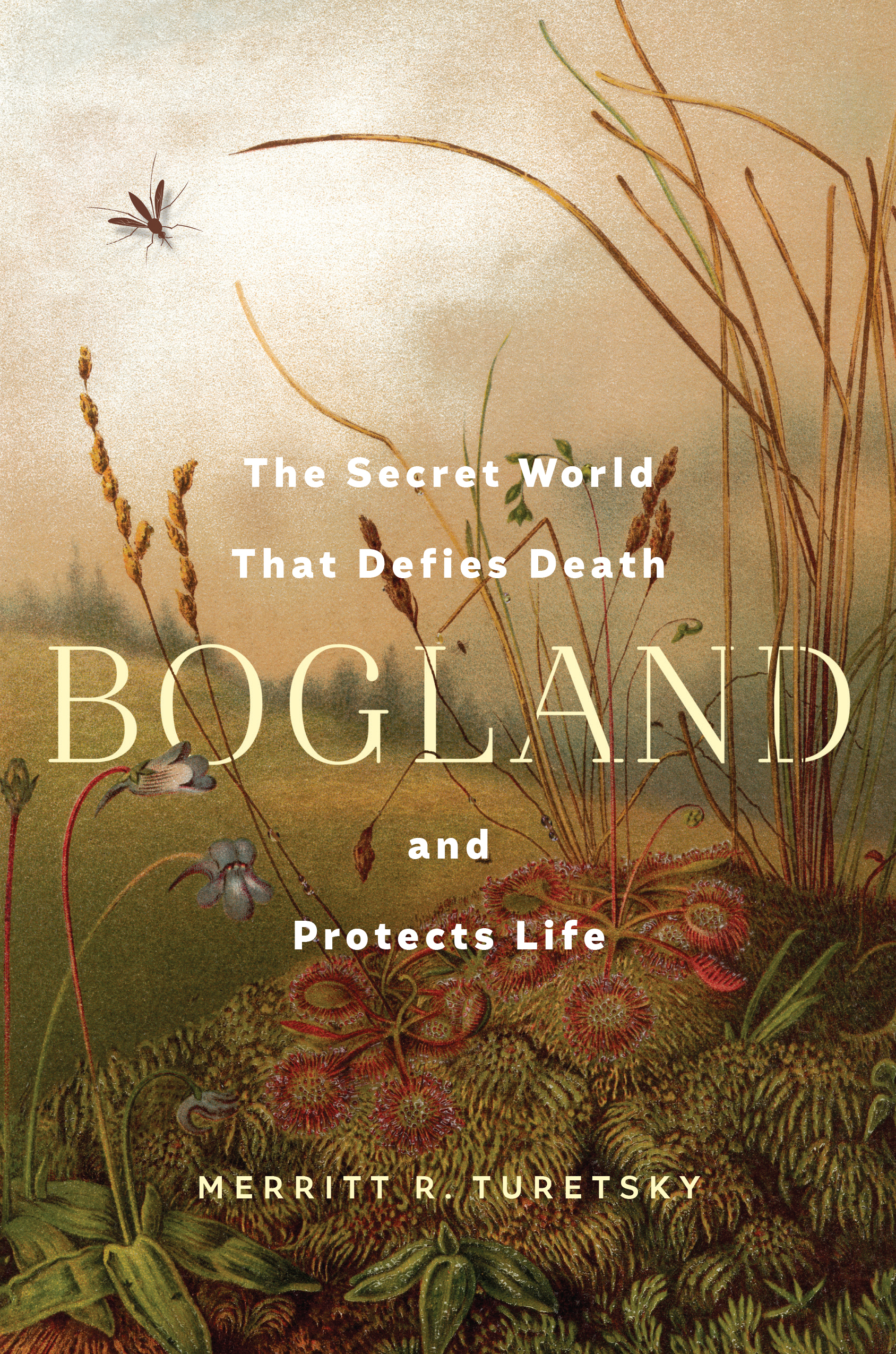
Bogland: The Secret World That Defies Death and Protects Life
Merritt Turetsky’s Bogland takes the most sneered-at ground on earth—the stuff we drain, mock, and turn into every word for being stuck—and contends it’s one of the planet’s great underrated systems. The carbon science is clear-eyed: These wet places comprise three percent of land and thirty percent of the world’s soil carbon, and fires and thaw could flip it all. Where the book comes alive is in the human connection, like the resurfaced Iron Age bog bodies with their last meal intact, swamps that hid the hunted, fieldwork reported from the muck itself. It leans hard on “liminal,” and the closing pep talk is earnest to a fault, but it’s a great read anyway. Bog? Let’s hear it for wetlands.

Botany in a Day
No book is going to teach you botany in a day — you have to get down on your knees and go face to face with the flora. But this one gets you further in an afternoon than any field guide will, because Elpel doesn’t start with species. He starts with families. Learn to see eight of them by their patterns — mint’s square stem and opposite leaves, mustard’s four petals in a cross and six stamens, the umbrella of the carrot family, the pea’s banner and keel — and you can walk into country you’ve never seen and still place most of what’s growing. It’s a way of thinking, not a list to memorize, which is why it works anywhere. He self-published it out of Montana, draws the plants himself, and covers what’s edible and medicinal as he goes.

Box 88
BOX 88 is a black-ops outfit run jointly by the British and the Americans, so far off the books that neither MI6 nor the CIA is sure it exists. Cumming runs two clocks. In 1989, Lachlan Kite is eighteen, a Scottish scholarship kid at an English boarding school, invited by his rich best friend to spend the summer at the family villa in the South of France. The friend’s Iranian godfather will be there, an oil man tied to the Lockerbie bombing, and that is how a teenager gets recruited and handed his first job. In 2020, Kite is a seasoned officer chained up in a room, worked over by Iranian intelligence who want to know what happened that summer, with his pregnant wife kidnapped as leverage. The boarding-school half is a real coming-of-age novel about class and belonging. The other half is a straight thriller. First of a series, and Cumming has written three more.
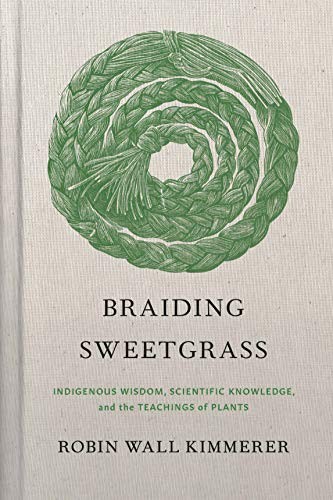
Braiding Sweetgrass
You’ve read it, right? Or seen it on the shelf? Or the bestseller list? How it got there is part of the story. Milkweed, a small nonprofit press in Minneapolis, published it in 2013 with no marketing budget, and for years nothing happened. Then readers started handing it to each other. It hit the bestseller list seven years out and stayed, sold millions, and made Kimmerer a MacArthur fellow. The book itself is quieter than the phenomenon. She’s a botanist, a professor of plant ecology, and a citizen of the Potawatomi Nation, and her point is that both ways of knowing a plant belong in the same room. So she walks you through the study showing sweetgrass grows better when it’s harvested, then tells the Skywoman story, then what her elders said about asking permission before you take. Reciprocity is the spine, as a gift like sweetgrass obligates you.
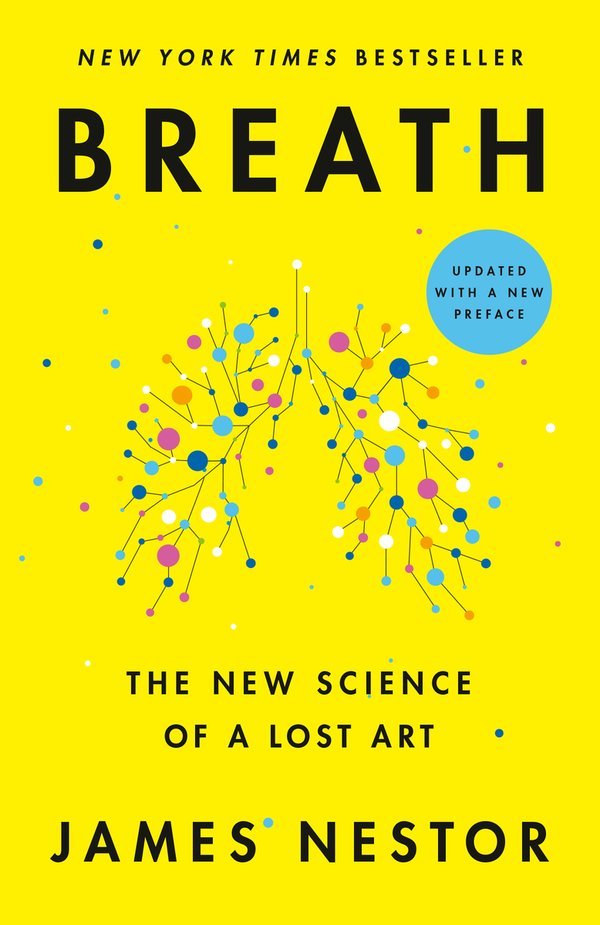
Breath
Nestor got himself into a Stanford lab and had a rhinologist plug both his nostrils shut with silicone for ten days, which left him breathing through his mouth and nothing else. His blood pressure spiked, he started snoring 4,000 percent more, and sleep apnea set in. Then they pulled the plugs, he spent ten days breathing through his nose, and it all reversed. That experiment is the spine of the book.
He handles ancient skulls at a museum in Philadelphia and finds wide jaws and straight teeth, then explains how softer food and less chewing narrowed the human face and closed down the airway. He tracks down the outsiders who worked pieces of this out on their own — a Russian doctor, a choir conductor who taught emphysema patients to exhale, Wim Hof in the ice. The takeaways are absurdly simple —breathe through your nose, breathe slower, exhale longer, and quit thinking about carbon dioxide as waste — but you still should investigate the book for yourself. After reading the drawbacks of mouth-breathing during sleep, I started taping my mouth closed and my sleep quality improved dramatically. Maybe not 4,000 percent, but close. (Insert jokes about taping my mouth shut during waking hours here.)
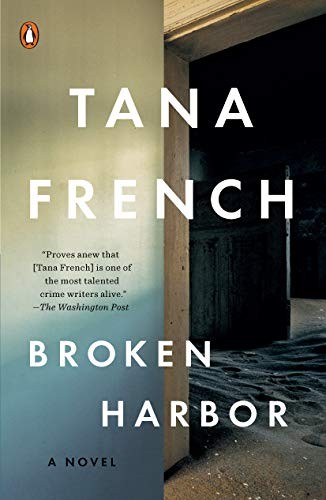
Broken Harbor
This is Tana French’s fourth Dublin Murder Squad book. Mick Kennedy, called Scorcher, is the squad’s top closer, a by-the-book man who believes hard work and rules keep the dark out. He catches a case at Brianstown, a half-finished housing estate on the coast north of Dublin — a few families living among empty shells and unpaved roads. Pat Spain and his two kids are dead in the house. His wife Jenny is barely alive. There are holes punched through the walls and baby monitors pointed at them, and Pat, out of work for a year, had been hunting something he was convinced was living in the attic. Then it turns out the estate sits on the beach where Mick’s family used to holiday, and where his mother walked into the water and committed suicide. He’s the wrong man for this and of course he takes the case anyway.
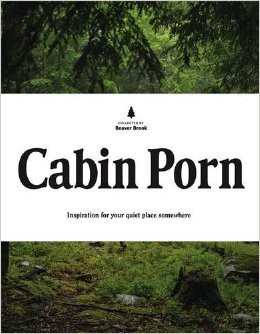
Cabin Porn: Inspiration for Your Quiet Place Somewhere
Zach Klein co-founded Vimeo, then in 2010 bought fifty-five acres of woods in upstate New York with his wife and some friends and started building. They needed ideas, so they made a Tumblr to collect pictures of handmade cabins, and it got away from them — ten million visitors, hundreds of thousands of followers, strangers sending in photos of their own places from all over the world. The book is the good half of that, about two hundred cabins, plus how-to on framing and siting and building. What makes it more than a mood board is the reporting: Every cabin comes with the story of who put it up, with what money, and how long it took. Klein’s own place at Beaver Brook had mice, and he got Lyme disease out of it.
California Desert Trails
J. Smeaton Chase was an Englishman who landed in Southern California in 1890, wandered it on horseback for thirty years, and wrote it down. This one came out in 1919, after he’d settled in Palm Springs when it was still nothing but a hot spring and a few houses. He rides a loop around the Colorado Desert, out past the Salton Sea and the Chocolate Mountains and over to the Colorado River, and he does a good chunk of it in summer, which the appendix on desert travel practically begs you not to do. He stops at every hermit, prospector, and Cahuilla family he crosses and lets them talk. The plant and animal writing is exact enough to still work as a field record, and he was pushing to protect the Santa Rosa and San Jacinto ranges decades before anyone listened. Still, it’s dated and might be for Mojave fans only.
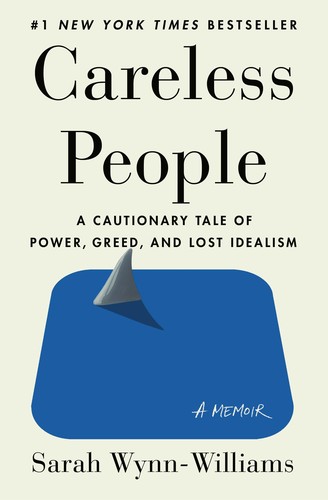
Careless People
Wynn-Williams was a New Zealand diplomat who talked her way into a job at Facebook in 2011 because she believed the thing could do some good in the world. She stayed seven years running global public policy, in the room for the parts you’ve read about — Myanmar, the 2016 election, Davos, the private jet. Her account is that Zuckerberg pursued a China deal that would have handed the government tools to censor and surveil users, that she spent two years trying to get one person hired to moderate content in Myanmar while the killing ramped up. Meta denies all of it, went to arbitration the day the book came out, and got an order barring her from promoting it or criticizing the company, which is a hell of a way to sell a million copies.
Celine
Celine is sixty-eight, blue-blooded, a Sarah Lawrence grad, with an apartment under the Brooklyn Bridge, a cigarette habit that gave her emphysema, and a better record finding missing people than the FBI. She takes cases about lost families because of a hole in her own. A young woman named Gabriela comes to her about a father who vanished twenty years back — a National Geographic photographer shooting grizzlies near Yellowstone, car found empty outside the park with bear tracks and a lot of blood, body never recovered. So Celine and her husband load a camper and drive west into country nothing in her life prepared her for, dragging an oxygen bottle, and figure out fast that somebody is following them and wants the case left shut. Heller based her on his own mother.
Chain Gang All Stars
It’s near-future America, where the prison system got turned into a televised blood sport. Sign up for the program and you fight other prisoners to the death on live TV; if you survive three years, you walk free. Almost nobody makes it. Loretta Thurwar is the biggest star on the circuit and closing in on her release, and Hurricane Staxxx is her teammate and the woman she loves, which is a problem when the schedule eventually pairs them off. Adjei-Brenyah writes the fights like sportscasting and the crowd like people you know. Then he drops footnotes on the page — real numbers and real cases and actual US prisons — and much as you might enjoy the storytelling, you will fume at the injustice of justice in America. Which is, of course, his point.
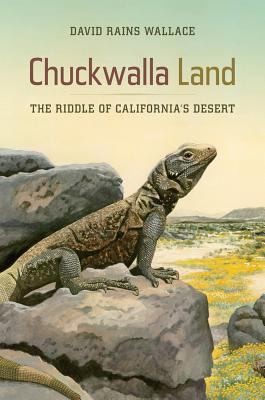
Chuckwalla Land
Here’s the riddle: Nobody can say how old the California desert actually is, or where its plants and animals came from. Creosote, ocotillo, cactus, the chuckwalla itself — did they evolve out there over tens of millions of years, or move in recently after the Sierra rose up and cut off the rain? Wallace walks Death Valley, Red Rock Canyon, Kelso Dunes, and other stretches while tracing two centuries of scientists arguing over it. Daniel Axelrod, a paleobotanist who read the answer in fossil leaves and got loud about it. Ledyard Stebbins on the botany side. Edmund Jaeger and Joseph Wood Krutch, who just went out and lived there. He doesn’t settle it, because it isn’t settled.
Cloud Atlas
Six stories nested inside each other like a set of dolls. A lawyer crossing the Pacific in 1850. A broke young composer in Belgium in 1931 conning his way into an old master’s house. A reporter in 1970s California chasing a nuclear plant cover-up. A London publisher in the present, locked in a nursing home against his will. A cloned server in a corporate future Korea. And at the center, a goatherd on Hawaii after the world has fallen apart, talking in a language that has broken down with it. Mitchell cuts each one off mid-sentence, runs to the middle, then comes back and finishes them in reverse. Every story turns up as an artifact in the next one — a journal, a bundle of letters, a movie. The whole thing is about power and who eats whom. And FYI, the movie was horrible; the book is amazing.
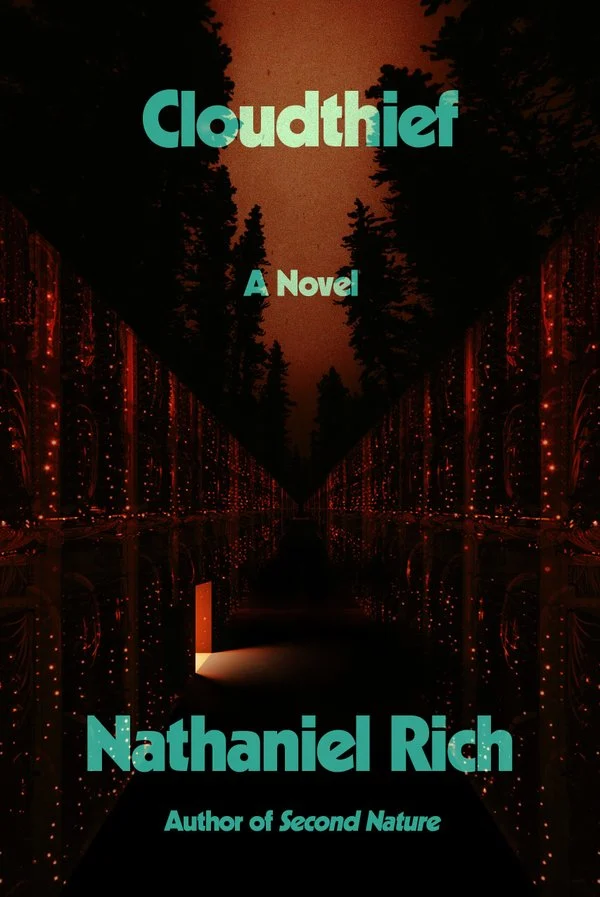
Cloudthief
Forget banks. The real vault is a data center — endless rows of drives holding everybody’s private business, sitting in a windowless building nobody guards like a bank. Tim is a climate reporter worn out from writing the end of the world over and over. Virginia is a con artist living completely off the grid in Manhattan, no digital trail at all, obsessive about keeping it that way. They fall in together out of want and broke desperation and decide to steal secrets. With their last cash and some cheap wigs, they drive to the edge of Tulsa, where the largest repository of knowledge on earth sits in a building the size of a small town. Each of them is hiding something from the other. And the heist is only the first act.

Clown Town
Ninth in the Slough House run, where MI5 parks the agents it can’t fire — bad spies serving out their careers shuffling paper under Jackson Lamb, who is filthy, cruel, and smarter than everybody. (Praise baby Jesus for Gary Oldman’s incredible turn as Lamb in Apple TV’s “Slow Horses”.) River Cartwright is off duty waiting to be cleared, so he pokes around his dead grandfather’s library and notices a book missing. That thread runs back to a covert operation during the Troubles in Northern Ireland, and the people who ran it are broke and old and willing to talk. Diana Taverner, who runs the service, decides to get out ahead of it, and once she moves, people start dying.
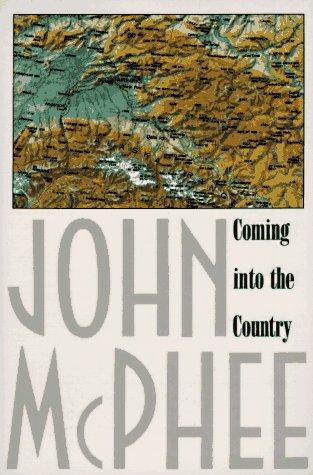
Coming Into the Country
McPhee went north in the mid-seventies, right as the Land Claims Act carved the state up and everybody was fighting over what would be park, what would be Native, what would stay open. The book comes in three parts. First, a canoe trip down a clear river in the Brooks Range with a survey crew, where a grizzly walks up on them and the whole trip reorganizes around bears. Then a rambling search for a site for a new state capital. Then the long one, out in Eagle on the upper Yukon, a town of maybe a hundred people, where he lets miners, trappers, and back-to-the-landers explain why they came and what it costs to stay.
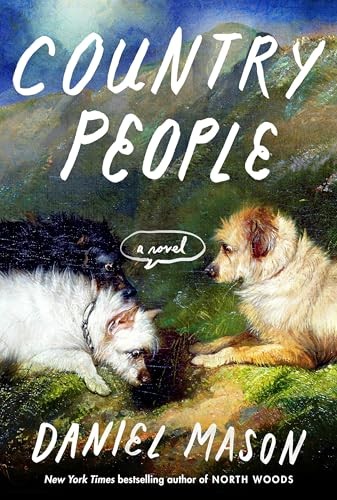
Country People
Miles Krzelewski is forty-five and fourteen years into a dissertation on Russian folktales that keeps changing topic every time it gets hard. His wife Kate lands a one-year visiting professorship at a college in Vermont, so the whole family — two kids and a truffle dog in a place with no truffles — packs up and leaves California for the Green Mountains. Miles tells himself this is the year he finishes. What he actually does is watch the kids and get slowly overtaken by the woods. Mason narrates the whole thing in a dry, sideways voice that keeps sliding into folktale cadence, until you can’t always tell whether the strange stuff is happening or Miles just wants it to. Same writer as North Woods, working much the same ground.
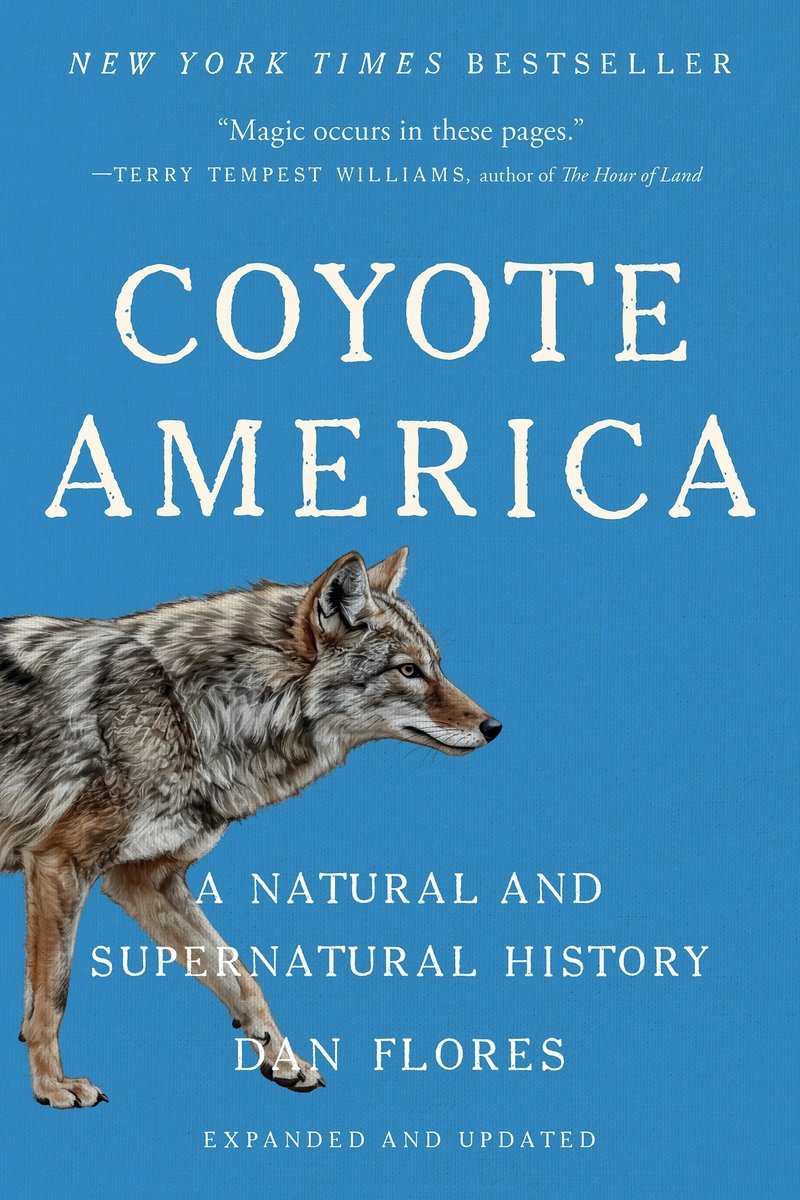
Coyote America
Wolves got wiped out of the Lower 48. Coyotes got the same treatment — bounties, poison, a federal agency that killed millions of them for the better part of a century — and instead of dying off they spread into all forty-nine mainland states and onto the sidewalks of Chicago and New York. Flores is a historian, and his explanation is that the killing is what did it. Hit a coyote population hard and the survivors throw bigger litters and scatter into open ground. He runs the animal back through Native trickster stories, where coyote is already the one who can’t be killed, then Mark Twain sneering at it in Roughing It, then Wile E. Coyote, then the poison campaigns, and finally into the city parks and suburbs where they live now.

Craft Coffee: A Manual
No espresso in it at all, which is the first thing worth knowing. Easto sticks to manual brewing and covers ten devices — French press, Chemex, V60, AeroPress, siphon, cold brew, the lot — and treats them as variations on the same handful of variables rather than ten separate rituals. The front half is the actual mechanics: what extraction is, why grind size and water temperature and time move the cup around, how to read a bag of beans past the marketing. Then she offers the recipes, with ratios and troubleshooting for when it comes out sour or flat. She writes like somebody who got tired of the priesthood. There are no lectures about your gear, no scolding, no insistence there’s one correct cup. I love this book for reclaiming excellent coffee from elitism.
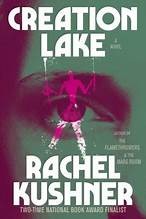
Creation Lake
Sadie Smith is a hired spy — ex-federal, now freelance, working for clients she never meets. Her job is to get inside a commune of radical farmers in southwest France and push them into doing something illegal enough to jail them. She has a fake name, a fake boyfriend she seduced to get the introduction, and total contempt for everybody she’s deceiving. Running underneath is the email she’s been reading without permission: long letters from Bruno Lacombe, the group’s old mentor, who has moved into a cave in the limestone and thinks the whole human project went wrong when we outcompeted the Neanderthals. Kushner lets his crackpot cosmology get more persuasive as Sadie’s certainty rots. She’s very funny and not remotely trustworthy.
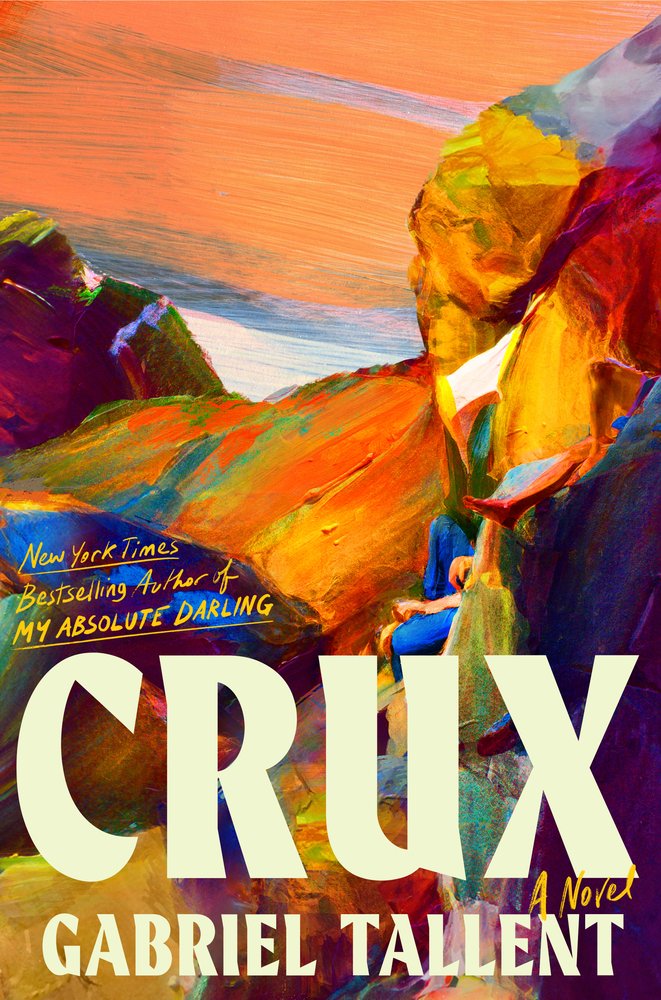
Crux
Gabriel Tallent’s second novel, Crux, feels as if it’s trying to squeeze every possible metaphor out of every possible climbing term, and, like his hyper-loquacious protagonist Tamma, it’s a lot to take—at first. But you settle in, or maybe buckle up, as high desert kids Tamma and best buddy Dan try to send Fingerbang Princess—a sketchy, highball boulder problem—and classic routes in nearby Joshua Tree. They have no money, no rope, no crashpad; what they do have are broken families and the belief that climbing is their only way out. Queer, swear-like-a-sailor Tamma lives in a trailer and has few options, Dan has more but doesn’t seem to care. Their journey together looks like a desperate dyno move to a wafer-thin hold—low odds of success, high degree of danger—but by the end, the metaphor works.
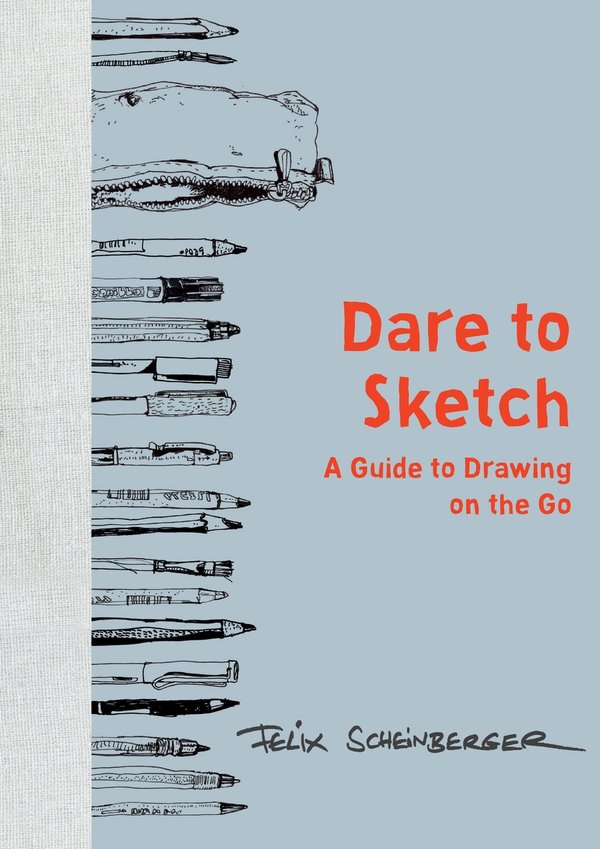
Dare to Sketch
Felix Scheinberger has drawn more than fifty children’s books, and he wrote this to get people over the fear of the blank page. His stance is that a sketchbook belongs to you and nobody else, so there’s no wrong way to fill it and no such thing as ruining one. Mistakes are just what the page looks like. The gist of his philosophy is permission. Don’t start on page one. Draw badly on purpose. Draw the thing in front of you instead of a photo of it. Most inspiring is his style: loose, bright, energetic, distorting. I’m not serious enough about drawing to fly to Germany and take one of his classes, but maybe someday.

Death Valley
A woman drives out of Los Angeles to a Best Western in the high desert, supposedly to work on her novel, but actually to get away from her father, who’s been in the ICU for months and died and been brought back twice, and her husband, whose chronic illness keeps getting worse. She’s not escaping any of it. The front desk clerk points her at a hiking trail, where she finds a saguaro the size of a building, which is impossible, since saguaros don’t grow in the Mojave. There’s a split down its side. She climbs in. Inside, she meets her father as a boy, and then her husband as a boy. The third time she goes looking for the cactus, she can’t find it, walks farther out, and gets lost for real. It is the funniest book anybody has written about nearly dying of thirst—especially delicious since it’s set in my backyard. I do not want to read books about grief (there’s enough of it IRL, thank you very much), but I did enjoy this one.
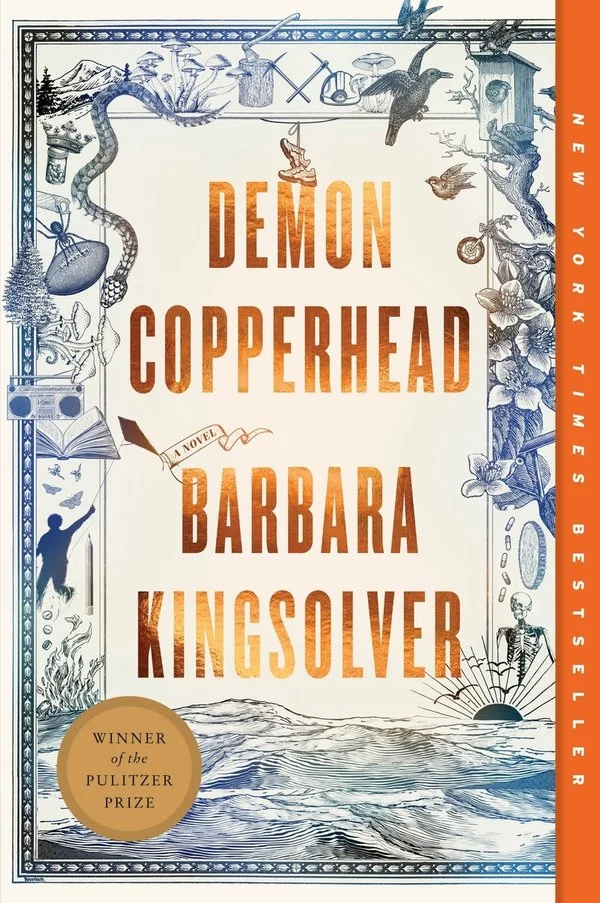
Demon Copperhead
Kingsolver took David Copperfield, moved it to Lee County in the far southwest corner of Virginia, and leaned on Dickens for the rest. Damon Fields, called Demon, is born on the floor of a single-wide to a teenage mother who’s already using drugs. From there, it’s foster homes that are really unpaid labor, a tobacco farm, a garbage-strewn house, a coach who sees him as a football asset, and then a knee injury and a doctor with a pad of Oxy scrips. She wrote it in first person and has him narrate. The larger argument is that the pills were aimed at those counties deliberately and everybody outside had already decided the people there didn’t count.
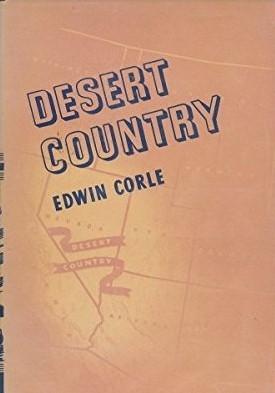
Desert Country
Erskine Caldwell got the idea for a series of books about American regions after coming home from covering the German invasion of Russia, and this was the first one out, in 1941. Edwin Corle got the desert — Nevada, Arizona, western Utah, the southeast corner of California — and he was a storyteller before he was a historian, so that’s how he plays it. Death Valley gets the most room. There’s the discovery of Mitchell Caverns under the Providence Mountains, the Mormons trying to build Deseret, a lot of mining that went bad, and a lot of people who walked out into that country and were never accounted for. History sits under all of it, but the yarn comes first. It’s also a snapshot of the desert before the war changed it, which makes it worth more now than when it came out.
Desert Journal
Raymond Cowles grew up in South Africa, studied at UCLA, and more or less invented the study of how cold-blooded animals manage their own body heat — the reason we know a lizard moves between sun and shade to hold its temperature. The book was unfinished when he died and completed by California naturalist Elna Bakker and published in 1977. It’s field notes, mostly: rattlesnakes and sidewinders, horned lizards squirting blood, the rosy boa, black widows, Colorado River toads, condors, the Imperial Valley, camps and canyons and what happens after a desert storm. He keeps returning to the one thing he noticed late — that desert animals need open ground and space is a requirement, not a backdrop.
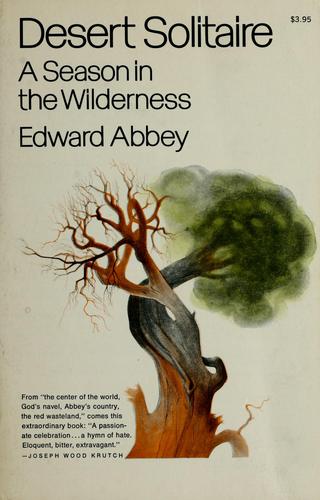
Desert Solitaire
Abbey spent two seasons as a ranger at Arches in the late fifties, alone in a trailer at the end of a dirt road, before the pavement came. This is what he made of it, and it isn’t a nature book so much as a man arguing. He’ll give you a juniper or a gopher snake in prose nobody has matched, then turn around and lay into the Park Service for building roads, into tourists who won’t leave the car, into the dams drowning the canyons. There’s a chapter on a Glen Canyon float trip taken just before the water came up that is the best thing in it.
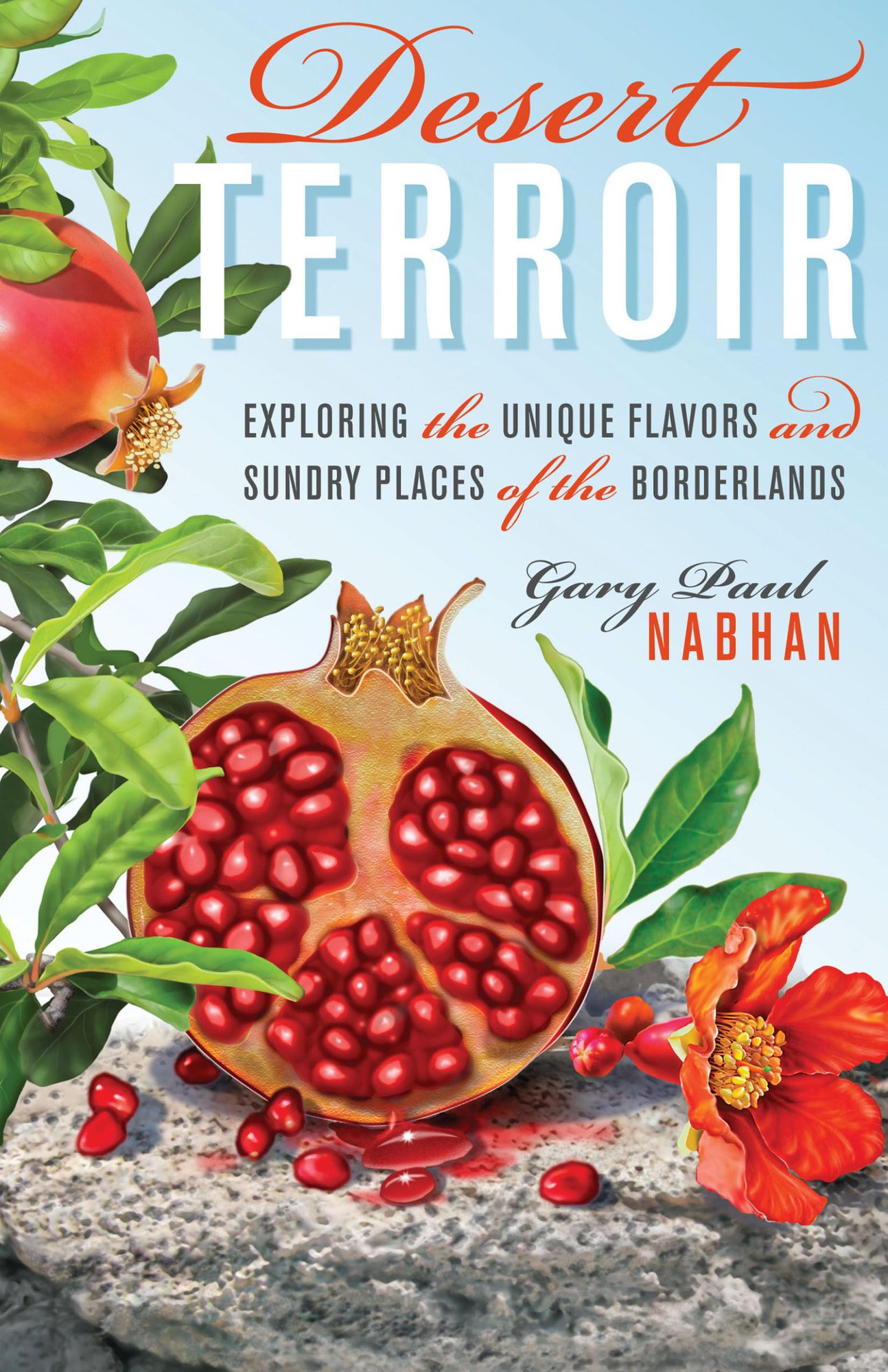
Desert Terroir
Terroir is the wine world’s word for the way a place ends up in the glass — soil, sun, wind, water. Nabhan takes it out of Burgundy and drops it on the Arizona-Sonora border, where he’s spent his life. Mexican oregano turns out to be strongest at the driest edge of where it can grow, because the plant is under stress. Mesquite flour tortillas taste like the bosque the pods came from. He works through grass-fed beef, capirotada, corvina out of the Sea of Cortez, and Cabeza de Vaca eating whatever he could find after the shipwreck. Then he pushes the idea past dirt and weather: The hands patting out the tortillas are part of it too, and so is his own Lebanese ancestry, since half these foods came from the deserts his people left.
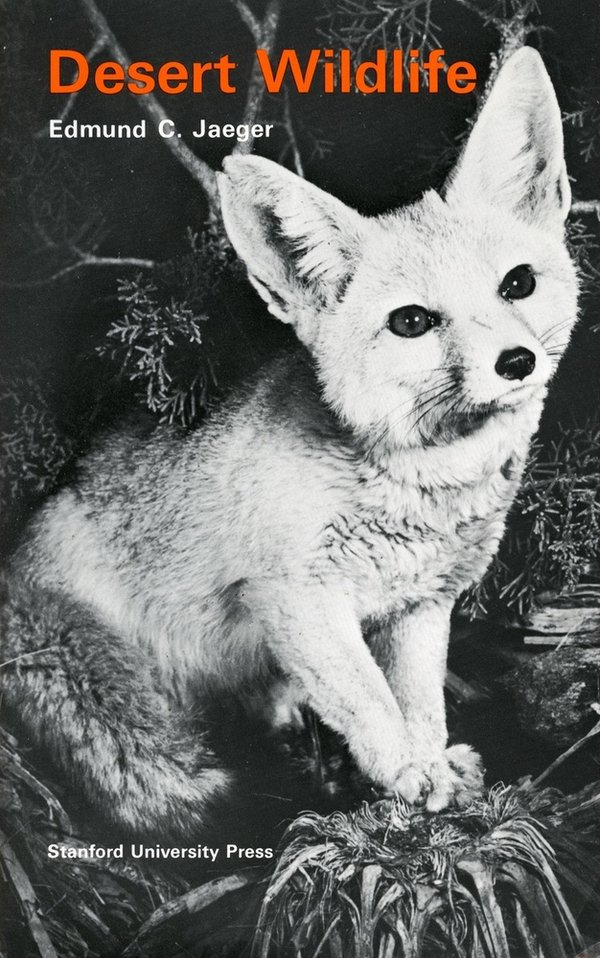
Desert Wildlife
In 1946, Edmund Jaeger was poking around a canyon in the Chuckwalla Mountains when he found a poorwill wedged in a rock crevice, cold and unresponsive, and it stayed that way for weeks. Nobody thought birds could hibernate. He went back winter after winter, banded the bird, took its temperature, and proved it, which is still the only bird known to do it. He taught at Riverside City College and spent sixty years walking the California desert, and this book, a 1961 expansion of an earlier one, is the accumulated result. Kangaroo rats that never drink. Chuckwallas wedging into cracks and inflating. Roadrunners, ground squirrels, sidewinders, the desert tortoise. It’s essays rather than a field guide, written plainly, by a man who watched these animals longer than most people watch anything.
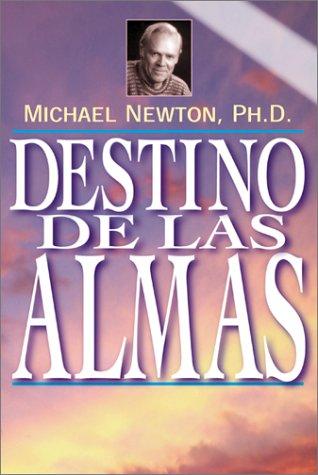
Destiny of Souls
Michael Newton was a counseling psychologist and hypnotherapist in Los Angeles, an atheist when he started, who says he stumbled into this by accident when a client under hypnosis went past a past life and started describing what happened between lives. He spent decades taking people there, and this is the second book of transcripts, seventy cases, following Journey of Souls. What his subjects describe is remarkably consistent, and that consistency is his whole argument: Soul groups you travel with life after life, guides assigned to you, a council that reviews how you did, a library of your own record, a choosing of the next body and the next parents before you go. He presents it as fieldwork, not doctrine, and lets the transcripts carry it. Whether hypnosis recovers memory or manufactures it is the question the book rests on, and Newton knows readers will land on both sides.
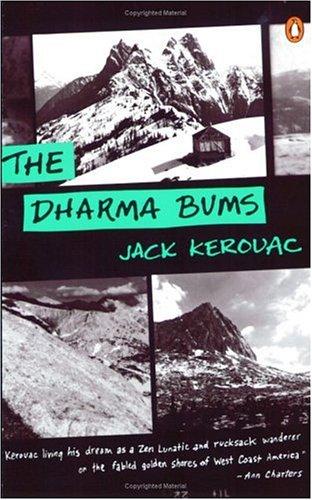
Dharma Bums
Kerouac wrote this right after On the Road, and it’s the calmer and better book. Ray Smith is Kerouac and Japhy Ryder is Gary Snyder, who was then a young poet in Berkeley translating Han Shan and heading for a Zen monastery in Japan. They meet and Japhy hauls him up the Matterhorn in the Sierra, which is where the book comes alive — two guys with cheap gear scrambling in the dark, Japhy running down a scree field whooping while Ray sits down and refuses to move. Ray comes home wanting the whole program: Buddhism, poverty, a rucksack, no job. There’s a lot of wine and then a summer alone in a fire lookout on Desolation Peak in the North Cascades, where the silence is harder than he expected. If you’re trying to decide which Kerouac to read first, make it this one.
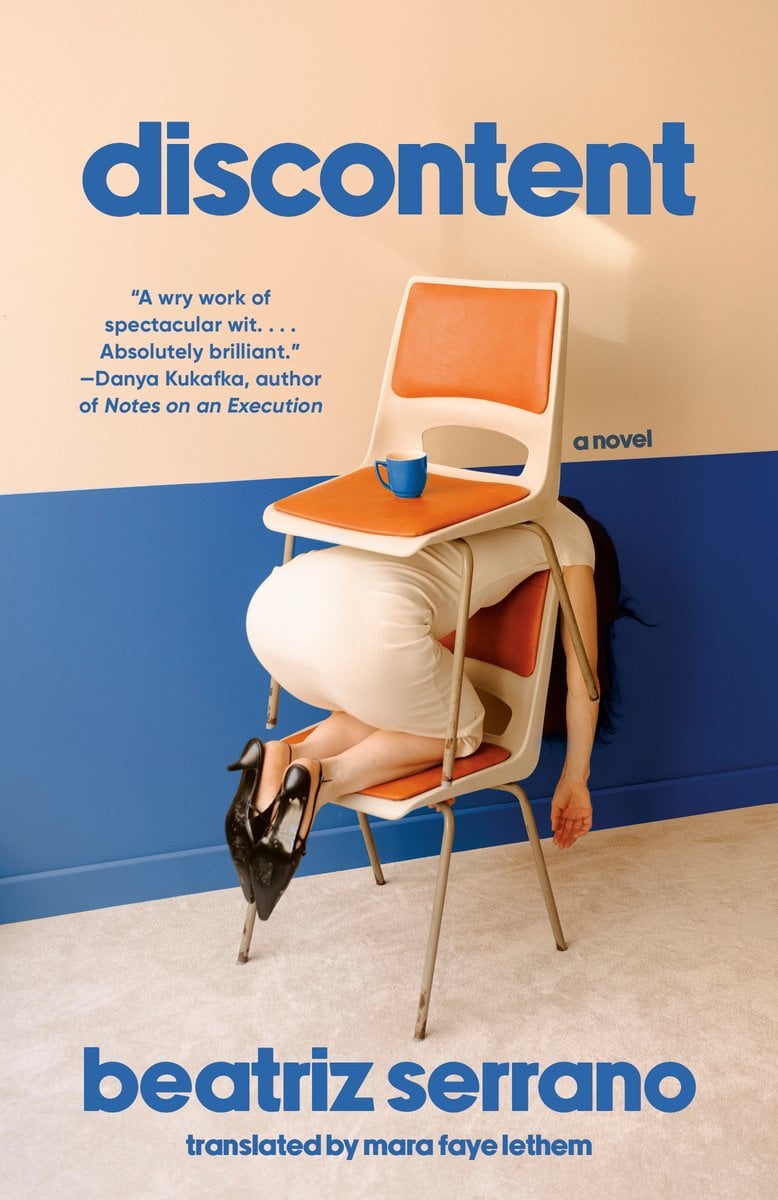
Discontent
From the very first page of Discontent, the funny and sardonic debut novel by Spanish writer Beatriz Serrano, lyrics from Portugal. The Man’s “Purple Yellow Red & Blue” lodged in my head and stayed for the duration of the book: “Workin’ just don’t work for me.” Marisa, the thirty-something protagonist, has a pretty sweet life thanks to a good job as a manager at a Madrid advertising agency. She has a great apartment, a hunky friend-and-neighbor with benefits, and wants for nothing material. She also can’t stand to work—like, at all—and spends her days doing as little as possible and manipulating office dynamics to do even less than that.
Clear-eyed to the point of cynicism, Marisa understands she fumbled her way into a nice gig. “The truth is I don’t know how to do anything and I don’t know how I got here. I suppose it was by perfecting the office game until everybody believed I was a great professional.” She’s not lying.
“I met a crazy advertising guy in a nightclub and he hired me for his agency, because back then those were the crazy things crazy advertising people did after having a bowl of cocaine for breakfast. The trend, back when there was money, was to hire advertising graduates as interns and then add a couple of people with different profiles, with no experience in the field, to provide ‘freshness,‘ ‘new ideas,‘ and ‘diverging visions.‘“
Marisa has no qualifications and no real skills, except reading and responding to the room—and obsessively watching YouTube videos. She’s so opposed to work, she muses about going on disability: “Recently I discovered that an accident on the way to work is considered an in itinere work accident, so you get paid your full salary while on leave, and ever since then, I cross the street carefree, sometimes even riskily.”
Discontent is set across three acts: a long and entertaining windup of world-building (mostly Marisa’s take on office dynamics); a short, and to Marisa horrifying, company retreat; and a speedy and surprisingly tidy resolution. Structurally, it reminds me of a rollercoaster with a long and measured climb, a sudden and awesome drop, and a sharp bank turn to the end. At 200 pages, it goes by fast, and it’s fun.
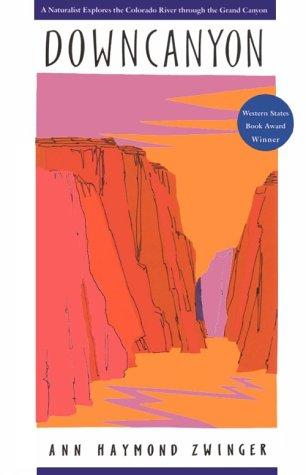
Downcanyon
Zwinger went down the Colorado through the Grand Canyon over and over, in every season and just about every kind of boat, usually tagging along with scientists doing river studies. She calls herself an observer at the river’s brim, and she leaves her human companions almost entirely off the page so the canyon can have her full attention. The book runs a calendar year. It opens in January counting bald eagles at Nankoweap Creek and closes with her walking out in snow at the winter solstice. In between, there are tree frogs, evening primrose, spiders, ants, a grain of sand, ravens she compares to Victorian undertakers, and two hundred eighty miles of whitewater.
Drawn: The Art of Ascent
Collins was shivering in a cave under Fitz Roy in Patagonia when he got the idea: Go out from home in each of the four directions, climb something new, and fill sketchbooks doing it. He told his friend and mentor Jonny Copp about it on a climb in Colorado and Copp said when do we start. Then he was killed in an avalanche on Mount Edgar in China along with Micah Dash and Wade Johnson. Collins went anyway, carrying a little bag of Copp’s ashes — to Yosemite, the Yukon, a tepui in Venezuela, the Keketuohai Valley in Xinjiang. The pages are pencil, charcoal, watercolor, torn paper, photographs, and his own handwriting, closer to a scrapbook than a book.
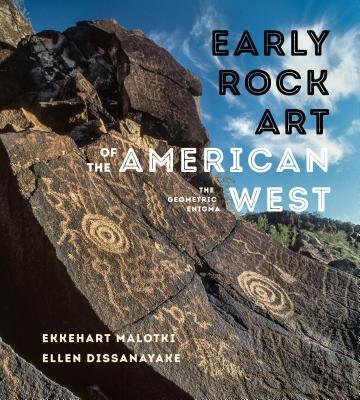
Early Rock Art of the American West
Almost everybody looking at rock art goes hunting for the pictures — the sheep, the hunters, the spirals with a story attached. (It’s the reason I drive past Mojave scratches to get to Colorado Plateau galleries.) Malotki and Dissanayake point out the oldest marks aren’t pictures at all. They’re dots, lines, grids, circles, cupules hammered into boulders, and that’s true on every continent. Malotki spent decades photographing this stuff across Arizona, Nevada, California, Idaho, and two hundred of his photographs run through the book. Dissanayake brings the theory: She calls the impulse artification, the human urge to take something ordinary and make it special, and she argues it comes before symbols and even before language has much of a role. They spend a lot of time dismantling the popular idea that shamans made these marks in trance states—watch a kid with a crayon instead, they say.
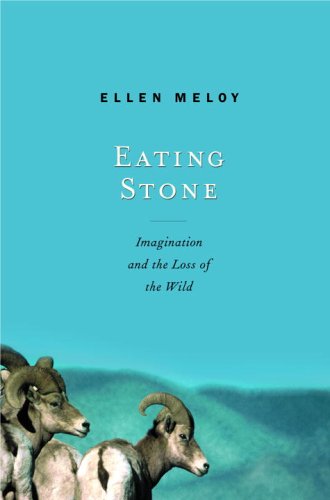
Eating Stone: Imagination and the Loss of the Wild
Meloy lived on the San Juan River in Southeast Utah and spent four seasons watching a band of about eighty desert bighorn on the cliffs near her house — sheep she called the Blue Door Band. They’d been written off as gone from that country in the 1960s, then quietly came back, and nobody could fully explain it. So she sat on ledges with a scope through the whole year, watching lambs launching five feet straight up and ewes doing the work of keeping everybody alive. She eats a ram that was killed and finds her title in it. Rock becomes plant becomes milk becomes bone becomes her. She finished the book three months before she died at age fifty-eight.
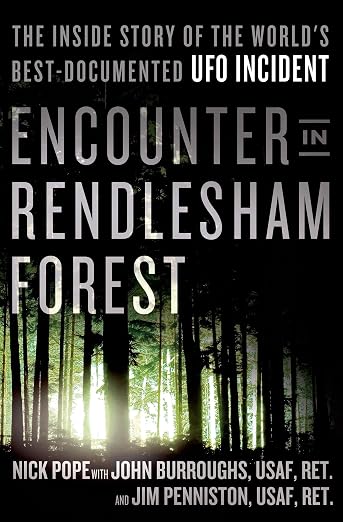
Encounter in Rendlesham Forest: The Inside Story of the World’s Best-Documented UFO Incident
Two days after Christmas 1980, security police at the twin American air bases at Bentwaters and Woodbridge in Suffolk, England, saw lights come down in the pines between them and went out to look. Jim Penniston says he walked up to a craft sitting in the clearing and put his hands on the hull, and that symbols pressed into it later came back to him as pages of binary. Nights later, the deputy base commander went out with a tape recorder running and logged a pulsing red object throwing beams down near the weapons storage area; that tape exists online and you can listen to it yourself.
Author Nick Pope ran the UFO desk at the British Ministry of Defence and has the receipts — Halt’s memo, radiation readings from the landing site, files pried loose under Freedom of Information. What sold it as Britain’s Roswell is that the witnesses were on duty, armed, and guarding nuclear weapons at the time. It never quite settles what they saw, but given the credibility of the experiencers and the well-documented historical pattern of unexplained incursions near nukes, it’s one of the more compelling cases in UFO lore.
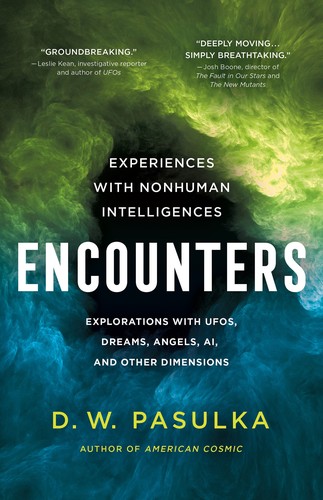
Encounters
This is Diana Pasulka’s follow-up to American Cosmic and she casts a wide net. Nonhuman intelligence here doesn’t just mean whatever’s flying around — it covers angels, demons, animals, AI, the things people meet in dreams, and the possibility that some of it is us from the future, coming back. She talks to scientists building machines to decode animal language, to a Nobel laureate who swears a glowing raccoon spoke to him, to experiencers whose stories she treats as data instead of symptoms. The best chapters are the ones about growing up around secrecy — a friend whose father worked in classified intelligence and the strange domestic weather that creates — and about how different cultures have handled dreaming. She’s still a religion scholar first, so the question is never whether any of it is real. It’s what people do with contact, and how belief gets built out of it.
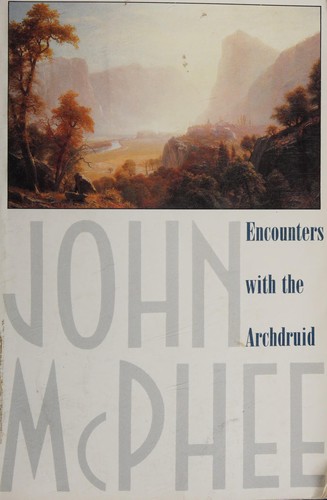
Encounters with the Archdruid
McPhee’s takes David Brower, the head of the Sierra Club and the most effective conservationist alive, and drops him in the field with three men who want to use the land, one at a time, then writes down what happens. First, a mining geologist who sees copper in the Glacier Peak Wilderness. Then a resort developer, the man who built Hilton Head, walking Cumberland Island in Georgia. Then the big one: Floyd Dominy, commissioner of the Bureau of Reclamation, the dam builder himself, sharing a raft with Brower down the Colorado through the Grand Canyon. They drink Dominy’s beer and argue for days about whether the river should be flooded. Brower had traded away Glen Canyon years earlier to save Dinosaur and he never got over it. The book documents a distant past whose decisions loom over the Southwest today and whose repercussions remain weekly news.

Enshittification
Doctorow coined the word “enshittification” in 2022 and it spread fast enough that the American Dialect Society made it word of the year in 2023. This is the long version of his argument: Platforms start good — cheap, useful, generous — because they’re buying you. Once you’re locked in and your friends and your business and your files are all in there, they turn the screws on you to please the sellers. Then they turn the screws on the sellers. What’s left is a husk that keeps running because leaving costs too much.
His real point is that none of this is a law of nature. It happened because antitrust got gutted, because laws made it illegal to build a tool that jailbreaks or interoperates with somebody else’s platform, because tech workers stopped having leverage, and because nobody enforced anything. The back half is a to-do list: Break them up, force interoperability, kill the laws that criminalize modification, and organize.
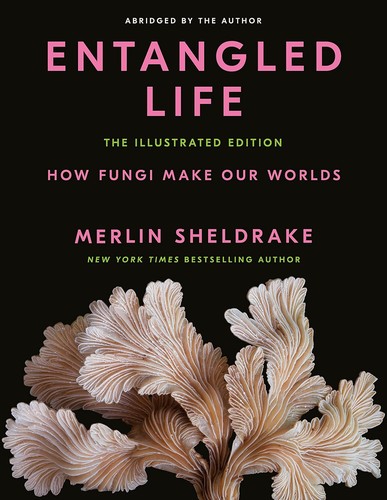
Entangled Life: How Fungi Make Our Worlds (The Illustrated Edition)
Fungi are having a moment. Research shows psychedelics can be a powerful tool to treat mental health issues, and local, state, and federal governments are open to decriminalizing shrooms or exploring medical applications. But, as Merlin Sheldrake enthusiastically shows, fungi are amazing—in the truest sense of the word. Without fungi, plants wouldn’t exist, and neither would you. Ninety percent of plants require mycorrhizal fungi to live. Every year, fungi release fifty megatons of spores (the equivalent of a half-million blue whales). Fungi give us medicine and break down the dead, and as many as ninety percent remain undiscovered. They are also, as Entangled reveals in dozens of microscopic images, beautiful, creepy, weird, fascinating, and unforgettable.
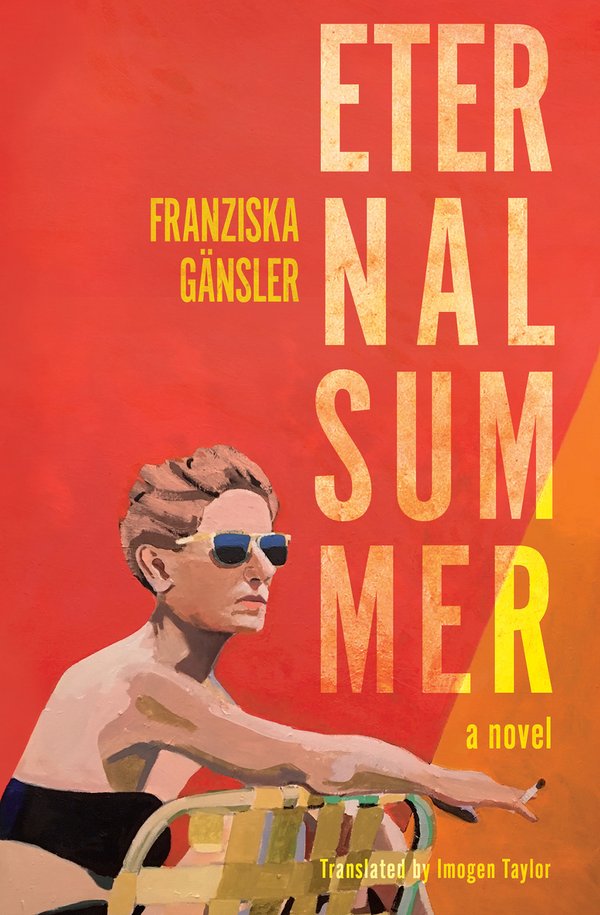
Eternal Summer
Iris runs a hotel in Bad Heim, a German spa town six hours from Berlin that used to draw tourists. Now fires burn across the river every summer, the smoke never clears, people wear masks outside, and the bookings have stopped. She keeps the place open anyway, mostly alone. Then a woman shows up with a small daughter and takes a room, and something about her doesn’t jibe. She won’t say her real name. A man calls the hotel asking whether Iris has seen a woman and a child. That’s the whole setup, and Gänsler runs it tight — 176 pages, two threats closing at once, one out in the hills and one on the phone.
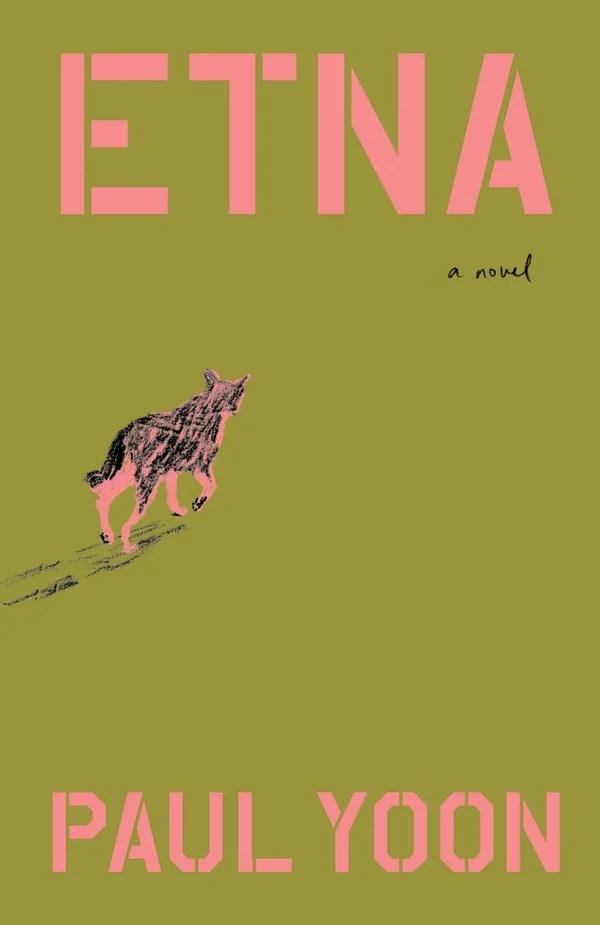
Etna: A Novel
The narrator is a dog. Etna is a working military dog in an unnamed country, and after years at war he walks away from the men he fought beside one night and heads for the place he was taken from as a pup, on the chance that home is still there. That’s the whole book — the walk. He crosses ground he worked during the fighting and finds it wrecked and rearranged. He meets people and animals trying to start over, and learns that peacetime isn’t safe either, just differently dangerous. Yoon writes spare and quiet, 208 pages, and never once makes the dog cute or gives him human thoughts.
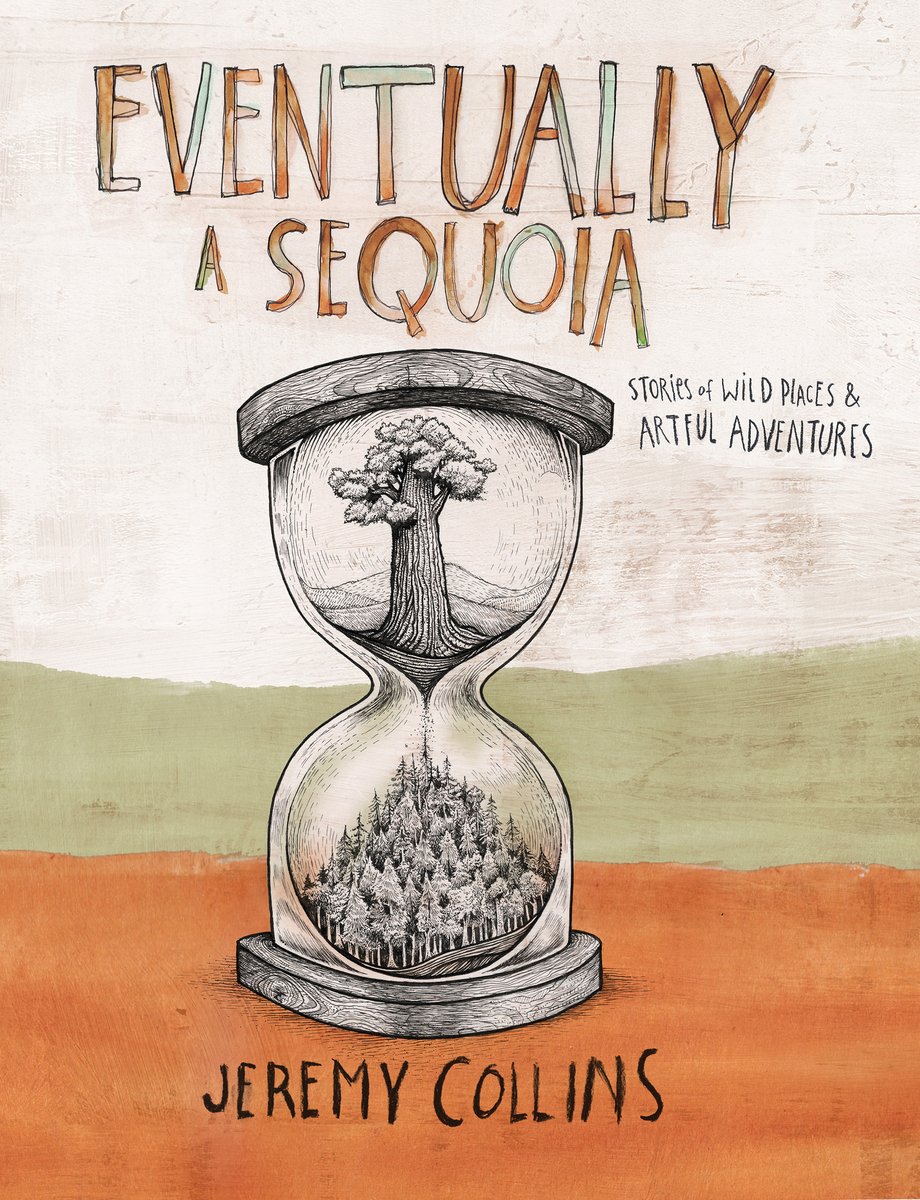
Eventually a Sequoia
Jer Collins is a climber and an illustrator and somebody asked him to bring his sketchbook down the Amazon and draw the people living along it. That trip opened the door to mixed-media storytelling, and he kept going — the Arctic National Wildlife Refuge, Nepal, Bears Ears, the redwoods. How much did I love this book? We excerpted it in Adventure Journal.
Jer’s organizing idea: A sequoia starts as a seed you could lose in your palm, so he goes looking for people working at that scale who are growing something enormous. Céline Cousteau, still at it two generations on. Prem Kunwar teaching and organizing in Nepal. Wendy Baxter, who climbs giant trees for a living and started the Ancient Forest Society. Gwich’in people fighting drilling on their own ground. The pages are ink, watercolor, collage, photographs, and handwriting all at once, and it doesn’t run in a straight line — you can open it anywhere.
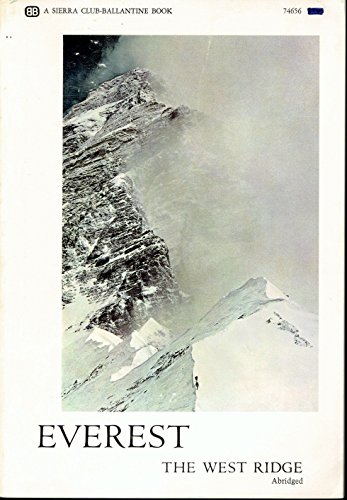
Everest: The West Ridge
Hornbein and Willi Unsoeld were on the 1963 American expedition, the one that put the first Americans on top by the regular route. The two of them wanted the West Ridge instead, which nobody had climbed and nobody knew if you could. They got a small crew, thin support, and permission that felt more like being thrown a bone. On summit day, they went up a steep couloir on the north face that now carries Hornbein’s name, topped out late in the afternoon, and then couldn’t go back down what they’d come up. So they kept going, over the top and down the other side, meeting Barry Bishop and Lute Jerstad below the summit, and the four of them sat out the night at 28,000 feet with no tent, no bags, no oxygen. Everybody lived.
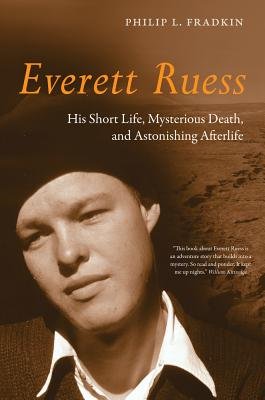
Everett Ruess: His Short Life, Mysterious Death, and Astonishing Afterlife
In November 1934, a twenty-year-old kid from Los Angeles rode two burros into Davis Gulch on the Escalante and never came out. The burros were found penned in the canyon. He wasn’t. He’d been wandering the Southwest since he was sixteen, making blockprints and writing letters home that people still quote, and on a doorsill in an Anasazi ruin he carved NEMO — Latin for nobody.
Fradkin takes the myth apart. He gets at the family that built the legend afterward, the kid’s difficulty with people, his likely homosexuality, and the plain fact that he was often reckless and sometimes a jerk. Thankfully, not another hagiography.

Everyone Knows Your Mother Is a Witch
Katharina Kepler was a widow in her seventies in a small German town, illiterate, sharp-tongued, in the business of mixing herbal remedies, and the mother of Johannes Kepler, who by then had worked out how the planets move. In 1615, a neighbor named Ursula Reinbold accused her of handing over a bitter drink that made her ill. It went from there — six years of accusations, a witchcraft trial, fourteen months chained in a cell, and her famous son coming home to write her legal defense. Galchen gives Katharina the narration, and she’s funny and stubborn and completely unaware of how bad this is going to get.
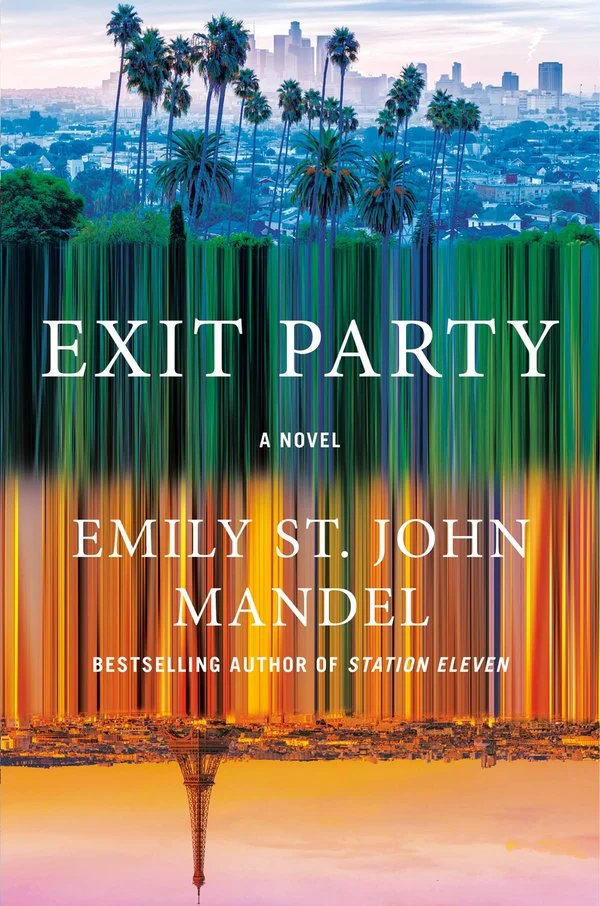
Exit Party
Los Angeles, 2031, the first spring after the United States comes apart. Peacekeepers are pulling out, the curfew just lifted, the jacarandas are blooming, and everybody in the city is going to a party. Ari Waker walks across Silver Lake past bomb dogs, Red Cross tents, and shanty towns to get to it. Inside, people are drinking and dancing. Then a man stumbles through the crowd who appears to be somebody’s exact double, walks out into the night, and Kareem, the guy throwing the party, vanishes on the spot. Ari — gunrunner, art collector, working for what’s left of the state — goes looking for an answer, and it takes her from a country at war with itself to a resort on the cliffs of Greece where arms dealers do business.
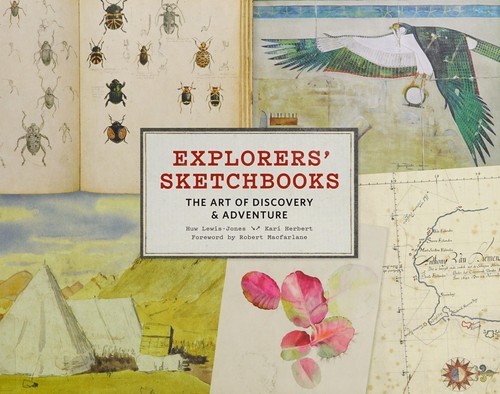
Explorers’ Sketchbooks: The Art of Discovery & Adventure
Before cameras, if you wanted to bring back what you saw, you drew it. Married couple Lewis-Jones and Herbert — he’s a polar guide and historian, she’s the daughter of the explorer Wally Herbert — pulled together seventy sketchbooks kept in the field over four centuries. Darwin. Scott, still sledging his rock samples while dying. Hillary. Thor Heyerdahl. And better, the ones nobody talks about: Adela Breton, who went into the jungles of Mexico and recorded Maya monuments nobody else bothered with; Alexandrine Tinne, who died trying to cross the Sahara; Olivia Tonge, who decided at fifty to go paint India and wasn’t asking permission. Alan Bean’s paintings of picking up rocks on the moon are in there, too. Each gets a short life, a quote, and pages of the real thing. Robert Macfarlane wrote the foreword and admits it showed him how little he knew.
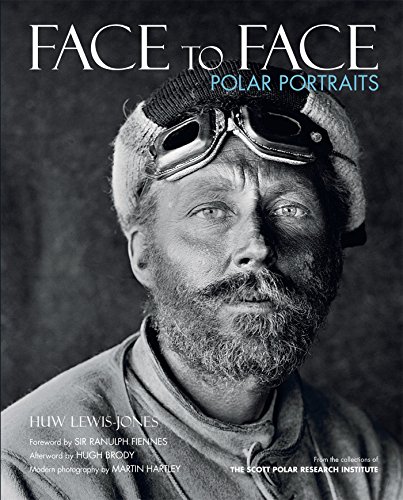
Face to Face: Polar Portraits
Polar explorer, historian, professor, and writer Huw Lewis-Jones is so prolific you will be forgiven for thinking there are two of him. In 2010, he published this book, an admiring sweep of ocean pioneers, along with a similar, companion book of mountain folks called Mountain Heros: Portraits of Adventure. Face to Face honors modern water people like surfer Kelly Slater and swimmer Lynne Cox while also plucking historical badasses from obscurity, like beloved Sir Thomas Lipton, who lost the America’s Cup five times. There are five hundred words or so of each person’s biography interspersed with intimate and action-oriented portraits, and Lewis-Jones’s British perspective brings a much more worldly array of personalities than you’d get from an American author.

Fathoms
Rebecca Giggs helped push a beached humpback back into the water off a Perth beach. It came back and she stood with the crowd while it died. What stayed with her was the question, what happens to a whale that dies where it’s supposed to, out in deep water? The answer sends the book everywhere. A body sinks and becomes an entire ecosystem, feeding animals that live nowhere else on earth. Whale song moves through a population like pop music, one season’s hit sweeping a hemisphere. Humpback milk runs pink from all the krill. There are whales down there so rare nobody has gotten around to naming them. The wonder of it all.
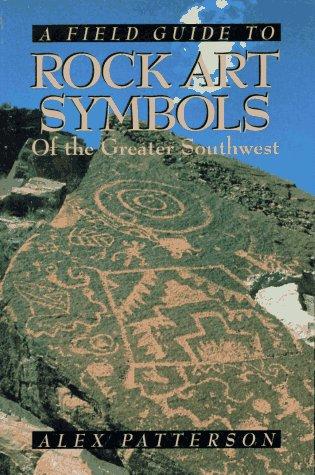
Field Guide to Rock Art Symbols of the Greater Southwest
Alex Patterson flew P-51s in the war, spent a career at IBM, retired, then went back to school and made himself an anthropologist. This came out of that second life, in 1992, and it’s still the standard — seventeen printings, 93,000 copies, and versions in the gift shops of about every national monument bookstore in the Southwest.
He gathered six hundred commentaries on individual symbols from more than a hundred archaeologists, anthropologists, and Native people, and organize the whole thing so you can actually use it standing in front of a panel. There’s a pictorial key up front and five hundred line drawings, arranged by what a figure looks like or what it might mean. Spirals, handprints, flute players, bighorns, mazes, birds, shields. He’s scrupulous about the guessing — every reading is somebody’s attribution, cited, and often two people flatly disagree on the same page.
Field Notes on Science and Nature
Anyone who’s contemplated keeping a nature journal knows the paralysis of structuring a blank book. Here, a dozen field scientists open their notebooks and give you a peek. There are George Schaller’s pages from the Serengeti lions and the pandas in Sichuan. Bernd Heinrich on ravens in the Maine woods. Kenn Kaufman’s lists from the year he hitchhiked the country chasing birds at nineteen. Anna Behrensmeyer on reading fossil beds, Jonathan Kingdon on drawing African mammals, Piotr Naskrecki on photographing insects nobody has named. Michael Canfield edited it, E.O. Wilson wrote the foreword, and the big payoff is the reproductions: eighty-seven color plates of actual pages, coffee-stained, cross-hatched, scrawled in the rain.

Fika: The Art of the Swedish Coffee Break
Fika started as slang — Swedes flipped the syllables of kaffe and got fika. It’s a coffee break, but that undersells it. It happens once or twice a day, everywhere, at every workplace, and it’s a verb: You fika with somebody. Sit down, drink coffee, eat something sweet, talk. Sweden runs near the top of the world in coffee per person and this is why. Brones writes, Kindvall draws, and they lay out the custom and then give you fifty recipes to run it — kanelbullar with cardamom in the dough, saffron buns for the dark part of winter, coconut peaks, ginger snaps, rhubarb cordial, rye bread, glögg. The illustrations do the teaching on the tricky ones, like how to twist a bun.
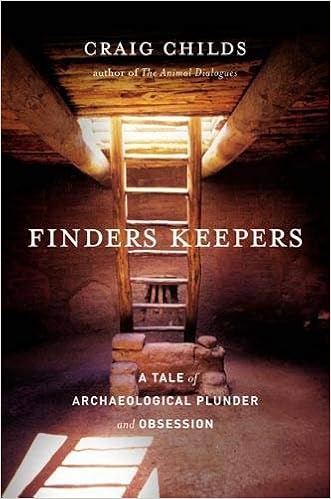
Finders Keepers: A Tale of Archaeological Plunder and Obsession
Craigs Childs walks canyons and leaves what he finds where it lies. That’s his position going in, and this book is him spending four years having it argued out of him. He sits with private collectors who have Mimbres bowls on the shelf and no apologies. He talks to museum curators sitting on warehouses of material nobody has looked at in fifty years. He’s in Blanding, Utah, after the federal raids that swept up local families who’d been digging pots for generations. He goes to Alaska, where people sell their own ancestors’ work because that’s the money there. And he owns up to his own worst act, lifting a pot from a public display and putting it back in the desert himself. Nobody comes out clean, including him, and the ground gets more interesting the longer he stands on it.
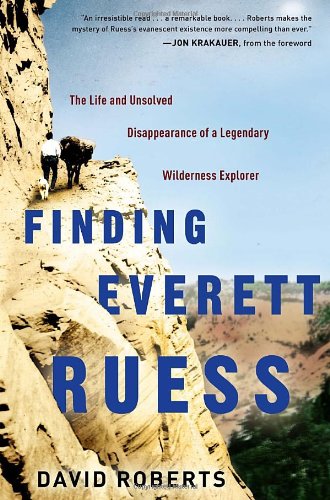
Finding Everett Ruess: The Life and Unsolved Disappearance of a Legendary Wilderness Explorer
Roberts came at Ruess for thirty years, and this book is him inside the story instead of outside it. The first half is the life: the letters, the woodblock prints, the burros, five years of a kid in his teens crossing the Southwest alone and writing home like he already knew he was building a legend. The second half turns into a detective story. In 2008, a Navajo man named Denny Bellson found a body in a crevice on Comb Ridge, matching a story his grandfather had carried since the thirties about burying a young white traveler he saw murdered.
Roberts went out, photographed the bones, and got a DNA match. Then a better lab said no — the bones were a Native man, and they’d dug up somebody’s ancestor. He writes his own part in that straight and still thinks the grandfather told the truth and they found the wrong grave.

First Lie Wins
Evie Porter is a con artist, and Evie Porter isn’t her name. She works for a man she’s never met who calls himself Mr. Smith. He hands her a town, an identity with a manufactured past that holds up to a search, and a mark, and she goes and does the job. This one is Lake Forbing, Louisiana, and the mark is Ryan Sumner, who runs a trucking company hauling more than the invoices say. She moves in with him. She also starts liking him, which was not the assignment. Then a woman turns up at a dinner party and introduces herself with Evie’s real name — the one thing she’s never let anybody touch. Elston cuts between this job and every job that got her here, and the fun is watching a professional liar get lied to.

Flesh
István is fifteen, new in town, living with his mother in a flat on a Hungarian housing estate, and he doesn’t know how to talk to anybody. The married woman across the hall, closer to his mother’s age than his, takes him on. It ends badly enough to put him in juvenile detention, and from there his life just keeps happening to him — the army, Iraq, dead-end jobs, then London, driving and guarding rich people, then marrying into that money and having it come apart. Szalay writes it stripped to nothing. István barely speaks. Whole years get skipped. You learn he’s grieving because the page goes quiet, and you learn he’s aging because he notices another man’s hair. It won the Booker in 2025, and the judges said they’d never read anything like it.

Flight to Arras
Saint-Exupéry flew reconnaissance during the collapse of France in May 1940, and this is one flight — low over Arras, through flak, to photograph German positions in a sector already lost. Everybody in the squadron knows the mission is pointless. Crews go anyway, and most don’t come back. He straps into a cold cockpit, runs through the checks, and the plane climbs, and while it does his mind goes elsewhere: to the roads jammed with refugees, to a governess from his childhood, to what a country is and what a man owes one when the thing is already finished. He was a working pilot before he was a writer, and the flying is exact — the smell of oxygen, frozen controls, the strange calm of being shot at from seven hundred meters.
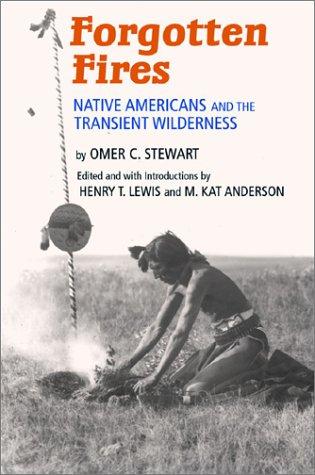
Forgotten Fires
Omer Stewart wrote this in the 1950s and nobody would publish it. His claim was that the pristine wilderness the pioneers walked into wasn’t pristine at all — Native people had been burning it on purpose for thousands of years, deliberately, in specific places at specific times of year, to move game, clear brush, favor certain plants, and keep the woods open. Prairie, oak savanna, pine forest, chaparral, the lot. That got him treated as a crank. He kept collecting evidence anyway, hundreds of eyewitness accounts from explorers, trappers, and settlers who watched it happening and wrote it down. He died in 1991. Lewis and Anderson finally published the manuscript in 2002, by which time fire ecologists had come around, and prescribed burning is now standard practice.
Four Thousand Weeks
Do the math and a normal lifespan comes out to about four thousand weeks. That’s it. That’s the whole allotment. Burkeman spent years writing a productivity column, running every system going, and finally decided the entire project is a trap. You can’t get on top of it. Getting faster just pulls in more work — empty the inbox and the world sends more email. Efficiency is a hamster wheel with better branding. His fix isn’t a better system. It’s dropping the fantasy that you’ll ever do it all, because you’re going to neglect most of what you could do no matter what, so you may as well choose what you neglect. He runs it through Heidegger and Seneca without making you eat your vegetables. Pick a few things. Do them imperfectly. Let the rest go undone. Which is permission to ignore emails (just not mine).
Fox 8
A fox teaches himself human by lurking under a window while a mother reads bedtime stories, so the whole thing comes at you in his spelling — Yuman, storys, grate. Then a mall goes up over the woods. The food disappears, the foxes scatter, and Fox 8 and his friend Dill go looking for a way to live. Saunders runs it in about fifty pages with drawings by Chelsea Cardinal, and the phonetic voice does something a straight narrator couldn’t: You’re laughing at the spelling right up until you aren’t. It ends as a letter addressed to us, and Fox 8’s ask is that if we’re going to be the ones with the mall and the bulldozers, we could at least be kinder about it.
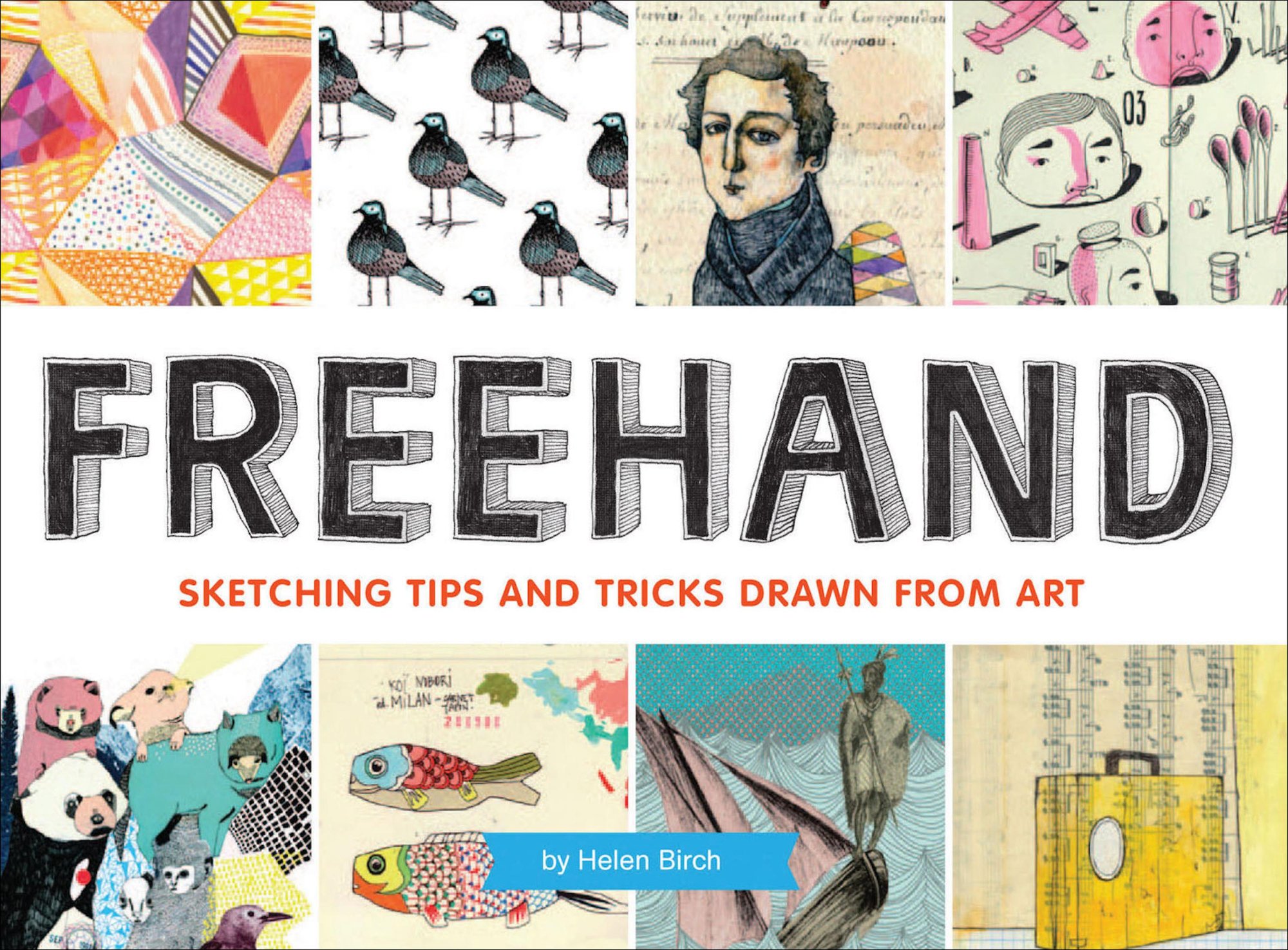
Freehand
Two hundred-plus drawings by working artists, mostly people Birch found online, each one printed with a short note on how it was done. Ball-point pen on found paper. Crosshatching with a dip pen. Gouache over a photocopy. Colored ink on graph paper. Oil pastel scraped back. She zooms in on details so you can see the actual marks, then tells you what tool made them. There’s no project to complete and no skill ladder to climb — it’s a book of other people’s solutions, arranged so you can flip to what interests you and steal it. The reference section at the back covers pencil grades, paper sizes, stretching paper, and color. It’s pocket-sized, and the point is to look at somebody’s line and think, I could try that.
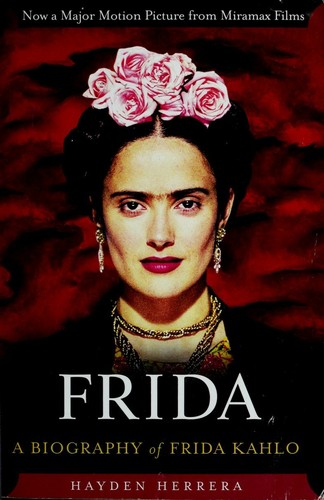
Frida
Herrera published this in 1983, when Kahlo was still mostly filed as Diego Rivera’s wife, and it’s the book that ended that. She goes back to the blue house in Coyoacán where Frida was born, the polio at six, and the streetcar that hit her bus at eighteen and put a handrail through her hip. Frida started painting flat on her back with a mirror rigged over the bed, which is how the self-portraits began — she was the model who was always available. Then Rivera, twice married and twice unfaithful, the surgeries that never stopped, the miscarriages, Trotsky. Herrera reads every canvas against what was happening the month it was made, and the paintings stop looking like symbolism and start looking like reporting.

Frida Kahlo: Her Photos
When Kahlo died in 1954, Diego Rivera turned the Blue House into a museum but had the rest of her things — clothes, letters, documents, and more than six thousand photographs — locked in the bathrooms and sealed. They stayed shut for half a century. When the storerooms were finally opened, the photo archive turned out to be the find, and Pablo Ortiz Monasterio pulled four hundred-some images out of it for this book. There’s work by Weston, Modotti, Man Ray, Muray, and Lola Álvarez Bravo, and photographs by Frida’s father, who was a professional. But the good part is what she did to them. She wrote on the backs. She cut people out. She kissed one and left the lipstick.
Gabriel’s Moon
Gabriel Dax writes travel books and doesn’t sleep. A fire took his mother and the family house when he was six, and he’s been dreaming it every night since. In August 1960, he’s in Léopoldville in the DRC and lands an interview with Patrice Lumumba, the new prime minister, who tells him on tape that certain people want him dead and then names them. Months later, Lumumba is dead in front of a firing squad and Gabriel’s tapes become the most wanted object in two intelligence services. Somebody searches his house. Then MI6 handler Faith Green turns up, ten years older, entirely in control, and starts sending him on errands he doesn’t understand. Boyd builds the whole thing on the actual assassination and the actual agencies that had a hand in it.
Ghost-Eye
It’s Calcutta, 1969. A three-year-old girl in a strict vegetarian household announces she wants fish for lunch. She’s never had it, never seen it in the house. She says she remembers another life, a mud house by a river, a different mother, catching and cooking fish. The family brings in Dr. Shoma Bose, a psychologist who studies what the literature calls cases of the reincarnation type, and what the child tells her rearranges how Bose sees the world. Fifty years on, that old case file surfaces among environmental activists, and Bose’s nephew Dinu gets pulled into the search for the woman that girl became. The trail runs to the Sundarbans, the tidal mangrove forest at the mouth of the Ganges, where the water is sacred, communal, and being eaten by industry.
Going Zero
A tech billionaire named Cy Baxter has built FUSION, a system that stitches together every camera, phone, card swipe, and database in the country and claims it can find anybody. There’s a $90 billion CIA contract riding on whether it works. To prove it, he runs a contest: Ten ordinary Americans get two hours to disappear and thirty days to stay gone, and anybody who lasts collects three million. One picks a storage locker. One builds a false room in his house. One tries to vanish into the homeless. And then there’s Kaitlyn Day, a Boston librarian picked as the easy kill, who keeps not getting caught, and who is very obviously not just a librarian. What she actually wants out of Baxter she doesn’t say until day 28.
Gold Fame Citrus
The Southwest has dried out and been evacuated, and a dune sea called the Amargosa is moving east across California, burying towns. Luz, a former poster child for the drought-relief effort, and Ray, an ex-soldier, are squatting in an abandoned starlet’s mansion in Los Angeles when they take in a strange toddler. They head into the desert looking for a colony, and find one, run by a dowser and prophet named Levi who is either a genius or a fraud and possibly both. Watkins grew up in the Mojave, and the invented natural history of the dune sea is said to be the best thing in the book.
Goodbye, Things
Sasaki was a magazine editor in Tokyo, thirty-five, living alone in a room stacked with books, CDs, DVDs, and gear for hobbies he’d quit, comparing himself to everybody and losing. So he spent a year getting rid of about ninety-five percent of it. What’s left is a two-hundred-fifteen-square-foot apartment with a wooden box, a desk, and a futon he rolls up. He’s clear that he’s no expert and no guru, just a guy who tried it, and that keeps the book from preaching. The useful part is the middle: fifty-five tips for letting go, then fifteen more for when you’ve gone further than most people.
Green
Green was hard to make and harder to keep. The dye wouldn’t hold — it faded, it shifted, it wouldn’t sit still on cloth — and medieval guilds kept the blue dyers and the yellow dyers separate by law, so you couldn’t just mix your way to it. Pastoureau’s argument is that the chemistry became the meaning. If the color won’t stay put, it gets attached to everything else that won’t: luck, chance, gambling, money, youth, love, fate. And then to poison, the devil, and treachery. He connects it from the Greeks, who might not have had a word for it, through Nero, Islam adopting it, Goethe calling it middle class and Kandinsky calling it dull, and to the reversal nobody saw coming, where the least trustworthy color on the wheel became the one that means save the planet.
Greenwood
I liked this book. The New York Times also liked it a lot. The Washington Post was a bit more cynical, but also on point. “Michael Christie’s second novel, Greenwood, makes it clear that we really want 500-page novels about trees…but even if you’re suffering from what you might call Literary Tree Fatigue, Christie’s novel is worth reading.” Careful, wouldn’t want to sprain your praise muscle.
To be fair, I did think Greenwood would much resemble Richard Powers’ The Overstory, the first third of which I adored for its lyrical tree praise and the last two-thirds of which drove me nuts for its pedantic and swampy character play. Greenwood also pulls a switcheroo, but it’s a much more coherent and enjoyable journey than Overstory. The switch is that the novel starts as a semi-dystopian, speculative, near-future narrative set in a world of ecosystem collapse. That’s what I signed up for, and that’s what I got in the beginning, with Jacinda “Jake” Greenwood, serving as a forest guide to the Greenwood Arboreal Cathedral, a coastal British Columbia refuge where some of the world’s last tall trees can be experienced—though only experienced by the few people who can afford it. Those people are preciously called Pilgrims by Holtcorp, the company that owns the island.
“On the Mainland, the Pilgrims live in opulent, climate-controlled towers that protect them from rib retch—the new strain of tuberculosis endemic to the world’s dust-choked slums, named after the cough that snaps ribs like kindling, especially in children—yet they still arrive at the Cathedral seeking something ineffable that’s missing from their lives. They’ve read that article about the health benefits of shinrin-yoku, the Japanese term for ‘forest bathing.‘ They’ve listened to that podcast about how just a few hours spent among trees triples your creativity. So they’re here to be healed, however temporarily, and if Jake weren’t mired in student debt and hadn’t embarked on such a pitifully unmarketable career as botany, she’d gladly be one of them.”
I very much wanted to follow Jake on her journey, especially when her lawyer ex-boyfriend shows up with the news that through a quirk of history and family, she might very well be the owner of this island and its rare and fragile forest, not Holtcorp. Release the hounds!
Unfortunately, for my end-days expectations at least, Greenwood’s dystopia is only the bracket for the beginning and ending of the story. In between is a twisting, gnarled rootball of family narrative. Christie takes us back to 1908, 1934, 1974, and 2008, as we get to know Jake’s father, mother, and other forebears, all of whom are fascinating, complex creatures, and, with the space they’re given, much more interesting than Jake. Of particular note is Everett, a World War I veteran with PTSD, who finds an infant in the woods of eastern Canada, where he poaches sap to make maple syrup. The baby, a girl, might be the daughter of the land owner R.J. Holt, who’s a dick, and instead of handing the baby over to authorities, Everett decides to keep her, and he goes on the run. Holt sends his fixer to find Everett, and the pursuit unfolds over years.
So, yeah, not a dystopian novel. Instead, Greenwood is a book about family, and family as destiny, and whether you can run from that destiny, or whether you want to. There’s lots of beautiful writing about wood and nature, some outlandish twists, one subplot that acts as speed bumps and another as superhighway. Greenwood didn’t win the Pulitzer like The Overstory, but in my view it’s a much more enjoyable read from start to finish—where we rejoin Jake at long last.
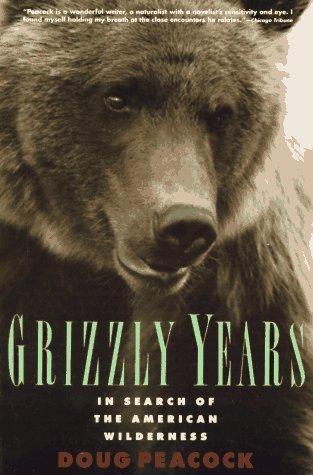
Grizzly Years: In Search of the American Wilderness
Peacock came home from Vietnam a Green Beret medic who couldn’t be around people, drove into the Montana and Wyoming backcountry, and started following grizzlies. No gun, just a camera and years of sitting still watching bears he came to know well enough to name. The book runs those two lives against each other — a bear crossing a meadow, then a village burning, then back — and his story is that the bears put him back together.
He’s clear-eyed about them, too. They aren’t symbols, they’re animals that could kill him and once nearly did. He gave Edward Abbey the model for Hayduke, and you can hear that guy in the prose, but the watching is patient and exact and nothing like a novel.
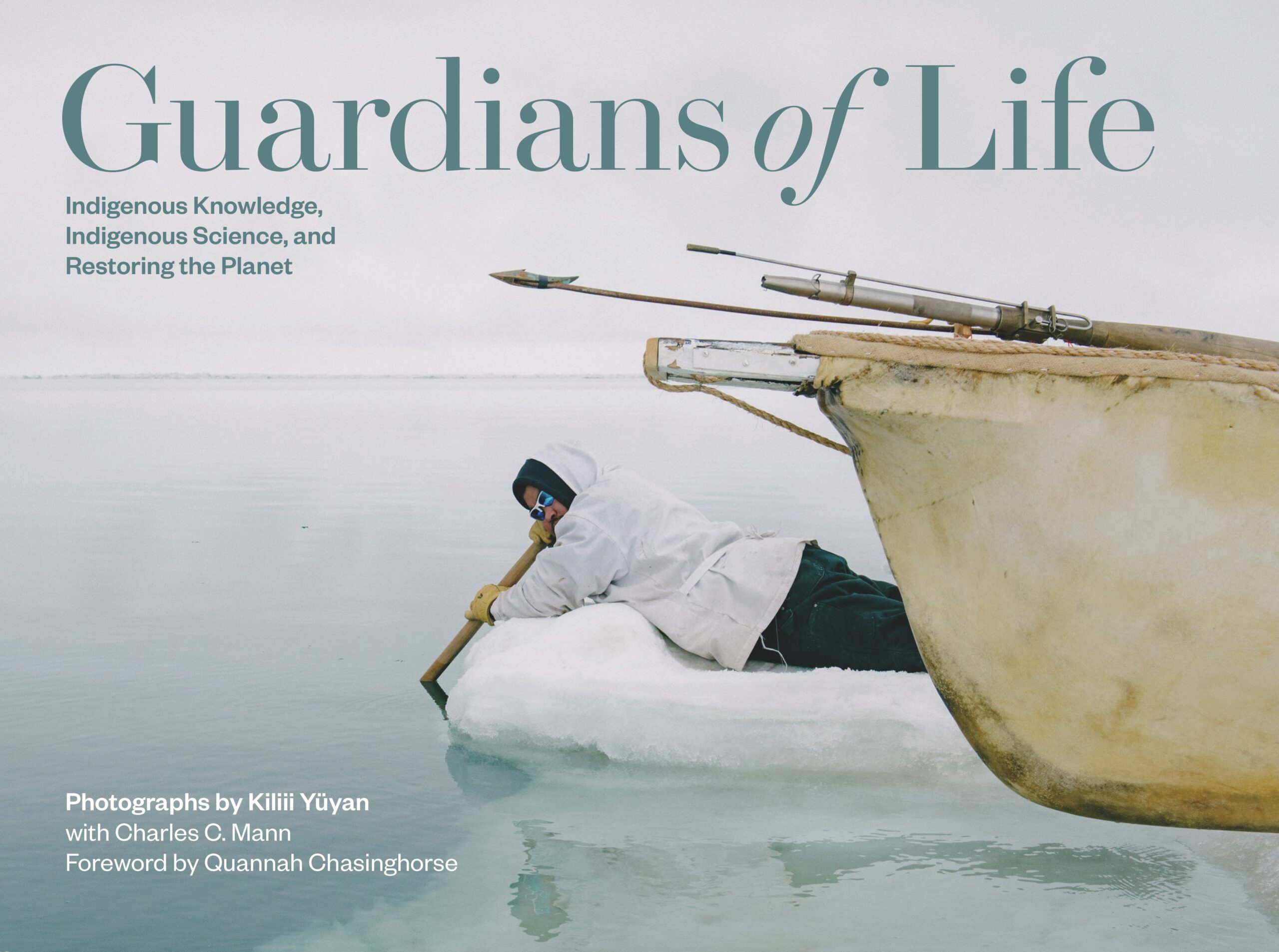
Guardians of Life: Indigenous Knowledge, Indigenous Science, and Restoring the Planet
In 1977, the International Whaling Commission banned the Iñupiat from hunting bowhead whales, a practice thousands of years old. The Iñupiat fought back in court, won the right to manage bowheads, and tripled the whale population in thirty years. Indigenous territories comprise thirty-seven percent of all remaining natural lands, reports Guardians of Life, and contain about eighty percent of the species on earth. National Geographic photographer Kiliii Yüyan has created a book-length argument for entrusting Indigenous peoples with maintaining this environmental stewardship, and I’m convinced. His nearly two hundred images from nine Native communities around the globe show humans intimately connected to their traditional lands and acutely dependent on the health of everything living there. Facts are powerful; Yüyan’s photos are more so.
H is for Hawk
A goshawk is the falconer’s hard case — bigger, faster, and less forgiving than a falcon, with a reputation for being impossible to keep steady. Macdonald had been a falconer since childhood and she bought one in Scotland for £800, in a cardboard box, and named her Mabel. Then she took her home and trained her the old way, sitting with the bird in a darkened room for hours, hand-feeding her, walking her through crowds, letting her out on a long line, and finally free over the fields around Cambridge. The book runs alongside T.H. White, who wrote The Once and Future King and also tried to train a goshawk in 1936 and made a mess of it.
Happy Bad
Beatrice is twenty-nine and works at Twin Bridge, a broke residential treatment center in a dust-blown East Texas town called Askewn, minding a floor of furious teenage girls who are on too many drugs or not enough. It’s the near future, which mostly means hotter. Then a heat wave takes the grid down for good and everybody has to get out — four staff, a van full of girls coming off their medication, cops who’ve stopped pretending, and hundreds of miles of blackout to cross. Beatrice has also been lying about something and it catches up to her on the road. Nolan writes it funny, which is a treat. All good dystopian novels should strive for moments of ROFL.
Haven
Caroline has a newborn, no sleep, and a husband who’s finally landed a job at a Big Tech outfit called Corridor, doing work he won’t talk about for money that fixes everything. He suggests a summer on Haven, the private island where Corridor people go. She says yes, thinking sun and swimming will loosen him up. What’s there instead is a very pleasant enclave where the locals don’t answer directly, three teenage girls turn up out of a pool grinning and calling her son Gabey, and there’s an undercurrent of something running underneath it all. Then the baby is gone. Katz writes early motherhood as straight horror — the exhaustion, the exposure, the way nobody sees you — and the corporate part as a religion people are glad to join.
Heartwood
How easy is it to get lost when you wander off the Appalachian Trail? Very. This extremely page-turning novel by Amity Gaige veers between the disappearance in Maine’s North Woods of thru-hiker Valerie Gillis, who is just two hundred miles from the AT’s terminus when she fails to show up for her trail support, and the people anxiously searching for her, including a determined female game warden and a cranky resident of an assisted living facility sleuthing online. Is this a simple case of taking a wrong turn in a dense forest or a criminal whodunit? Suspicion falls first on the husband (of course) and then on a secret government training base. Meanwhile, the clock is tick-tick-ticking.
Heather
Callie Hauser comes home to the New Jersey Pine Barrens as the new police chief, which in a town this size means everybody she polices knew her as a kid. She makes an arrest that looks routine and it kicks loose a case nobody has touched in thirty years: The Riley twins, sixteen, gone one day in the nineties with no trace and no answer. Mullen runs it in two timelines, the girls then and Callie now, and one of the voices comes at you in second person, which takes some getting used to and then gets under your skin. It’s slow on purpose. The Pine Barrens do a lot of the work — a million-plus acres of scrub pine and sand roads and stories, right in the middle of the most crowded state in the country.
Helpless
Faye Heron is a Hollywood screenwriter, married to her producing partner, and she owes her whole career to a film professor at the small upstate New York college she attended. He dies, she goes back for the funeral, and there’s Henry Spalding, the professor’s nephew and her college boyfriend, the relationship she got out of because it was swallowing her whole. Then it turns out the death might not have been natural, and Henry has enough on Faye to make her come with him to the family cabin for a week. What happens there is something she isn’t fully trying to escape and that’s the uncomfortable engine of the book. Knoll writes it like a nineties erotic thriller (Kathleen Turner! William Hurt!) and then delivers an ending that reframes the whole thing.
Here Kitty Kitty
Lee manages a Tribeca restaurant and runs on cocaine and pink champagne, financed by older men who buy her clothes and cover her rent. She was going to be a painter. She can’t remember the last time she touched a canvas. Her best friend has grown up and stepped away, the man she thought was it has moved to Paris, her sugar daddy is turning dangerous, and then the eviction notice comes. It’s Jardine Libaire’s first novel, from 2004, and I loved her 2023 You’re An Animal, so can’t wait to dive in.
Hidden Nations of Animals
The premise is a line from American naturalist Henry Beston: Animals aren’t underlings, they’re other nations. Huling takes it literally and spends a year mapping their territories — Canada’s beaver belt, the tunnel complexes of sub-Saharan mole-rats, prairie dog cities inside the sprawl of the American Southwest, Argentine ant supercolonies fighting border wars, migration corridors across the Eurasian steppe that work like the Silk Road. Oliver Uberti, formerly of National Geographic, drew the maps, and they reinforce the point, displaying a version of the world where the land we call uninhabited is full of settled, organized populations that were there first.

Hide and Seek: The Architecture of Cabins and Hide-Outs
The follow-up to Rock the Shack, and the pitch is in the title: Buildings you inhabit to not to be found. They’re cabins, huts, treehouses, bothies, and small retreats from around the world, shot well and presented with plans and short texts on materials and siting. Mirrored boxes in Swedish forests, black timber sheds on Norwegian rock, plywood interiors, wood stoves, one window doing all the work. Gestalten books are for looking more than reading, and this is one of the better ones for anybody sketching a small structure on a napkin.

Hold Still
Fine art photographer Sally Mann found boxes in the attic — letters, photographs, court records — and built a memoir out of what was in them. Her father the country doctor and eccentric. Her mother. Gee-Gee, the Black woman who raised her, and Mann’s reckoning with what that arrangement actually was. The Virginia farm. The controversy over the pictures of her own children, told from inside it. Her husband’s illness. A murderer who died on her land. She writes as well as she photographs and the family documents are reproduced throughout. Big fan.
Home Ground: Language for an American Landscape
A dictionary of American landscape words, written by forty-five writers instead of lexicographers. Barry Lopez and Debra Gwartney handed out the terms and let each writer define them — so Barbara Kingsolver gets some, Antonya Nelson, William Kittredge, Luis Alberto Urrea, Jon Krakauer. About nine hundred words in all: cirque, playa, hoodoo, bayou, kipuka, bench, draw, riffle, blowout, oxbow, arroyo, tinaja. Each entry gives the meaning and then where the word came from and who uses it, so you get Spanish, French, Dutch, and Native terms all sitting in the same American row.
Homesick for a World Unknown
George Schaller invented the way modern field biology is done, which was mostly to go sit with the animals for years. Born in Berlin in 1933 to an American mother and a Nazi diplomat father, shuttled through occupied countries, he came to the US as an enemy alien at fourteen. Then he spent two years living unarmed among mountain gorillas in the Congo, which turned them from monsters into a family; then Serengeti lions, Indian tigers, Himalayan snow leopards, Tibetan antelope, and parks established on four continents. He taught Jane Goodall how to watch chimps. Author Horn had his journals and letters and went into the field with him twice, and she doesn’t sand off the coldness that came with the discipline.
Hot Wax
It’s summer 1989. Ten-year-old Suzanne talks her way onto tour with her father Gil, a metal guitarist one break away from being somebody, and his band the Kills. She’s a music obsessive with a camera and no ability to play, and she watches the whole thing — the rivalry with the other guitarist, the drugs, the rooms getting bigger — until it ends in violence with her as the only witness. Twenty-nine years later, Gil dies and leaves her everything, and she walks out of a dull marriage and hits the road to find out what actually happened.
House of Leaves
A family moves into a house in the Virginia countryside and finds a closet where there wasn’t one, then a hallway, and then they measure the place and discover the inside is a quarter inch bigger than the outside. The hallway keeps growing. The book is that footage, described in a manuscript by a blind old man who may have invented the film, annotated by a tattoo shop kid who’s coming apart while he transcribes it, with footnotes fighting each other down the page. Text runs sideways, upside down, one word per page during the chase scenes, and the word house is blue everywhere it appears. It is a haunted house made out of typography, meta upon meta upon meta. There’s an entire Subreddit of people who claimed the book changed their lives, and a writer I respect deeply told me it was one of the spookiest things he’d read. Me? I thought it was trying way, way, way too hard. If there’s magic here, it’s lost on this guy.
House of Rain: Tracking a Vanished Civilization Across the American Southwest
The standard story is that the Ancestral Puebloans vanished. Childs walks the actual ground to show they moved. He starts at Chaco and follows the trail out — the great houses at Aztec and Mesa Verde, the roads, the pottery styles and masonry techniques turning up in the next valley over, then the Kayenta country, then the huge migrations south into the Mogollon Rim and Casas Grandes. Every chapter is him out there on foot in a place, with archaeologists sometimes and alone plenty, wrestling with the record. The people are the Hopi, Zuni, and Rio Grande Pueblos, who’ve said all along where they came from.

How Beautiful We Were: A Novel
How Beautiful We Were is more acutely felt than most of the real-life environmental tragedies that populate today’s headlines. A fictional eco-disaster set in the also fictional African village of Kosawa, Mbue’s second novel eviscerates the hypocrisies and externalized hungers of the fossil fuel industry and its natural resource extraction, which have become all too like the weather: always there and nothing to be done about it. But Thula, a young girl at the book’s outset, does indeed take action, leading a revolution against an oil company and its corporate lackeys. Beautiful spans generations, time blurs, and no one is rendered in simple black and white—neither capitalist colonizers nor the villagers who fight for their traditional lands. From start to finish, it’s powerful and empathetic, important, and devastating: “When we began to wobble and stagger, tumbling and snapping like feeble little branches, they told us it would soon be over, that we would all be well in no time…They told us we had to trust them.”
How Life Works
The gene-as-blueprint story is wrong and Ball’s argument is that biological science has known it for a while without saying so out loud. The human genome came in at around twenty thousand genes, fewer than a water flea, and it turned out most of them don’t map onto traits in any tidy way. What he lays out instead is a system with causation running in every direction — proteins that have no fixed shape until context gives them one, RNA doing work nobody assigned it, cells behaving as agents, whole organisms pushing back down on the molecules. It’s dense but worth it: The payoff is that life stops looking like a machine and starts looking like weather holding a shape.
How to Change Your Mind
A skeptical Michael Pollan came to psychedelics late, and in his sixties he took LSD, psilocybin, and 5-MeO-DMT under guides so he could report from inside. Around that he builds the history: The first wave of research in the fifties and sixties, Leary wrecking it, thirty years of prohibition, and the current trials at Hopkins and NYU using psilocybin for terminal-cancer anxiety, depression, and addiction. The neuroscience chapter on the default mode network is a great short explanation what the drugs appear to be doing. He’s a careful reporter working on material that makes careful reporters sound ridiculous, and he pulls it off. But you can skip his extended description of his own trip. Like someone else’s dream, it’s not remotely interesting, and no one cares.
How to Do Nothing
This isn’t a digital detox book, which Odell says up front. She’s an artist who spends a lot of time watching birds in an Oakland rose garden. Her position is that the attention economy is an economy and that refusing to give it your attention is a political act rather than a self-care one. She builds it out of odd material — the Cynics, a commune that failed, bioregionalism, David Hockney, two crows that started visiting her balcony. What she wants is attention redirected rather than withdrawn: to the place you actually live, to its history, to the people and species in it. The first time I read this book, I thought it was pudding-brained. The second time, I got it. Your attention = your time = your life. It matters.
How to Read a Tree
Every tree is a record of what happened to it. Gooley teaches you to read it: why branches on the south side grow at a different angle, how a tree leans away from prevailing wind and thickens on the windward side, what a sudden change in bark texture means, why the lowest branches on a woodland tree died and on a field tree didn’t, what root flare tells you about the soil. It’s built in short chapters, each a single sign, and you can start on the walk to the mailbox.
How to Read Nature: Awaken Your Senses to the Outdoors You’ve Never Noticed
The short, gentle one in Gooley’s run of “how to nature” books — an introduction rather than a manual, aimed at getting the senses back open. Fifteen short exercises, most taking a few minutes: Listen for the shape of a landscape in its sounds, notice where the insects are, look at what the sky is doing at the horizon rather than overhead, walk a stretch barefoot, sit still. He argues the outdoors is being consumed as scenery when it should be a relationship, and that the equipment for joining in is your five simple senses.
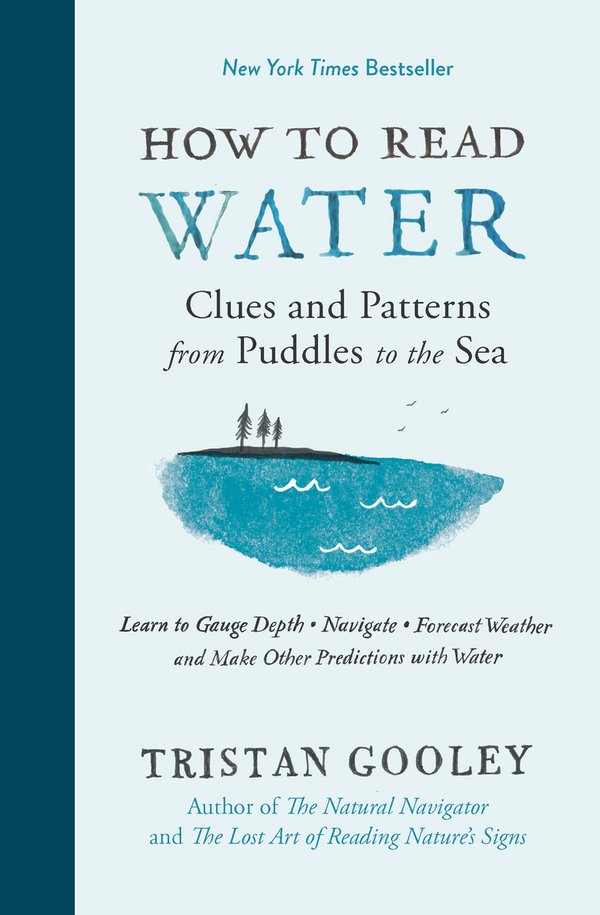
How to Read Water: Clues and Patterns from Puddles to the Sea
Water carries signs and almost nobody reads them. Gooley works through puddles, ponds, rivers, and open sea: How ripple patterns reveal wind direction and depth, how eddies mark what’s under the surface, how the color of a wave says something about the bottom, why a river’s outer bend is deeper, how Pacific navigators steered by swell patterns felt through the hull, and how to tell tide from current. There’s a stretch on reading water at night by reflected light that’s worth the book on its own.

How to Teach Nature Journaling
The companion to Laws’s Laws Guide to Nature Drawing and Journaling, and it’s built for anybody leading a group — teachers, naturalists, parents, camp staff. Forty-plus field activities with the actual instructions, timing, and prompts, all organized around three questions Laws teaches everybody to ask: I notice, I wonder, it reminds me of. The point isn’t art. It’s attention, and the drawing is a tool for slowing a kid down in front of a leaf. Free to download, aligned to school standards if you need that, and it works just as well on adults. I keep both books in the living room within easy reach.
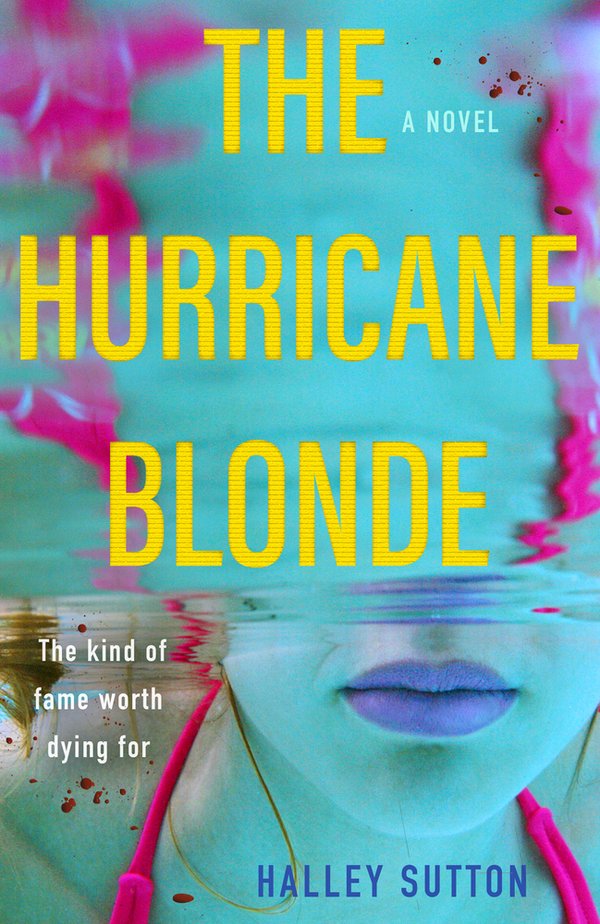
Hurricane Blonde
Salma Lowe gives celebrity death tours in Los Angeles — a van, a script, the houses where famous people died — and one of the stops is her own sister’s, a movie star found dead in 1975 at twenty-two. Then she finds a body in that house on a tour, posed the same way, and the case nobody would reopen becomes something she has to work herself. Sutton runs the old Hollywood machinery alongside the present: A studio system built on chewing up young women, a family that made its money inside it, and a sister who was never allowed to be a person.
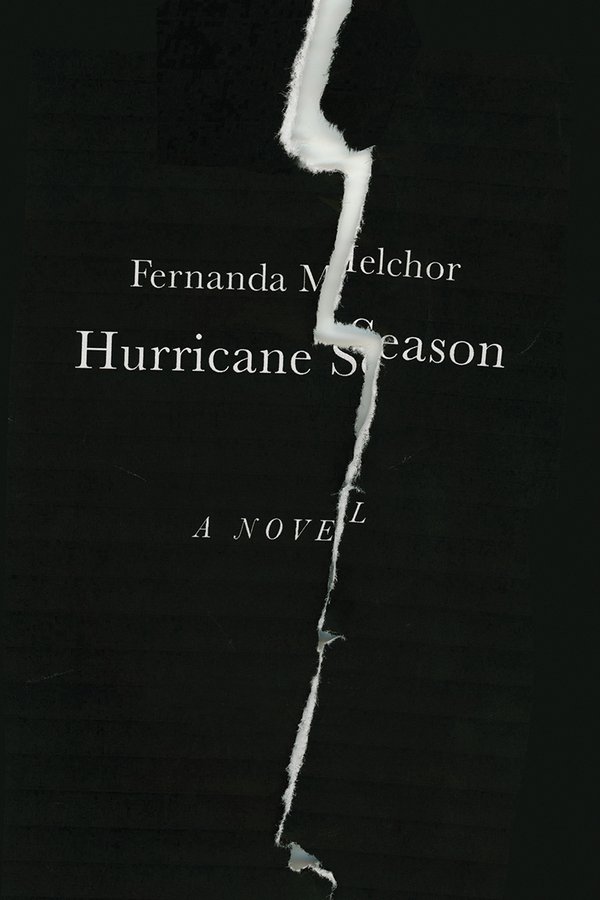
Hurricane Season
The body of the Witch is found in an irrigation canal outside a Mexican village called La Matosa, and the novel works outward from there through five people connected to the killing — a teenage girl, a boy, a mother, a man on the run. Each section is one enormous unbroken paragraph, rumor and voice and violence running together at full speed, and the language is filthy in a way the translator Sophie Hughes had to reinvent in English. It’s about poverty, machismo, and the oil towns of Veracruz, and it is one of the hardest and best novels of the last decade.

Imaginary Peaks: The Riesenstein Hoax and Other Mountain Dreams
In 1962, a climbing magazine ran a photo of an impossible range of granite spires called the Riesenstein, said to be in British Columbia, and climbers went looking for it. It was a hoax — the picture showed the Kichatna Spires in Alaska, and the man behind it wanted to see what people would do. Author Katie Ives edited Alpinist for years, and she uses the prank to get at something bigger: The blank spaces on maps, the explorers who invented ranges that didn’t exist, and what happens to climbing when there’s nothing left unlabeled. It’s half the history of mountain hoaxes, half a meditation on why we need somewhere unmapped. This is a fantastic book. Interest in climbing goes a long way to enjoying it, but isn’t necessary.

Immaculate Conception
Enka grows up on the poor side of a walled city in Florida, gets a scholarship to an elite art school, and immediately fixes on Mathilde, the prodigy everyone else is afraid to approach. Mathilde is genuinely great and genuinely fragile, and Enka makes herself indispensable. Mathilde goes to the Whitney and the Venice Biennale. Enka goes nowhere, marries into a tech fortune, and gains access to a technology called the Scaffold that lets one person inhabit another’s mind, supposedly to absorb their trauma. She uses it on her friend, to unintended consequences.
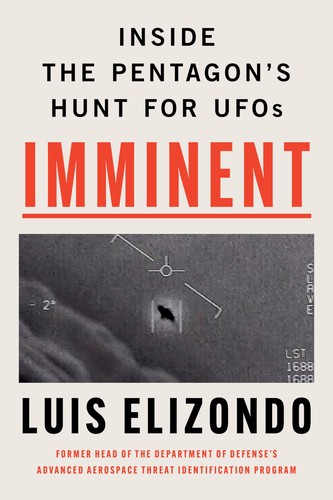
Imminent
Elizondo ran a Pentagon program on unidentified aerial phenomena, resigned in 2017, and was central to the infamous Navy UFO videos going public. This is his account. He promised more than he delivered—or, to be fair suggested more. But still. There are objects with no visible propulsion outperforming everything in the military inventory, near-misses with fighters, incursions over nuclear sites, and a bureaucracy he describes as more interested in not being embarrassed than in finding out. He’s careful about what he says he witnessed versus what he was told, and the manuscript went through Pentagon prepublication review, so the redactions are part of the reading. Whether you buy the conclusions, it’s the most credentialed firsthand account of how the subject is handled inside the building. As for Roswell, he doesn’t know personally, but someone who did told him it was real. Do with that what you will.

In Patagonia
Bruce Chatwin’s book about Patagonia is one of the great travel narratives — though what exactly it is up for debate. It’s part travelogue, part history, part fiction, part hallucination, part what the actual. Chatwin walked through Patagonia collecting stories the way other people collect stamps. Nothing quite like it exists.
In Plain Sight
Coulthart is an Australian investigative reporter with a legitimate journalism career — organized crime, war crimes, corporate fraud — and he came to the UFO subject as a skeptic. The book works through the documented material rather than the folklore: The Navy videos and the pilots who went on the record about them, the 2021 government report, the Nimitz encounters, the history of official denial, and the people inside agencies who’ve started talking. He’s straight about where evidence runs out and where he thinks he’s being played. In the years since, he’s gone further and further out on the limb, and many longtime UFO watchers argue his skepticism is kaput. I’m inclined to agree with them, but this book is from the beforetimes.
In Praise of Shadows
An essay from 1933 about what electric light did to Japanese aesthetics. Tanizaki argues that Japanese beauty was built for dimness — lacquerware designed to catch a single flame, gold leaf that only works in a dark room, the recess of an alcove, the tarnish on silver that Westerners polish off and Japanese prize. He spends several pages on the traditional toilet, seriously, as an argument about atmosphere. The whole thing is about what gets lost when a culture adopts another culture’s technology wholesale, and he’s wry about his own crankiness. It’s about forty pages and designers have been quoting it for ninety years.
In Search of the Old Ones
This book changed my life. Roberts was a mountaineer who fell hard for the Ancestral Puebloans and spent years walking to their sites in the canyons of southeast Utah and northeast Arizona — cliff dwellings on ledges, granaries, rock art panels, kivas. The book alternates his own trips with the history of the archaeology, including the Wetherills and the early looting that was indistinguishable from excavation. He argues with the professionals throughout, and the descriptions of getting into hard-to-reach ruins are unmatched. I caught the bug nearly as bad as he did, and this book is one of the reasons why. Read it? Only a half-dozen times so far.
In the Woods
In 1984, three children go into the woods outside a Dublin suburb and only one comes out, found clinging to a tree with his shoes full of blood and no memory of it. Twenty years later, that boy is Detective Rob Ryan, and nobody on the squad knows his past. Then a twelve-year-old girl is found dead on an archaeological dig at the same wood, and he catches the case with his partner Cassie Maddox and reveals nothing. This is Tana French’s debut, and it set the pattern for everything after: The murder gets solved, the detective does not.
In Trees: An Exploration
In Trees, the author of On Trails turns his attention to biology, adopting the tree as a lens to view the world and embracing “treethinking”—slow, branching, deep-rooted, long-viewed—as a path to wisdom. He pushes the idea everywhere, and the reporting earns the reach: scaling a sequoia with David Attenborough, studying Kimura’s famous bonsai garden in Japan, sleeping in a chimpanzee nest in Tanzania, then working through Alabama archives into his own family’s slaveholding past. Moor’s prose is clear, curious, unafraid of contradiction. Arborescence is the organizing metaphor, and by the fourth or fifth application—brains, evolution, race, grief—it starts to strain; not every subject wants to be a tree. But the range is his point, and this big, ambitious, generous book mostly earns its size.
Infinity Gate
A physicist in a collapsing Lagos discovers how to step sideways into parallel Earths and is immediately picked up by the Pandominion, an empire spanning a million versions of the world, run by the humans and animal-descended peoples who got there first. It’s at war with a machine civilization from another branch of the tree, and the war is going badly in ways nobody at the top will admit. Carey runs it through three characters, including a rabbit-descended soldier and a machine intelligence that becomes a person over the course of the book. Narrated from far in the future by something that says up front it was responsible for everything.
Insectopolis: A Natural History
A little context: Homo sapiens have been around for a few hundred thousand years. Insects? Four hundred million years. In this beautifully rendered, graphic-novel-style accounting of the natural history of bugs, artist Peter Kuper notes insects are perfectly happy without humans while humans without insects are toast. It’s an unsubtle reminder of who needs whom, but told with levity and wit. Dung beetles, you will be relieved to know, get special treatment, and there are cameos by Charles Darwin, Rachel Carson, and Osamu Tezuka, the father of Japanese manga, who was obsessed with bugs. If every book on science were this fun, informative, and engaging, there would be a lot more scientists. A dung beetle walks into a bar and asks, “Is this stool taken…”
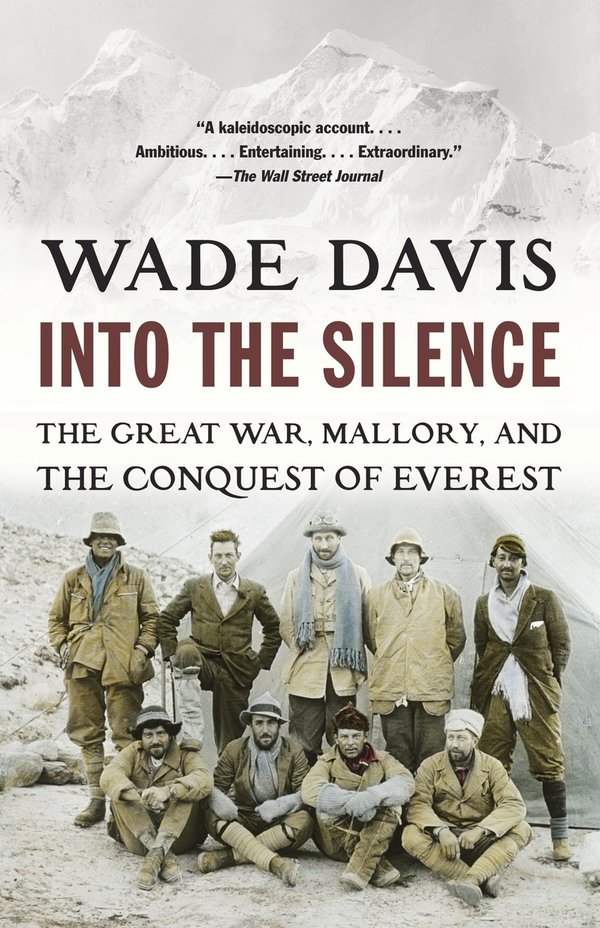
Into the Silence: The Great War, Mallory, and the Conquest of Everest
Wade Davis’s monumental history of the British Everest expeditions of the 1920s — and the World War I trauma that drove them. The climbers who went to Everest were survivors of the trenches. The mountain was where they went to feel something other than horror. It’s the definitive book on early Everest and will open your eyes to the traumatic context that frames their efforts.
Into the Wild
Chris McCandless graduated from Emory, gave his savings to charity, abandoned his car, burned his cash, and spent two years drifting the West under the name Alexander Supertramp before walking into the bush north of Denali in April 1992. He died in an abandoned bus about twenty miles in. Krakauer reconstructs the two years from the people who picked him up and grew fond of him, works through what actually killed him, and puts his own reckless young self on the page alongside. The bus was airlifted out in 2020 after too many people got in trouble trying to reach it.
Into Thin Air
Krakauer was sent to Everest by a magazine to write about the commercialization of the mountain and summited on May 10, 1996, the day a storm caught multiple teams high on the peak. Eight people died that day, including both lead guides. He wrote the book fast, partly out of the wreckage of his own account, and it is unsparing about the guides, the clients, the oxygen, the fixed ropes, the decisions made above eight thousand meters by people whose brains weren’t working. Other survivors dispute parts of it, loudly and in print, which is worth knowing. It remains the reason most people know anything about Everest.
Is a River Alive?
The question posed by the title of celebrated British nature writer Robert Macfarlane’s keenly felt study of rivers is answered in the first few pages by his nine-year-old son: “Duh.” Yet, self-evident values are not always treated self evidentally. In 1971, when law professor Christopher Stone proposed rivers and other natural elements might have legal rights, he was ridiculed. Five decades later, Ecuador became the first country to recognize these rights formally, and that’s where Macfarlane begins his search for the animating force behind running waters. As he travels from South America to India to eastern Canada and back home to England, accompanied by guides who are themselves characters, Macfarlane finds people who are radically reimagining what a river can be—and, more provocatively, exploring the exciting consequences from such revolutionary thought.
Isola
There’s little in the opening pages to suggest this 2025 novel will turn into a great adventure yarn replete with the hand-knife beheading of an attacking polar bear. It’s the early 1500s and orphaned French noblewoman Marguerite de la Rocque de Roberval is living at the whims of her cousin and protector, who steals her fortune and seems to be grooming her for marriage to himself. She is forced to sail to America aboard his colonizing ship, where she finds forbidden love with his assistant. Big mistake. The cousin abandons them on an island in the Gulf of Saint Lawrence, where they endure savage winters and face not one, but two polar bears to survive. It is indeed a yarn, and a powerful indictment of the constraints of class and gender. Not until the very end did I learn it was based on a real story.
James
Huckleberry Finn from Jim’s side, and the first thing Everett does is give him back his mind. The slave dialect is a performance the enslaved put on for white people and drop the second they’re alone — Jim teaches the children how to do it properly, like a language lesson. On his own he’s literate, has read Voltaire and Locke, and argues with them in his sleep. He runs because he hears he’s to be sold south, meets Huck on the island, and from there the river carries the same story you know with everything reweighted. It won the National Book Award and the Pulitzer, and it earns both.
Journey of Souls
The first of therapist Michael Newton’s “soul” books, from 1994, and the one that started the whole life-between-lives field. He shares twenty-nine cases, transcribed, of subjects under deep hypnosis describing what happens after death. There’s a passage, a reception by guides, a return to a soul group of familiar companions, a review of the life just lived, and eventually a choosing of the next body. What he keeps pointing at is the consistency across subjects who had never met and had wildly different beliefs. He presents it as clinical fieldwork rather than doctrine, and whether hypnosis retrieves memory or manufactures it is the question the book rests on.
Journey Without Maps
In 1935, Greene, thirty and with no relevant experience whatsoever, walked across the interior of Liberia with his twenty-three-year-old cousin Barbara, a cook, and a line of carriers, on a route where the map said nothing but “Cannibals.” They spent four weeks on foot through villages nobody outside had written about, sick most of the way, and increasingly convinced they was traveling backward in time toward something he recognized. That’s the book’s real subject — he keeps cutting from Liberia to his own English childhood and his psychoanalysis at sixteen. It’s uncomfortable in places and honest about his own condescension, and the fever passage near the end is extraordinary.
Judas 62
The second Lachlan Kite spy book, and it splits the same way the first one did. In 1993, Kite is a young officer sent into post-Soviet Russia under cover as an English teacher, running an exfiltration of a bioweapons scientist out of Voronezh — an operation that goes wrong enough that thirty years later his name turns up on a Russian assassination list called Judas. In the present, he has to go back into Russia to finish what he started, with the FSB waiting. The 1993 half is the good one: A kid in a cold country with a bad legend and no way out if it slips.
Just a Highland Fling
Neelu Pillai flies to Scotland for her estranged father’s wedding intending to keep her head down. Instead, she hooks up with a local the night before, then delivers a tipsy tirade at the rehearsal dinner that sends the bride running. So she owes her father a runaway bride and the search party is the three of them — Neelu, her father, and Jacob, the desi bagpiper from the night before. They spend several days in a car through the Highlands toward Skye, with a father-daughter reckoning going on in the back seat. Kumar builds books around situations that trap two people together, and this is her best-liked one.

Kennedy 35
This is the third Lachlan Kite spy novel. In 1995, he’s sent to West Africa to catch a war criminal from the Rwandan genocide, an operation that gets people killed and leaves a debt. In the present, the same man surfaces and the reckoning arrives with Kite’s wife and child in the middle of it. Cumming runs the two timelines against each other again, and the 1995 material — the heat, the improvisation, the young officers making calls above their rank — carries the book. He’s also honest about what Western intelligence was and wasn’t doing in Rwanda while it happened.
Kindred: Neanderthal Life, Love, Death and Art
Smug Homo sapiens have long looked down on Neanderthals, like city folk sneering at country cousins. Snort. You couldn’t even not go extinct. But these hominins have always gotten a bad rap, and Rebecca Wragg Sykes’s affectionate synthesis of a revolution in scientific understanding shows just how bad. Rather than dimwitted brutes, Neanderthals were human beings whose brains were as big or bigger than ours, who ranged from the British Isles to the Chinese border to the deserts of Arabia, who created sophisticated stone tools and developed complex adhesives such as birch tar, and who lived successfully in an ever-changing climate for more than three hundred thousand years. Oh, and interbred with Sapiens to the extent that two to three percent of our genes come from them. These people were smart, adaptable, and clever, and while there are plenty of lessons to be found in their experience (and extinction), the Kindred message that lingers longest is respect. Way overdue respect.
Kwaidan: Ghost Stories and Strange Tales of Old Japan
Hearn was Greek-Irish, went to Japan in 1890 as a newspaper correspondent, married into a samurai family, took the name Koizumi Yakumo, and spent the rest of his life there. This is the collection he’s known for — Japanese ghost stories he heard or found in old texts, retold in spare English. The blind musician whose body is covered in protective sutras except his ears. The woman of the snow who spares a young man on the condition that he never speak of her. A man who drinks a soul from a cup of water. Then an odd tail of essays on insects. Kobayashi made four of them into a film in 1964.
Landmarks
Macfarlane found that a children’s dictionary had cut words like acorn, bluebell, and kingfisher to make room for broadband and cut-and-paste, and this book is his answer. Nine chapters, each on a landscape and a writer who saw it clearly — Nan Shepherd on the Cairngorms, Roger Deakin on water, J.A. Baker on the Essex marshes — and between them, glossaries. Thousands of terms in Gaelic, Norn, Welsh, Cornish, and English dialects for particular conditions of land, water, light, and weather: A word for the sun-path on water, a word for a hollow where a hare lies. The argument is that when you lose the word you stop seeing the thing.
Lands of Lost Borders: A Journey on the Silk Road
Harris is one of the few authors whose writing stops me in my tracks (in a good way, of course). She grew up wanting to be an explorer, decided the planet was fully mapped, and went into science instead — Oxford, MIT, a plan to work on Mars. Then she rode a bicycle from Turkey to India along the Silk Road with her oldest friend, ten months, including a stretch smuggled into Tibet without permits, and changed her mind about what’s left to explore. The riding is superb — passes, headwinds, checkpoints, hospitality from people with nothing — and running under it is a real argument about borders as inventions and about why Marco Polo is the wrong model.
Last Water on the Devil’s Highway
El Camino del Diablo runs across the driest corner of the Sonoran Desert, and for centuries the only reliable water on it was Tinajas Altas — a stack of natural rock basins in a granite ravine, filled by the rare rain and holding it in the shade. Everybody who crossed depended on those tanks: O’odham, Spanish soldiers, Forty-Niners headed for California gold, surveyors, smugglers, and today migrants and the Border Patrol. The authors bring archaeology, hydrology, and the historical record together on one small place, count how much water it actually holds and how often, and read the graves below it.

Lessons in Chemistry
Elizabeth Zott is a research chemist in early sixties Southern California who is very good and gets nothing for it — no doctorate, no credit on her own work, and a lab full of men who treat her as furniture. Then, through a chain of events involving a rowing crew, a dog named Six-Thirty, and a daughter, she ends up hosting a TV cooking show and teaching the housewives of America chemistry instead of recipes, on the premise that they can think and that dinner is a chemical reaction. It’s funnier than it sounds and angrier too, with a sharper edge than the TV series starring Brie Larson.
Let My People Go Surfing
Chouinard taught himself blacksmithing to make better pitons, sold them out of the trunk of his car in Yosemite, and then discovered his pitons were wrecking the cracks, so he stopped making the thing his company was built on and switched to chocks. That decision is the whole book in miniature. The rest is how Patagonia runs: The philosophies for product, production, distribution, and management, why they went to organic cotton after seeing what a conventional cotton field smells like, why the flex-time policy that gives the book its title exists, and why growth for its own sake is treated as a failure state.
Limits of the Known
Written after a cancer diagnosis at seventy-three, and it’s Roberts taking stock of a life of risk and asking what exploration was ever for. He goes through the history — polar travel, the Amazon, the great cave systems, first ascents — and keeps turning back to his own record and to the friends who died. There’s a hard passage about a partner killed on an early climb that he had written around for decades. He doesn’t arrive at a consoling answer, and the honesty about what the obsession took from him and from others is the reason to read it. David and I talked often about him contributing to Adventure Journal, but books kept his attention, especially when he knew his time was limited. He offered us one of the most poignant sections of this book, and we published it.
Living on Earth
Third in the run that started with Other Minds, and this one widens out from mind to the whole planet. His subject is action — how living things don’t just experience the world but reshape it, from bacteria oxygenating the atmosphere to beavers to termites to us. He’s a philosopher who dives, so the argument keeps surfacing in real encounters with animals. Then he turns to the hard part: If organisms have always remade the earth, what makes our version different, and what obligations follow. It’s careful, unhurried, and free of the usual doom.
London Fields
Nicola Six knows she’s going to be murdered and sets about arranging it. She picks two candidates in a west London pub — a small-time con man and darts obsessive named Keith Talent, and a rich, gentle sad sack named Guy Clinch — and plays them both, feeding each what he needs. Narrating is a dying American writer who thinks he’s found a story he can just take dictation on. It’s 1999, the millennium is coming, something is wrong with the weather and the sun, and nobody in the book will discuss it. Amis wrote the sentences to be looked at, and the whole thing is a setup.
Make Nice
Three generations of the Pickford family land on Mackinac Island for one more week together: A snail scientist studying an invasive species, his sister on the way out of a marriage, her teenage daughter, the wayward brother, and the father footing the bill for reasons he isn’t saying. The brother has arrived with five pounds of stolen cocaine and a plan to sell it to some rich guy at the hotel, which does not survive contact with a resort full of people who want golf and fudge. It’s Effgen’s debut and he writes the island — horses, ferries, waffle cones, no cars — as carefully as he writes the family.
Making and Drawing
Cane is a British potter,and her perspective is that drawing and making are the same activity at different stages. Drawing isn’t how you plan a pot, it’s how you think about one — the loose sketch that finds the curve, the notation that records a shape you saw in water or a hillside, the marks that become surface decoration. She works through her own process from observation to finished vessel, with a lot of her sketchbook pages reproduced, and brings in other makers doing it differently. Aimed at anybody who works with their hands and has been told drawing is a separate skill they don’t have.
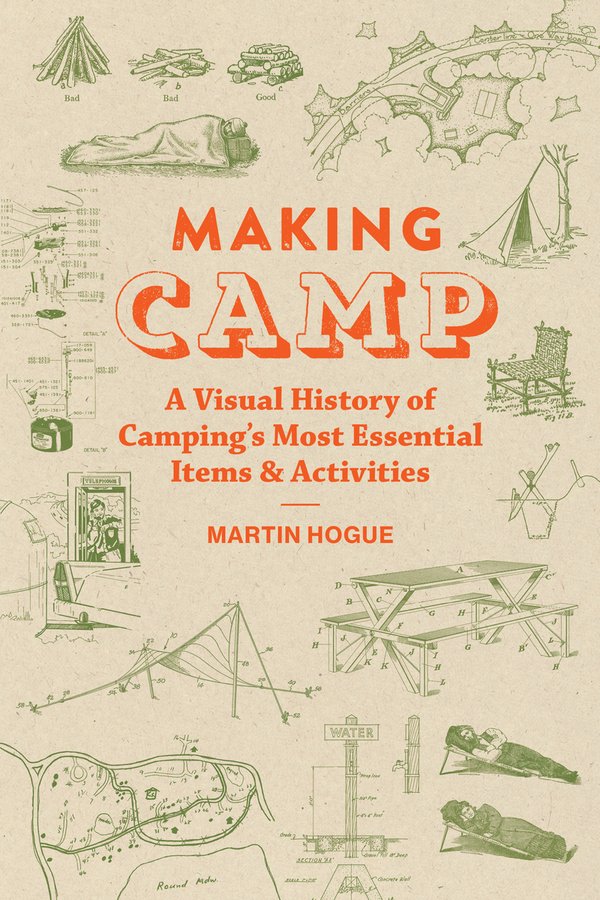
Making Camp
Hogue teaches landscape architecture and looks at camping the way an architect looks at a building — as a designed system nobody notices. The campsite with its numbered post, fire ring, picnic table, and parking spur is an invention with a history, and he traces it through patents, catalogs, park service manuals, and old photographs. The tent, the sleeping bag, the camp stove, the reservation system, the loop road: All of it engineered, standardized, and sold. It’s a visual book, dense with archival material, and it will permanently change how a Forest Service campground looks to you.
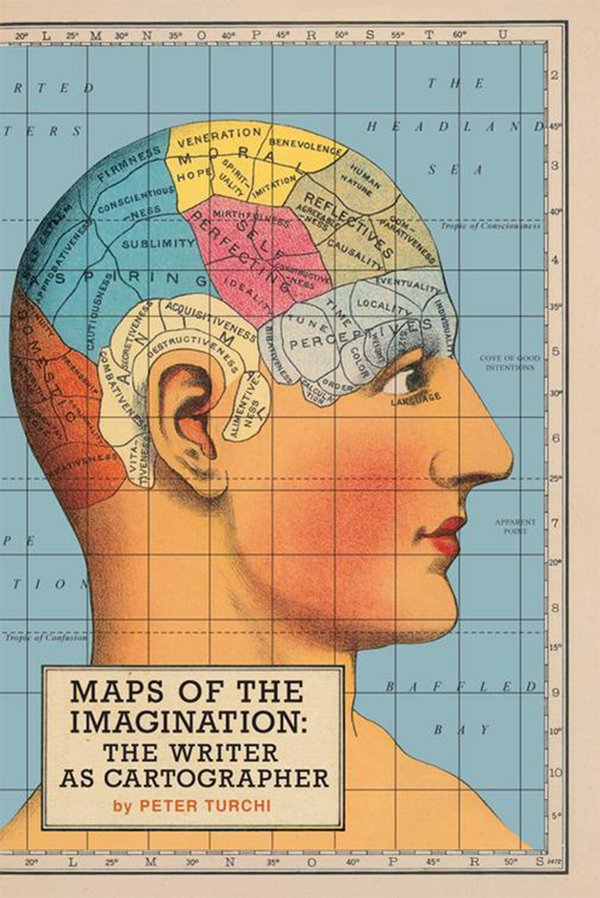
Maps of the Imagination
Turchi’s premise is that a writer is a cartographer — you decide what to include, what scale to work at, where to put the edges, and how much blank space to leave for the reader. He runs it through actual maps: Portolan charts, projections and their distortions, blank spaces marked unknown, the difference between a map that guides and a map that seduces. Then back to writing: Exposition as legend, structure as projection, the first line as the coastline you start from. It’s illustrated throughout with historic maps and it will make you think about your own drafts differently.
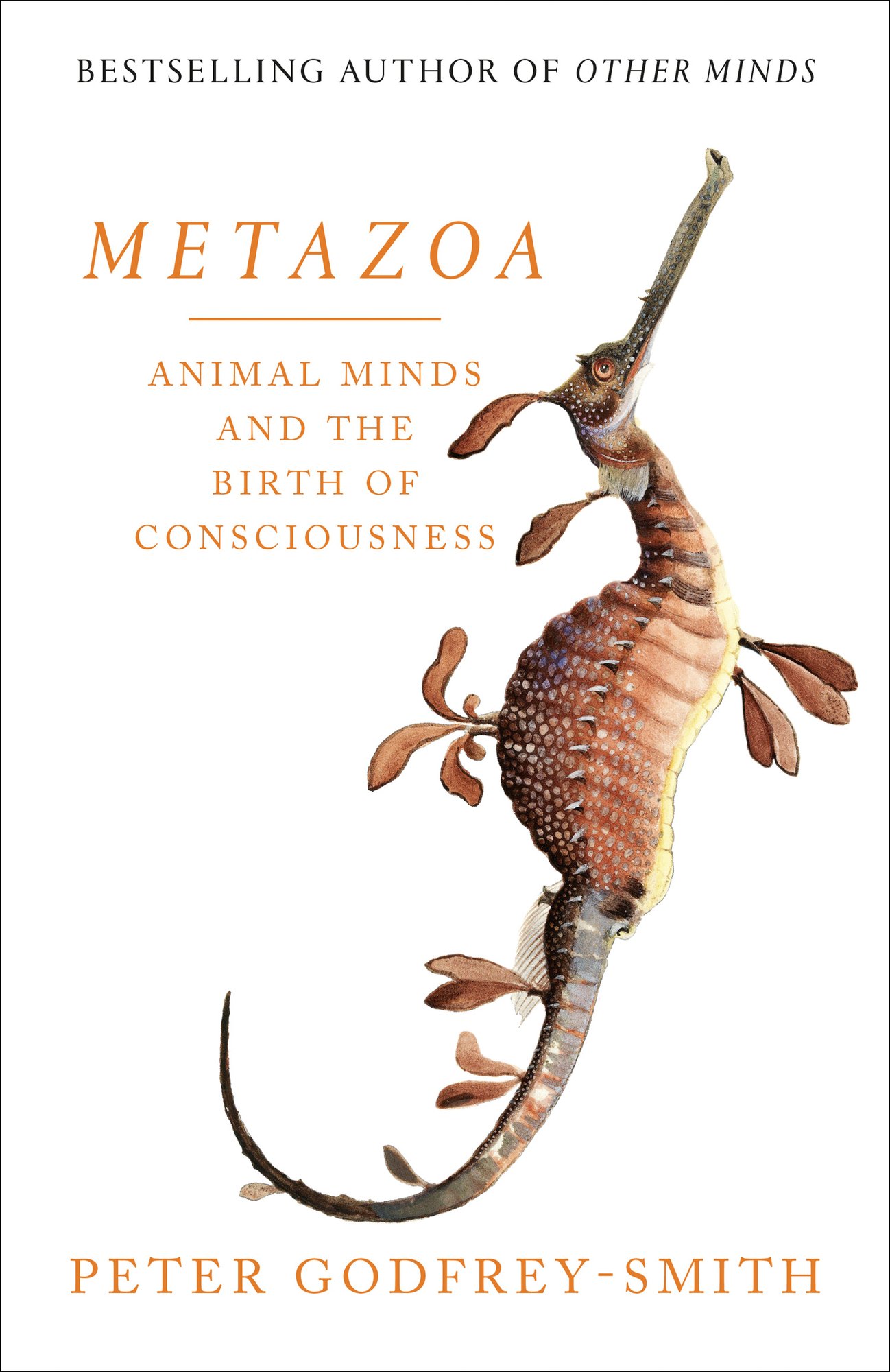
Metazoa
If Godfrey-Smith’s Other Minds was the octopus, this is everybody else. He works up the animal tree looking for where experience begins — sponges with no neurons at all, then corals, then a shrimp that stuns prey with a snap, crabs that seem to weigh a decision, fish that pass mirror tests. His question is what it takes for there to be something it’s like to be a given animal, and he refuses easy answers. The diving passages carry it: A man underwater watching a crab watch him back and trying to work out what’s happening on the other side.

Mid-Century Modern Interiors
A history of the American interior between roughly 1940 and 1970, and it’s about interiors rather than the famous chairs. Havenhand covers the designers who shaped how rooms looked and worked — Florence Knoll, Ray Eames, Alexander Girard, Van Day Truex, Dorothy Draper — and posits that interior design got treated as decoration and therefore as women’s work, which is why the men with the chair patents got the credit.
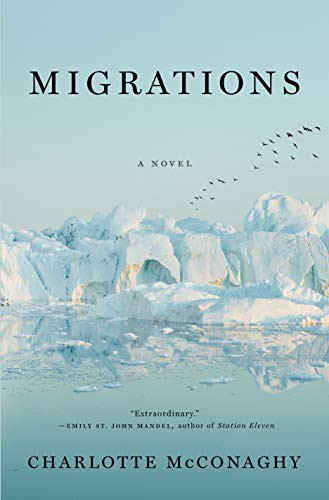
Migrations
Franny Stone talks her way onto a fishing boat in Greenland by promising the crew that the Arctic terns she has tagged will lead them to the last fish in a mostly emptied ocean. The birds are making what may be the final migration of their species, Greenland to Antarctica, and she means to follow them the whole way. Why she needs to do this, and what she left behind in Ireland and Australia, comes out slowly and is not what you assume. McConaghy writes the sea and the birds beautifully and the book is really about a woman who cannot stop leaving.

Minus 148 Degrees: First Winter Ascent of Mount McKinley
In February 1967, eight men attempted Denali in winter, which nobody had done. Three of them reached the summit late in the day, then got pinned at Denali Pass by a storm that lasted six days — no tent, in a shallow ice cave, with the wind reading beyond the instruments and the number in the title as the estimated chill. One man died lower on the mountain in a crevasse fall. Davidson was one of the three and wrote it from his own notes, and what makes it last isn’t the cold but the interior of it: The bargaining, the hallucination, and the odd calm of men waiting to find out.
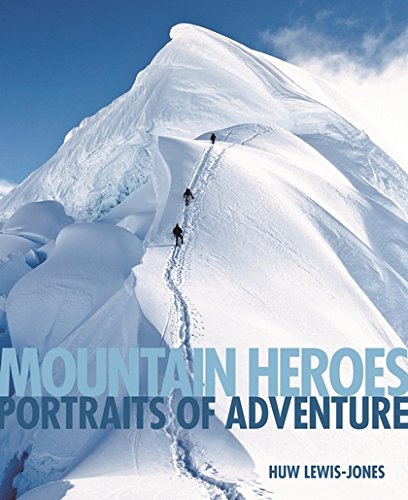
Mountain Heroes: Portraits of Adventure
Portraits of the great mountaineers — Mallory, Shipton, Tilman, Hillary and Tenzing, Bonington, Messner, Boardman and Tasker, Lynn Hill, Steve House, and others — each with photographs, a short bio, and a passage in their own words. Lewis-Jones is a polar and mountain historian and the picture research is the strength: Expedition portraits, gear, camps, faces at altitude. Reinhold Messner wrote the foreword. It’s a browsing book and a good measure of how being a climber has changed over a century.
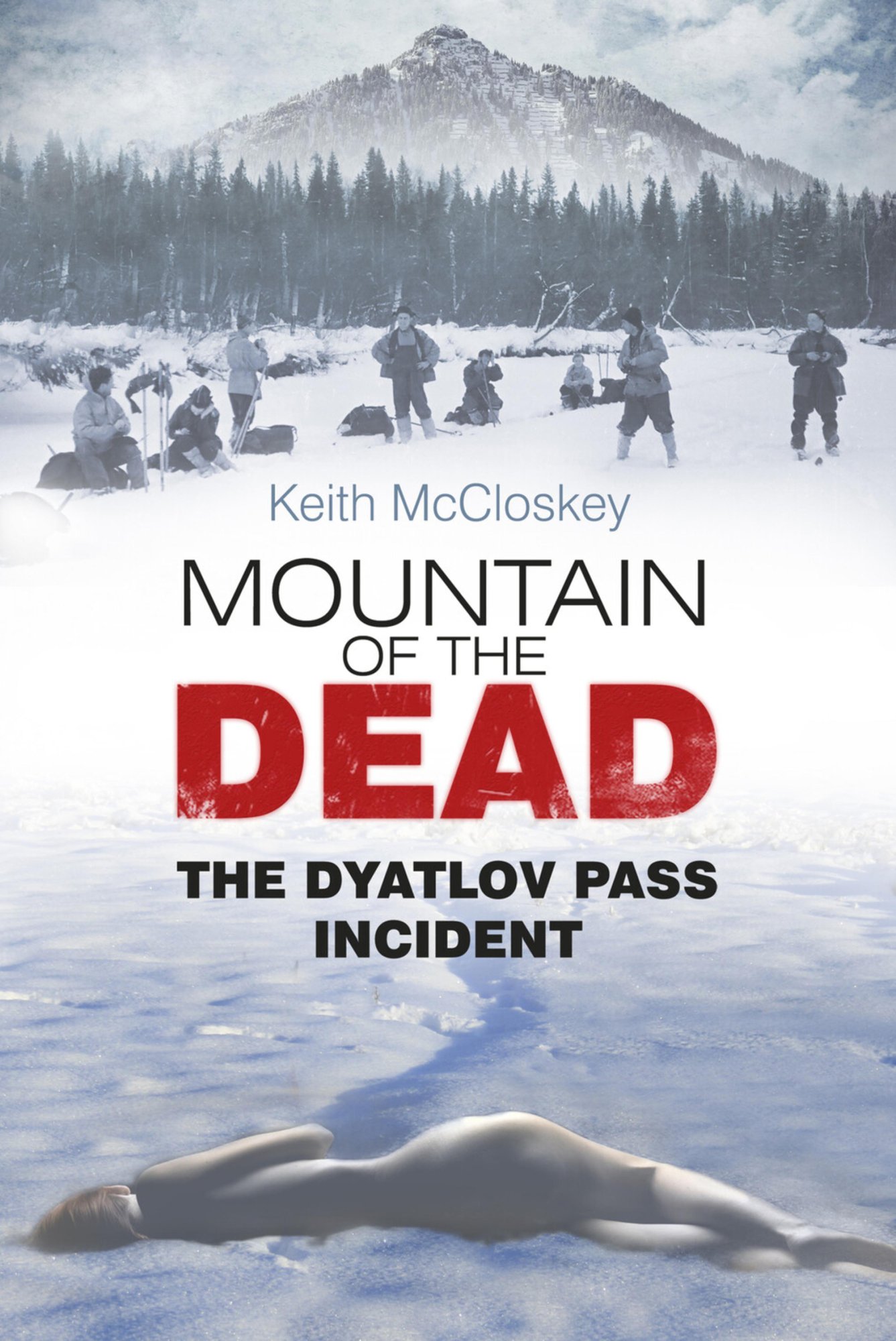
Mountain of the Dead
In February 1959, nine experienced backcountry skiers died on a slope in the northern Urals. They cut their way out of the tent from the inside and ran into a blizzard at night in bare feet and underwear. Some froze; several had crushing chest injuries and one was missing her tongue. Soviet investigators closed the file, citing a compelling natural force and sealed it. McCloskey goes through the case file, the photographs from the hikers’ own cameras, the autopsies, the search records, and the theories — avalanche, infrasound, military testing, radiation, the local Mansi — without pretending to settle it. This is the best book I’ve found on the incident—it’s fine, but William Finnegan, why don’t you report on this?
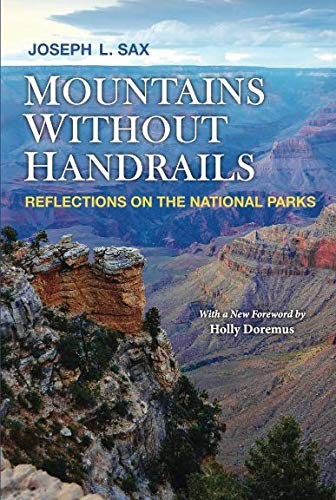
Mountains Without Handrails
Sax was a law professor, and his argument is that parks aren’t a commodity to be delivered to consumers efficiently,and that the fight over what to allow in them — helicopters, tramways, snowmobiles, developed lodges — isn’t about elitism but about whether a place will still demand anything of you. He wants parks to be a school for a certain kind of attention, where you supply your own effort and your own meaning. It was written in the late seventies and, alas, the argument was lost long ago. I’m a believer, but the people in power want wi-fi in parks, so there ya go.
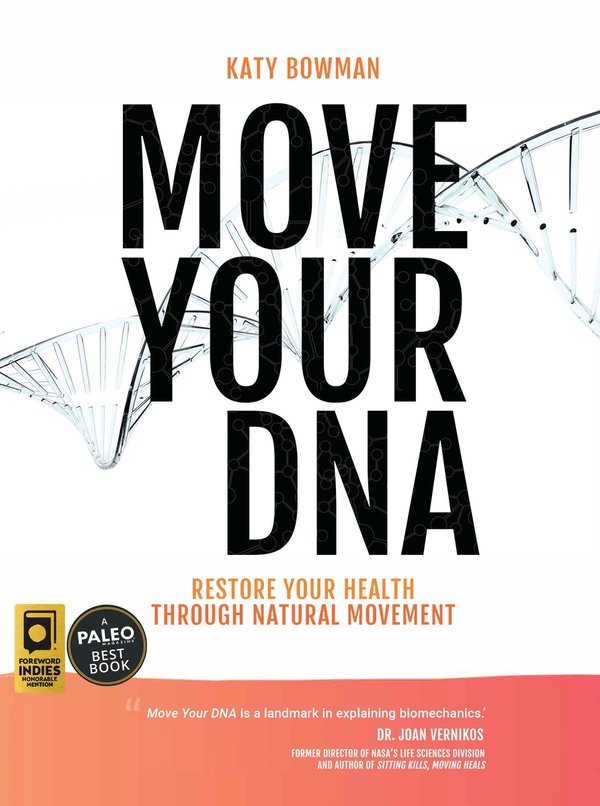
Move Your DNA
Bowman is a biomechanist, and her argument is that exercise isn’t movement. An hour at the gym followed by nine hours in a chair leaves most of your body loaded exactly the same way all day, and cells respond to mechanical load, so the shape of your life shows up in your tissue. She calls it a nutritional model: You need a varied diet of movement, not a supplement of it. So she wants you walking on uneven ground, hanging from things, squatting to rest, sitting on the floor in different positions, getting your feet out of stiff shoes. There are corrective exercises, but the real prescription is to rearrange the house and the day so movement is unavoidable.
Mystery Lights
Ten stories, most of them set in the Desert Southwest, most of them about women in situations that tilt just past ordinary. A wellness retreat that goes wrong. Influencers in a canyon. A boarding school. A woman on the road near Marfa. Valencia keeps the horror mostly offstage and the tone dry, so the unease comes from the social dynamics — hierarchy, ambition, a group deciding somebody doesn’t count — with the landscape doing the rest. Its her debut collection, and she’s very good on the specific menace of an empty road at night.
Myths about Rock Art
Bednarik is a self-taught Australian researcher with more than a thousand papers and no formal degree, and he has spent his career telling the rock art field it is making things up. This is the catalog of that. Natural cracks and mineral stains identified as engravings. Confident readings of what a figure means from people with no connection to the culture that made it. Dating methods that don’t hold. The shaman-in-trance theory applied to everything everywhere. Sensational claims that get press and never get retracted. He’s abrasive about it, and the useful part is the standard he’s arguing for: Say what you can actually demonstrate and admit that meaning is usually gone.
Names on the Land
This book outlines where every major American place name came from, told as a narrative rather than a dictionary. Stewart runs the whole sweep — Native words remade by the English, Spanish saints, French traders, Dutch New York, the Puritans naming towns for the Bible and for home, surveyors handing out numbers, boosters inventing classical names for prairie crossroads, railroads naming stations down the line alphabetically. He’s funny about the accidents: The misprints, the misheard words, the names given as jokes that stuck. It was published in 1945 and never really superseded.
Native Nations
A thousand years of Native North America told as the history of powerful nations rather than as a prelude to colonization. DuVal opens at Cahokia, the city on the Mississippi bigger than London at the time, and works forward through the great mound societies, their deliberate abandonment, and what people built afterward — Haudenosaunee, Osage, Quapaw, Mohawk, Shawnee, the Pueblos. Europeans show up a third of the way as one more factor to be managed, and they are managed, for a long time. Her point is the centuries after contact were shaped as much by Native diplomacy and strategy as by anything Europe did — and these are ongoing nations, not a closed chapter.

Nature and the Mind: The Science of How Nature Improves Cognitive, Physical, and Social Well-Being
In 2018, Florence Williams’s The Nature Fix showed the science behind some of the positive effects of the natural world on human health. Now, neuroscientist Marc Berman takes us deeper, much deeper, into the fundamental wiring proving us creatures of our environment. Berman founded the Environmental Neuroscience Laboratory at the University of Chicago, and Nature and the Mind is heavier on science than anecdote. That science is compelling. One example: His experiments show we are drawn to curved lines, differing colors, and fractals, all elements of nature. When we add those elements to our built environments—like hospital rooms with views of trees—the outcomes are overwhelmingly better for us.
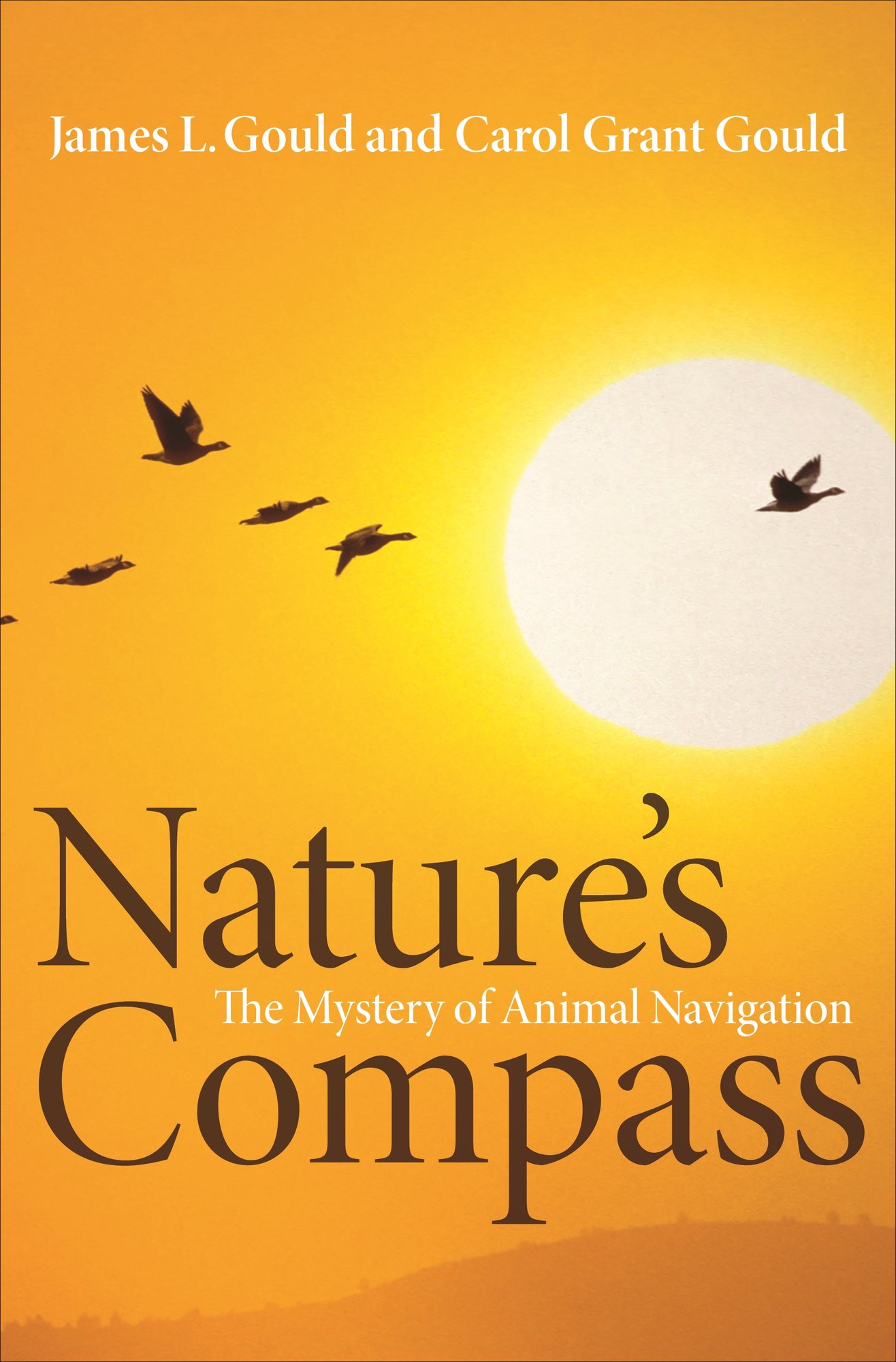
Nature’s Compass
Animals navigate better than they should be able to and we still can’t fully explain it. The authors track through the evidence: Bees using polarized light and dancing directions to a hive, monarchs three generations removed finding one Mexican forest, salmon returning to a natal stream by smell, sea turtles reading the earth’s magnetic field as a grid, birds carrying a star map and a magnetic compass and a sun compass and switching between them. It’s written as a detective story about the experiments — like, how you actually test whether a bird is using stars (you’ll probably need a planetarium).
Nearshore
A small nuclear device goes off beside a highway in West Virginia — low yield, few dead, and the first act of nuclear terrorism in history. Months later, on a rough stretch of Northern California coast, a surfer and lifeguard named Jamie Palmer responds to a boating accident that puts two people in the water. The professor drowns, the boy lives, and Palmer ends up his guardian. Then a doctoral student turns up saying she and the professor had traced a link between the bomb and a Silicon Valley megacorp and its founder. Hawk edited Surfer for eight years and lives on that coast, and the ocean in this is the real thing.
Night Flight
Saint-Exupéry flew the mail in South America, and this is the night operation: Three planes converging on Buenos Aires from Patagonia, Chile, and Paraguay, and Rivière, who’s the man on the ground sending them out. One pilot flies into a cyclone over the Andes and loses the ground, the sky, and eventually the fuel. Rivière’s position is that the mail must move, that men are made harder by being required, and that his own pity would kill more of them than the weather does. It is very short and very hard, and the flying passages are written by somebody paying close attention in the cockpit.
Night Flowers
In 1983, hikers in New Mexico’s Gila National Forest find the bodies of a woman and two children in barrels. Thirty years later, nobody has a name for any of them. Laura MacDonald, a librarian and genealogist in Connecticut going through breast cancer treatment, takes up the case as an anchor in tough times, and she works it with Jean Martinez, a Sierra County detective whose family wants her retired. The third voice in the book is the dead woman herself, telling it from the afterlife and afraid that if the killer is caught she’ll be remembered only for how she died. Herchenroether is a breast cancer survivor and that half of the book is as sharp as the mystery.
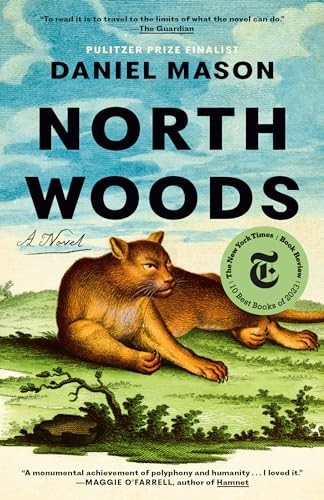
North Woods
This is the story of one house in the western Massachusetts woods, told across four centuries by everyone who passed through it. Two lovers fleeing a Puritan colony. An apple-obsessed English soldier. Twin spinster sisters. A landscape painter, a schizophrenic son, a true crime writer, a beetle, a catamount, and the trees themselves. Mason writes each section in the form of its era — letters, ballads, a case report, a nature almanac — and the ghosts accumulate without ever taking over. I was dubious at times, but when I got the full measure, I realized this is a masterpiece. The structure is nothing like Cloud Atlas, but they certainly share some DNA.
Norwegian Wood
Toru Watanabe hears a Beatles song on a plane and is thrown back to 1969, to a Tokyo university, and to two women. Naoko was his dead best friend’s girlfriend, fragile and receding into a sanatorium in the hills. Midori is alive and blunt and impossible to look away from. It’s the straight realist novel in Murakami’s body of work — no talking cats, no parallel worlds — and it’s the one that made him famous enough in Japan that he left the country. It’s sad in a very specific way about being twenty and carrying somebody else’s death.
Notes from an Island
For twenty-six years, Finnish artist and writer Tove Jansson and her partner Tuulikki Pietilä spent summers on a bare platter of rock in the Gulf of Finland, a tiny speck called Klovharun, living their dream of art and isolation. Her “notes” in Notes from an Island are as spare and polished as the rocks she collected then returned to the waters in winter. With keen observation and droll humor, she writes plainly but richly of freedom, and flower blooms, and frequent guests like her nieces, who blew soap bubbles and enlivened their cabin studio. It might be a leap to put Notes on the shelf next to Pilgrim at Tinker Creek or The Living Mountain, but not much of one.
Now I Surrender
A Mexican woman flees into the desert after an Apache raid on her dead husband’s ranch. A lieutenant colonel chasing cattle rustlers realizes he’s tracking an abduction instead. Decades on, the American and Mexican armies maneuver Geronimo toward a surrender both sides need for their own political reasons. And in the present, a writer drives the borderlands with his family looking for a truer version of all of it. Enrigue braids the four, uses different names for the same people because everybody out there had several, and makes the case that what ended in Apachería wasn’t a people so much as a kind of freedom nobody has had since. It’s an ambitious structure, with mixed results. I loved the abduction narrative. The rest of it, not so much.
Oaxaca Journal
Sacks was a lifelong fern obsessive and in 2000 he went to Oaxaca with the American Fern Society — a busload of amateur botanists, a few professionals, and him with a notebook. So the book is about ferns, but it’s also about mezcal and how it’s distilled, about chocolate, cochineal insects and the red they make, Monte Albán, the market at Tlacolula, the mathematics of zero as the Zapotecs had it, and a long riff on hallucinogenic mushrooms. He’s at his most relaxed here, traveling with people as monomaniacal as he is, and it’s nearly short enough to read in an afternoon.

Observational Sketching
Higaki is an industrial designer at Seiko, and this teaches drawing as a way of understanding how things are made. You sketch a stapler, a chair, a shoe, a coffee grinder — and the exercises push you to look for structure, joins, materials, and why a curve is where it is. There are sixty-odd short exercises, each on an ordinary object, building from line and perspective to shading, texture, and rendering different materials. It’s aimed at designers, but it works for anybody who wants to draw the actual world rather than a picture of it.
Octopus, Seahorse, Jellyfish
My Octopus Teacher might have alerted us to the idea of a novel alien intelligence beneath the waves, but nothing can prepare you for the profound diversity and unconventional beauty of octopuses, seahorses, and jellyfish seen through the lens of National Geographic photographer David Liittschwager. On facts alone, the animals astound. Sixty-five percent of an octopus’s neurons are outside their brain, in their arms. Female seahorses impregnate males. One species of jellyfish can reverse aging and start its life cycle anew. And yet, Liittschwager’s photos are even more mesmerizing than the facts. Created with a pair of condenser lenses against mostly white backgrounds, they reveal these critters in granular detail, showing an infinitude of texture and pattern, and you can’t help but ponder the consciousnesses staring back. (Except for the jellies, which have no eyes. Or brain. Or blood.) It is a marvel of a book.
Odds Against Tomorrow
Mitchell Zukor is a young math genius hired by a Manhattan firm called FutureWorld that sells corporations worst-case scenarios — for a fee, they calculate your catastrophic exposure and indemnify you against being sued for not foreseeing it. Mitchell is very good at this and privately terrified all the time. Then a hurricane floods New York exactly as he predicted, and he becomes a prophet in a drowned city, paddling a canoe through the streets. Rich published it months before Sandy, which made the reception strange, and the satire of risk as a business is sharper than the disaster.
Off the Road
Hitt walked the Camino de Santiago in the early nineties, five hundred miles across northern Spain, back when the trail was still mostly empty and the pilgrim infrastructure was a few nuns with a stamp. He is not a believer and says so, and the book is funny and a little cranky — bad feet, worse hostels, and a rotating cast of eccentric fellow walkers. Woven through is the medieval history of the pilgrimage: The relic trade, the invented bones of St. James, the guidebooks written in the twelfth century that read exactly like the ones today. It’s the book most credited with reviving the Camino among Americans.
On the Calculation of Volume (Book I)
Tara Selter, an antiquarian book dealer, wakes up and it is the eighteenth of November. It is the eighteenth of November again the next day, and the next, and it doesn’t stop. She isn’t looking for a way out and there’s no comic montage — she just keeps a record. Her husband greets her fresh every morning and she has to decide, daily, whether to explain what’s going. She moves into the spare room so he won’t find her. Food she eats doesn’t come back to the shelves, so the world is quietly being depleted by her presence. Balle, a Danish writer, planned seven volumes and spent decades on them, and the flat precision of the prose is what makes it hypnotic instead of gimmicky. Volume one was interesting. I started volume two and was pretty quickly over it. Seven? Yeah no.
On the Rez
Frazier spent years going out to Pine Ridge Indian Reservation in South Dakota with his friend Le War Lance, an Oglala Lakota man he met in New York, and the book is what that friendship showed him. Some of it is history — Crazy Horse, the treaties, Wounded Knee twice — and much of it is just riding around: broken cars, cousins, borrowed money, funerals, the economics of a place with the lowest incomes in the country. The center of it is SuAnne Big Crow, a basketball player who faced down a hostile gym in Lead, South Dakota, by walking to center court and dancing. Frazier is honest about being a white writer who keeps getting things wrong.
On the Road
Sal Paradise meets Dean Moriarty and spends the next few years crossing and recrossing the country — New York to Denver to San Francisco, down to Mexico City, back again, in borrowed cars and on buses, with no money, chasing whatever Dean is chasing. It’s barely fiction; everybody in it is somebody, with Dean being Neal Cassady. Kerouac drafted it in three weeks in 1951 on a hundred-and-twenty-foot roll of paper so he wouldn’t have to stop to change sheets, then spent six years getting it published. The prose runs hot and the book made postwar restlessness into an American style.
On Trails
Moor thru-hiked the Appalachian Trail and spent the next several years asking what a trail actually is. So the book goes from fossil traces of the first creatures to move on a seafloor, to ants laying pheromone lines and correcting each other’s errors, to elephant paths, to Cherokee routes that became highways, to the AT itself and the argument over whether it should be a wilderness corridor or a way of connecting towns, and finally to the internet as a trail system. His thesis is that a trail is accumulated intelligence — thousands of small decisions, refined by everyone who came after.
Oryx and Crake
Snowman is living in a tree, wrapped in a bedsheet, maybe the last human, looked after by a group of gentle green-eyed people who aren’t human at all and think he’s a prophet. He works backward through how this happened: a childhood inside a corporate biotech compound with his brilliant friend Crake, the gated science towns and the ruined cities outside them, the pill that everybody wanted, and the woman they both loved. Atwood built the science out of things already underway when she wrote it, which is why the pigs with human tissue and the chicken that’s only breasts don’t read as invention anymore.
Other Minds
Our last common ancestor with an octopus was a flattened worm about six hundred million years back, which makes them the closest thing to meeting an intelligent alien on this planet. Godfrey-Smith is a philosopher and a scuba diver, and he spent years at a site off Australia where octopuses gather. What he describes: skin that sees color while the eyes are colorblind, most of the neurons out in the arms so each one partly thinks for itself, animals that recognize individual people and squirt the ones they dislike. And a two-year lifespan, which is the sad puzzle at the center — all that mind, gone in a season.
Our Man in Havana
Wormold sells vacuum cleaners in Havana, has a teenage daughter with expensive tastes, and no money. The British intelligence service recruits him to spy, but having nothing to report, and no spying experience, he invents a network of agents out of the phone book and sends London drawings of vacuum cleaner parts labeled as a secret military installation in the mountains. Headquarters is so thrilled, they send him a secretary and a radio operator for support. Then people who exist only on paper start turning up dead, and the fiction becomes real. Greene had worked for MI6 and wrote Our Man in Havana as farce; surprisingly (or not), its made-up reporting is exactly what happened with the Iraq weapons-of-mass-destruction dossier in the Bush-Cheney years.
Outlive: The Science and Art of Longevity
This book was written and blew up before Attia was connected to Jeffrey Epstein. His argument — and I wholeheartedly agree — is that medicine is good at trauma and infection and bad at the four things that actually kill most people: heart disease, cancer, neurodegeneration, and metabolic dysfunction. All four build for decades before anybody screens for them, and by the time you have a diagnosis you’re playing defense. He says you should act forty years earlier, with far more aggressive testing than a normal physical gives you — which sure seems to suit his business of testing and health consultation. The exercise chapters are the strongest part, especially his insistence that grip strength, VO2 max, and stability predict how the last decade of your life goes. The bloom is off the longevity bro rose, but this still feels like an important book with a critically important message: You alone are responsible for your health and health practices. As with Breath, I return to my notes from Outlive several times a year.

Paddling North: A Solo Adventure Along the Inside Passage
Audrey Sutherland paddled a nine-foot inflatable kayak up the Inside Passage from Ketchikan, alone, in her sixties, in summer after summer until she’d done the whole eight hundred and fifty miles. No support, no motor, food she’d dehydrated herself, camping on beaches, reading tide tables and weather off the water. She kept a rule about going alone: Go simple, go solo, go now. The book is her journals and her own watercolors, and the practical detail is exact enough to plan by. She was still doing it at eighty.

Palace of Treason
Dominika is back in Moscow, promoted, and now spying for the Americans from inside the SVR while being personally noticed by Putin, who appears as himself throughout. The operational thread runs to Vienna and to an Iranian nuclear program, and the book’s tension is entirely about how long a mole that highly placed can last. Matthews keeps up the same procedural rigor and adds the internal politics of Russian intelligence — the flattery, the paranoia, the careerism — which he clearly enjoyed writing. Each chapter still ends with a recipe, which is either charming or maddening (the latter).
Parks 2
Author and photographer Brian Kelley has a huge collection of U.S. national park maps and ephemera—at least twelve hundred items. He notes, “If you just have one map, it doesn’t feel as significant. But then when you start getting this massive collection of them, it feels more like an archive.” Parks 2 is a glimpse into that archive and a celebration of more than a century of beautiful design and imagery, from the black and white days of Ansel Adams to the experimental 1960s. Over nearly four hundred pages, the book shares three hundred pieces from Kelley’s files, along with essays by Alex Honnold, Chris Burkard, and others. It’s a darn good way to launch your own archive.
Pastoralia
It’s six stories, and the title one has a man and a woman playing cave people in a theme park exhibit, required to grunt at visitors, receiving a daily goat, and filing performance reports on each other. That’s the register throughout: Ordinary Americans trapped in absurd employment, trying very hard to be decent inside systems designed to make that impossible. A male stripper living with his grandmother. A self-help seminar. A barber who fantasizes constantly and can’t speak. Saunders writes corporate language better than anyone alive and the funniest sentences here are the saddest ones.
Petroglyphs, Pictographs, and Projections
Rogers is a communication scholar, and his subject isn’t what rock art meant but what we keep doing with it. Visitor centers, guidebooks, New Age tours, corporate logos, and the shaman theory all get examined as acts of appropriation, each one projecting a set of modern needs onto marks whose makers are gone or, more often, still here and not consulted. He’s good on the difference between how archaeologists, land managers, tourists, and tribal members talk about the same panel. It’s an academic book with a plain argument: The interpretation says more about the interpreter than the rock.
Pilgrim at Tinker Creek
Annie Dillard was in her twenties, living beside a creek in Virginia’s Blue Ridge, when she spent a year writing what she saw there — muskrats, a mantis laying eggs, a frog that a giant water bug drains to a floating skin while she stands watching. She’s after god in all of it, and she doesn’t sand off the grotesque parts, because a lot of nature turns out to be parasites and appetite. Then she looks up and sees a tree lit from the inside. The prose is extraordinary. What’s hard is the seeing, and she does it for a year. It won the 1975 Pulitzer for general nonfiction.
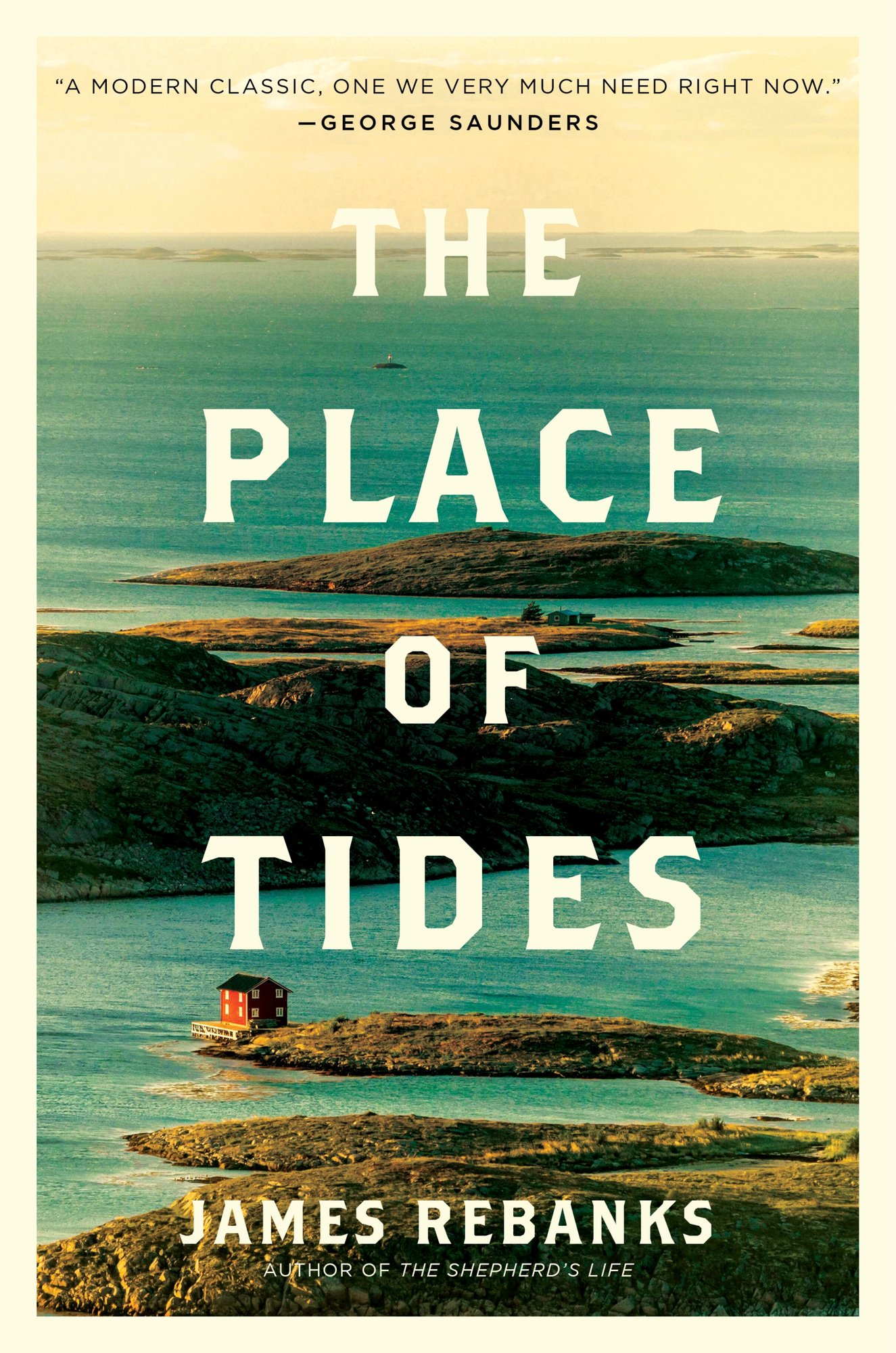
Place of Tides
Rebanks, the Lake District shepherd who wrote The Shepherd’s Life, went to a bare island off the coast of northern Norway for a season to work with a woman named Anna in her seventies — one of the last of the duckwomen, who build and tend nests for eider ducks, protect them from gulls and eagles, and after the ducklings leave collect the down. The work goes back centuries and is nearly over. He’s there to escape his own life and instead gets an apprenticeship in patience from someone who doesn’t much want the company at first.

Playground
Four lives converging on Makatea, a French Polynesian island strip-mined for phosphate decades ago and now down to eighty residents who are being asked to vote on whether a consortium can build the first floating city offshore. There’s a tech billionaire who made his fortune on a social platform and is dying; his estranged college friend, now a Black chess prodigy turned novelist; an oceanographer in her nineties who taught the world to love the sea; and a Makatean woman who came home.
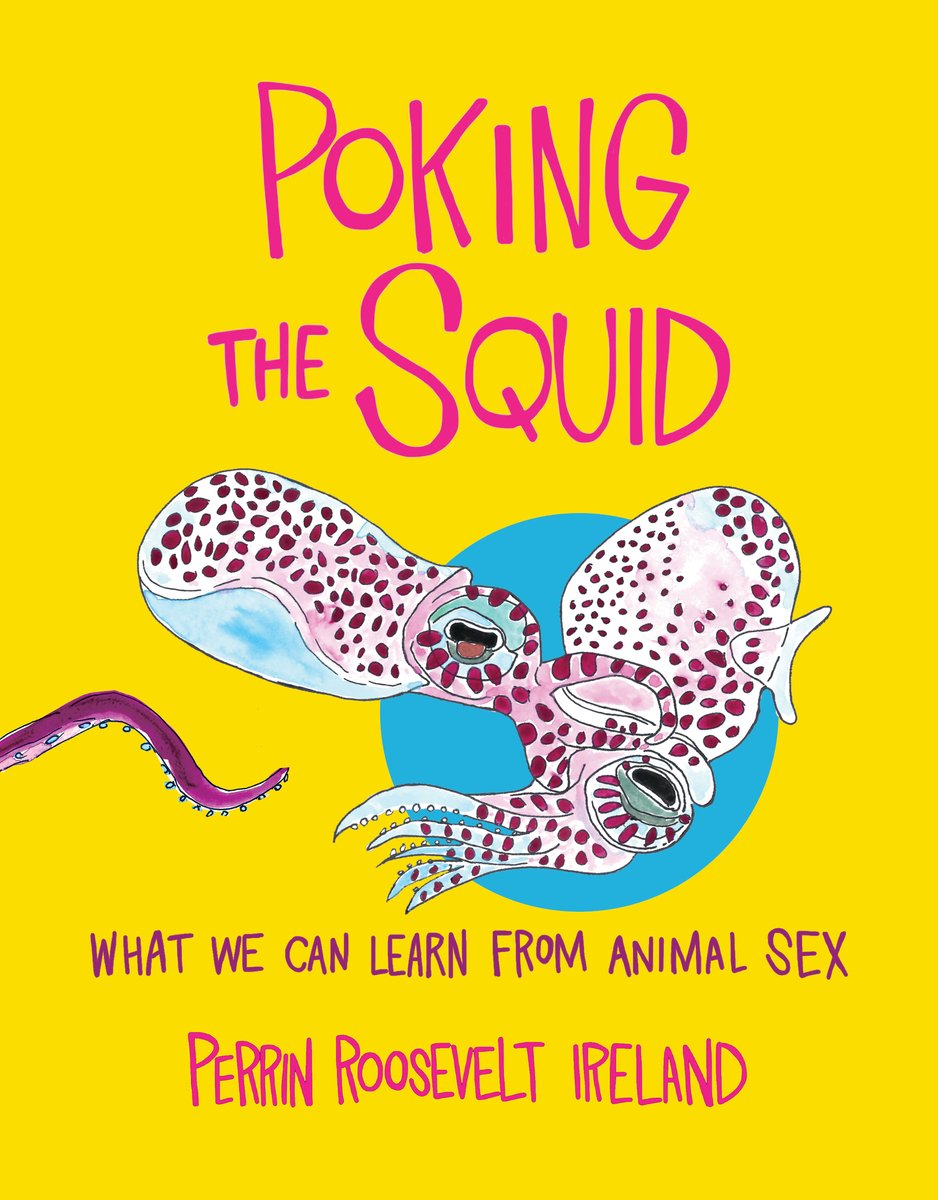
Poking the Squid: What We Can Learn from Animal Sex
Sex sells, even animal sex, and Perrin Roosevelt Ireland has made a career as a science educator by focusing on the squirts, wriggles, and wee thumps of the faunal world. Known on social media for her short dispatches on creature reproduction while hula-hooping (it does get your attention), in Poking the Squid, she reveals that the grappling and mounting of kingdom Animalia is weirder, more exotic, and maybe even more fun than anything you’ll read in the Kama Sutra. The sex puts the graphic in her graphic novel, and her watercolors and hand lettering add whimsy. Underneath all the bumping and grinding is an important message: hetero, homo, solo, whatever your bent, it’s all natural. A happy ending!
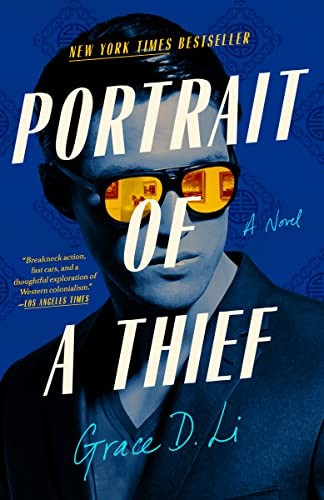
Portrait of a Thief
Will Chen is a Chinese American art history student at Harvard who witnesses a museum heist and shortly thereafter is approached by a Chinese corporation with an offer: Fifty million dollars to steal back five bronze zodiac heads looted from the Old Summer Palace in 1860 and now sitting in Western museums. He assembles a crew of five Chinese American students — a hacker, a driver, a con artist, his own sister. The heists are the frame; the book is really about the five of them, diaspora, and what it means that the objects were stolen first. It’s a caper novel with a genuine argument about repatriation underneath it—but don’t worry, the caper satisfies.
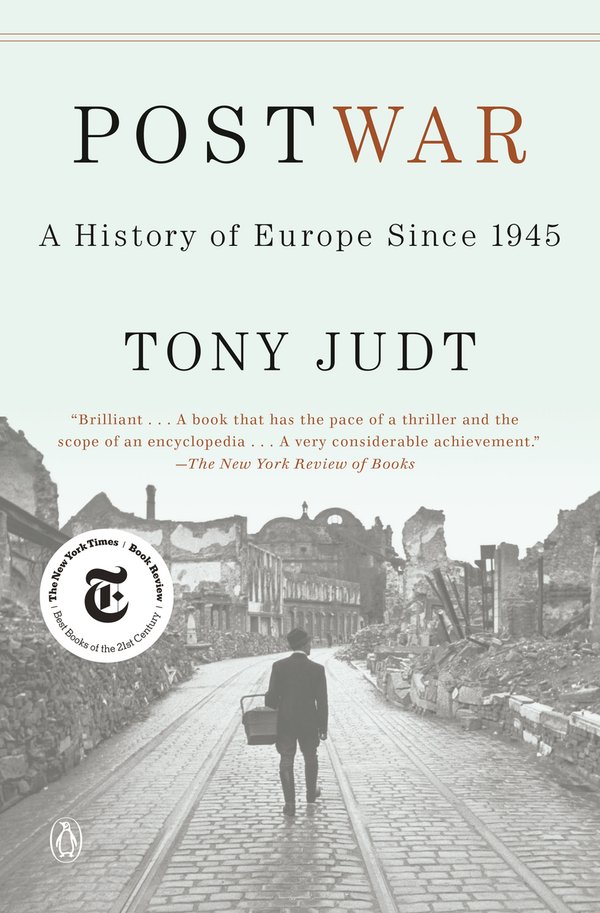
Postwar: A History of Europe Since 1945
What the title says: Europe from the rubble of 1945 to 2005, east and west given equal weight, in one nine-hundred-page volume by a historian who could actually write. The material everybody knows — Marshall Plan, Wall, 1968, 1989 — is here, but also what usually gets cut: the refugee movements of the late forties, the way each country arranged its own amnesia about collaboration, the welfare states, the cinema, the sixties as a European rather than American event, Yugoslavia. I’m gonna read it, really I am.
Prophet
Sunil Rao can tell whether any statement is true — no explanation, he just knows — and he’s been used for that by intelligence services until they got tired of his drug habit. Adam Rubenstein is the American colonel sent to collect him. They investigate a substance called Prophet that manifests objects out of people’s happiest memories, a diner appearing overnight in an English field, and the objects turn out to be lethal. It’s Macdonald’s first fiction, co-written with Sin Blaché, and it’s a queer spy thriller about nostalgia as a weapon, which is not what anybody expected after H is for Hawk.
Providence
Humans hit something in deep space called the salamanders, which killed the crew that found them, and humanity built a war fleet in response. Providence Five carries four people and an AI that does all the fighting, plotting, and deciding — the crew is aboard mostly for public relations, because the video feeds sell the war back home. So they float in a ship that doesn’t need them, doing PR posts, cracking up in different directions, until the AI stops explaining itself. Barry writes it tight and mean, and the horror isn’t the aliens, it’s being nothing but a passenger on your own mission and knowing it.
Psychovertical
Kirkpatrick spent twelve days alone on the Reticent Wall on El Capitan, one of the hardest aid routes in the world, hauling everything himself, sleeping in a portaledge, terrified most of the time. The climb runs through the book pitch by pitch, and between the pitches is the rest of his life — a dyslexic kid from Hull who couldn’t read properly, working in a gear shop, a marriage and small children he keeps leaving to go do this. He’s very funny and completely unsparing about what the obsession costs the people at home. It won the Boardman Tasker prize.
Pulphead: Essays
Here are fourteen pieces, almost all of them exemplary. Sullivan at a Christian rock festival in an RV with a group of West Virginia teenagers, at Disney World with the Real World cast, in the Ozarks with Axl Rose’s hometown. Also: The cave art of the American Southeast, Constantine Rafinesque the naturalist crank, Michael Jackson, Bunny Wailer, a hurricane, and his own brother electrocuted by a microphone and brought back. He never sneers at anybody, which in this kind of magazine writing is close to unique, and his sentences are worth reading twice.

Raising Hare: A Memoir
Dalton was a foreign policy adviser in Westminster, stranded at a country house during lockdown, when she found a newborn leveret alone on a track. Hares aren’t domesticable — they’ve never been tamed, they die of stress in captivity, and nobody had really watched one up close. So she fed it and left the door open, and it stayed, and came and went for two years, sleeping under her desk and then vanishing into the fields for days. She never named it. She never touched it more than necessary. The book is her learning to notice a hedgerow properly, and to let a wild animal set every term of the arrangement.
Ranger Confidential
Twelve years as a National Park Service ranger — Yosemite, Zion, Grand Canyon, Denali — and this is the version they don’t print in the brochure. Body recoveries below the rim, drug busts, car wrecks, search and rescue for people who ignored every sign, and the psychological arithmetic of carrying that on a seasonal wage with no housing and no pension. Lankford follows two other women rangers alongside her own story, and the book is as much about what the job does to a marriage as about what happens on the trail.

Red Sparrow
Dominika Egorova is a ballerina whose career ends with an injury, and her uncle in Russian intelligence gets her into Sparrow School, where the state trains officers in seduction as tradecraft. Her assignment is a young CIA officer in Helsinki running Russia’s most valuable mole. Matthews spent thirty-three years as a CIA operations officer, and the tradecraft is the whole appeal — surveillance detection routes, dead drops, the mechanics of recruiting a person, all of it correct and none of it glamorized. Dominika also has synesthesia and sees people’s intentions as colors, which the whole thing hangs on. Matthews goes overboard on the descriptions of her beautiful ballerina calves — we get it, we get it — but the synesthesia is a clever twist on the spy game.
Refuge: An Unnatural History of Family and Place
Two things happen at once. The Great Salt Lake rises to record levels through the mid-eighties and drowns the Bear River Migratory Bird Refuge, where Williams has watched birds her whole life. And her mother is dying of ovarian cancer, as her grandmother did, in a family full of the same cancers. The book braids them, chapter by chapter, each headed by a bird and a lake elevation. The last section is the one everybody remembers, in which she names what the family lived downwind of in the fifties. It’s the book that propelled her to a household name, and I’m not even close to partial about it, as I was with Terry in Mexico during Day of the Dead, which appears toward the end of the book.

Revelator
The Birch family has kept a covenant with something living in a cave on their mountain in the Smokies since the 1930s. Each generation supplies a girl who goes into the dark to receive from it, and Stella was the best they ever had. She got out at fifteen, and by 1948 she’s running moonshine in Chattanooga and staying away. Then her grandmother dies and she goes back to find a nine-year-old girl being prepared for the same work. Gregory grew up around that country and writes the family church, the whiskey, and the hollers straight, which makes the god in the cave land even more real than it should.
Rim to River
Zoellner walked eight hundred miles across Arizona, roughly the diagonal, and used the walk to grapple with the state he grew up in. Chapters alternate between the trail — heat, water, private land, dogs, the people who pick up a walking stranger — and essays on the things that made Arizona what it is: The Colorado River deal, the copper mines, the retirement industry, Barry Goldwater, the border, the water law, the Mormons, the sheriffs. He’s critical and affectionate at once.
River of Doubt
Despite his well-document track record of pushing beyond his physical limits and emerging from life-threatening situations mostly unscathed, Theodore Roosevelt’s journey through uncharted regions of the Amazon almost broke him. What started as a comically arrogant march through the jungle ended with TR contracting malaria, gravely injuring himself, and begging his son to leave him for dead. The book offers a revealing peek into the life and psyche of one the most spirited US Presidents.

Rock Paper Scissors
Adam and Amelia have been married ten years and give each other a gift by the traditional list every anniversary — paper, cotton, leather. She wins a weekend away in a converted chapel in the Scottish Highlands, they drive up in a snowstorm, and the place is remote, cold, and wrong. Adam has face blindness and can’t recognize his own wife. Between the chapters sit the letters Amelia has written him every anniversary and never given him, which say things she has never said out loud. Feeney builds the whole thing to a turn that makes you go back and reread the first fifty pages.
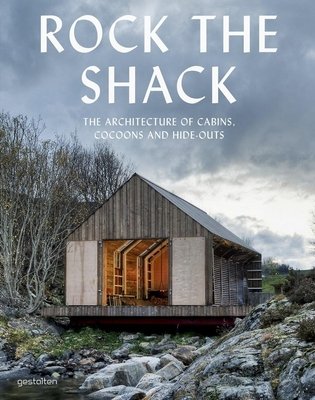
Rock the Shack: The Architecture of Cabins, Cocoons and Hide-Outs
The one that started the small-cabin publishing run. Huts, shelters, and retreats from the last couple of decades, plus a handful of older icons, arranged for browsing — forest cabins on stilts, mountain refuges, a sauna at the end of a dock, buildings that are basically one room and a view. Photographs dominate and the texts are short. Its real service is showing how many ways you can do a small building well, and how much of the effect comes from where it sits rather than what it cost.
Rope: How a Bundle of Twisted Fibers Became the Backbone of Civilization
The widespread adoption of nylon kernmantle ropes in the early 1960s revolutionized rock climbing—their ability to stretch nearly forty percent absorbed the energy of a fall, protecting climbers from rope injuries and opening the door to bold risk-taking. But as Tim Queeney, a sailor and practitioner of arcane skills (he teaches celestial navigation), reports in Rope, humans’ invention of cordage had a more profound impact on our path through time. Start with spears: Wrapping the sharp end with fibers made them stronger, leading to more kills, more protein, and the development of bigger brains. The chapter on rope and adventure is too brief, but that’s okay: Whether it was the Egyptian Pyramids, fishing, or cowboying, Queeney makes a convincing and fascinating argument we are who we are because of a few twists here and there.
Ruins
Amy Taylor is a Melbourne novelist whose first book, Search History, made The Guardian’s best-of-the-year list. Ruins, her second, drops a couple into an Athens summer. Emma and Julian are house-sitting for a friend and quietly falling apart — she wants a next chapter, he’s swallowing the collapse of his academic career. Then they meet Lena, a young Greek woman who becomes the third point of the love triangle, and the whole thing turns into a slow-motion wreck. Taylor writes heat well: the stifling city, the appetite, the power running underneath. It’s sexy, mean, and hard to put down in one sitting.
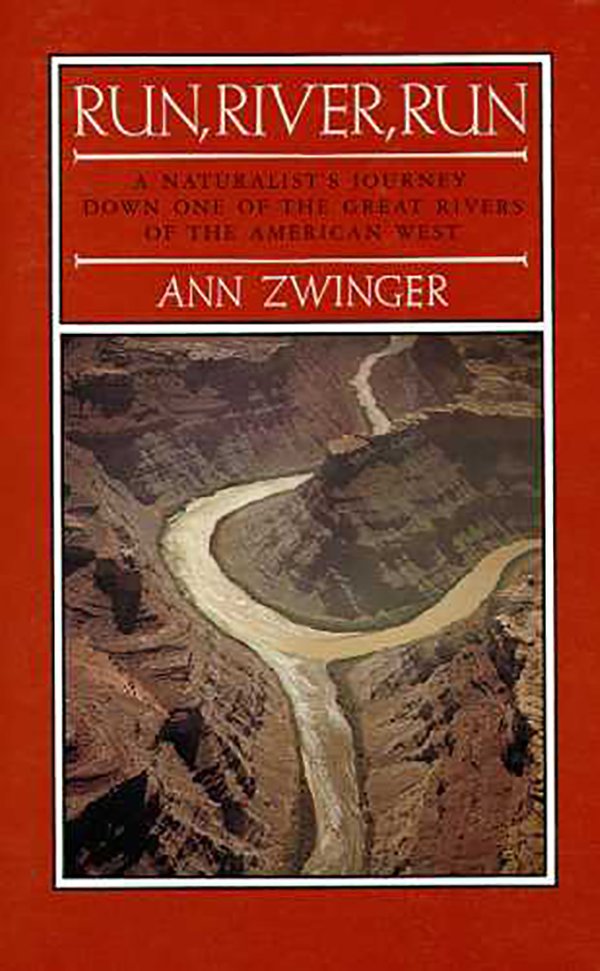
Run, River, Run
Ann Zwinger ran the Green River from its source in the Wind River Range down to its confluence with the Colorado — by kayak, raft, and on foot — and wrote the whole river as a naturalist. She covers the geology of the canyons it cuts, the plants on the banks, insects, birds, the beaver, and the history: Powell’s expeditions, the outlaws, the ranchers, the dam at Flaming Gorge that changed the water temperature and everything living in it. Her own pen-and-ink drawings run throughout. It won the Burroughs Medal and it’s a good model for how to write one river completely.
Sand Talk
Yunkaporta is an Apalech man from far north Queensland and also an academic, and the book asks what Indigenous thinking has to say about global systems — not as culture but as method. Each chapter starts with a symbol he carves or draws, and the argument runs through pattern, kinship, sustainability, story, and violence. He’s hard on the way the academy handles Aboriginal knowledge, funny about his own contradictions, and the central claim is that most of the world’s problems come from thinking in straight lines and hierarchies rather than in networks and relationships.
Sandstone Spine: Seeking the Anasazi on the First Traverse of Comb Ridge
Comb Ridge is an eighty-mile monocline running from Utah into Arizona, dense with Ancestral Puebloan sites, and nobody had ever traversed the whole thing on foot. Roberts did it with Greg Child and Vaughn Hadenfeldt — three men in their fifties and sixties, hauling water in the heat, finding ruins and panels along the way, arguing about the route and about each other. It’s an expedition book and an archaeology book at once, and the friction between three strong-willed friends on a long walk might be a good part of what makes it work. I know all of them (or, as David has passed, knew) and I can just hear the bickering. It sounded like a hell trip but it made for a solid book.
Sapiens: A Brief History of Humankind
This is the whole span of the species in one volume, organized around three revolutions: Cognitive, agricultural, scientific. Harari’s central move is that what let us take over wasn’t intelligence exactly but the ability to believe in things that don’t physically exist — gods, nations, money, limited liability companies — which lets millions of strangers cooperate. His second best line is that farming was history’s biggest con, giving us more calories, more people, and worse lives. He’s bracing, occasionally too tidy, and specialists argue with plenty of it, which is worth knowing going in. It turn him into a phenomenon for good reason and opened my eyes to how much we take for real is just made up (starting with laws).
Savage Harvest: A Tale of Cannibals, Colonialism, and Michael Rockefeller’s Tragic Quest for Primitive Art
In 1961, Michael Rockefeller, twenty-three, son of the governor of New York, disappeared off the coast of Asmat in Dutch New Guinea while collecting art. The family said he drowned. Hoffman went and lived in Asmat villages for months, worked through Dutch government and missionary archives, and came back with a detailed case that he was killed and eaten, and why — a specific reckoning for three village elders shot by a Dutch patrol years earlier. Hoffman explains the logic on its own terms rather than as savagery and is unsparing about what the Dutch and the artifact collectors were doing there.
Scenes in America Deserta
Banham was the British architecture critic who took Los Angeles seriously when nobody else would, and this is what happened when he pointed the same eye at the Mojave. He drives it, camps it, and picks at his own reaction the whole time — why does a man raised in green, wet Norwich find this country so beautiful and what does that say about him rather than about it. So you get Kelso, Death Valley, the Salton Sea, Amboy, the Marine base, roadside architecture, and a running argument with the desert writers who came before him. He’s funny, he’s a little embarrassed to be another Englishman in love with the Southwest, and he knows exactly what a Quonset hut is doing out there.
Sea People
How did humans reach every habitable island across ten million square miles of Pacific, upwind, centuries before Europeans could cross an ocean at all? Thompson takes the whole history of that question: Cook and his crews puzzling over it, missionaries, the drift theories, Heyerdahl and the Kon-Tiki, then the linguists and archaeologists, then the moment in 1976 when the Hōkūleʻa sailed from Hawaii to Tahiti with no instruments, navigated by Mau Piailug from Micronesia, one of the last men alive who knew how. She’s married into a Māori family and writes the scholarship and the seamanship with equal care.
See/Saw: Looking at Photographs
This is Dyer looking hard at photographs, mostly one at a time, mostly for a few pages each. Eugène Atget’s empty Paris streets, Dorothea Lange, Roy DeCarava, Vivian Maier, Alex Webb, Gary Winogrand, plus a long stretch on his own preoccupations — benches, hats, people asleep, the moment just before or after the thing you’d expect a photographer to shoot. He’s funny and digressive, doesn’t do theory, and mostly asks what’s happening in the frame and what happened a second later. Reading it will slow you down in front of a picture, which is the whole service.
Severance
Candace Chen works a dead-end job in New York coordinating the production of specialty Bibles in Chinese factories. Shen Fever arrives — a fungal infection that doesn’t kill people so much as lock them into repeating one familiar routine forever, folding the same shirt, setting the same table, until they starve. Candace keeps going into the empty office because her contract says to, photographs the emptying city for a blog, and eventually joins a small group of survivors led by a man who is turning into something worse than the fever. It’s a pandemic novel, an immigrant novel, and a very funny satire of work, published two years before it got uncomfortable.
Shop Class as Soulcraft
Crawford has a doctorate in political philosophy, took a think tank job, lasted five months, and quit to open a motorcycle repair shop. His argument is that we’ve built an economy that separates thinking from doing and calls that progress and that the knowledge work sold as creative is often more scripted and less accountable than fixing a bike. A wrench either works or it doesn’t. He’s good on why schools cut shop class and what that did, and better on the specific pleasure of diagnosing a fault in an old Honda when the manual is wrong and nobody can tell you the answer.
Shopping for Porcupine
Kantner was born in a sod igloo on the Kobuk River to homesteading parents and grew up hunting and trapping among Iñupiaq neighbors in northwest Alaska. This is memoir in photographs and short essays — his father’s pictures and his own — covering that childhood and what has happened to the country since: Snowmobiles, then satellite dishes, then oil money, then caribou herds and river ice behaving differently. He’s not romantic about subsistence living and he’s not sentimental about what replaced it. The photographs of his family’s life at the edge are a great reason to own it.
Silent Spring
Carson was already a bestselling nature writer when she turned her attention to pesticides, and she was dying of cancer while she finished this. The opening is a fable — a town where the birds have gone quiet — and the rest is the evidence: DDT moving up the food chain, robins dying on treated campuses, raptor eggs failing, chemicals accumulating in fat and in mothers’ milk. Her real target is the assumption that the public has no right to ask. The chemical industry came after her personally, and it didn’t stick. Her work ran in The New Yorker in 1962, prompted a presidential science advisory review, and the DDT ban and the EPA followed.
Sixty Meters to Anywhere
Leonard got sober at twenty-three after an arrest and a night in a cell, and then had to work out what a life looks like without the thing that had organized it. What he found was climbing. The book runs the two together — the drinking years told straight and without self-flattery, and then the slow apprenticeship on rock, the fear, the partners, the long drives, the first big routes. He’s the guy behind Semi-Rad and he’s funny, but this is the serious one, and the honesty about early recovery is the reason people hand it to each other.
Skies Above
A field guide to what’s over your head, written by a weather journalist for people who don’t want the math. Cloud types and what each one is telling you about the next few hours. How a thunderstorm actually organizes itself and what makes a supercell different. Hail, derechos, hurricanes, the difference between a watch and a warning and why the wording is what it is. Then the sky at night — moon halos, blood moons, aurora, meteor showers, and light pillars. It has short chapters, photographs throughout, and it makes an ordinary drive more interesting. That I still can’t tell a stratocumula from a wispy nimbus is on me, not the book.

Skinwalkers at the Pentagon
Lacatski was the Defense Intelligence Agency scientist who got the AAWSAP program funded — the predecessor to the better-known Pentagon UFO office — and this is the insider account of it. The program studied Skinwalker Ranch in Utah and the claim at the center of the book is that whatever was operating there followed investigators home, with poltergeist activity reported at their houses and, per the title, inside the Pentagon itself. It’s the strangest document in the field and it comes from people with real clearances and real budget lines. Where it goes past the evidence, it goes a long way past. Critics argue they’re just trying to sell books, but I know what books pay and no one would hang their reputation out for that little hill of beans.
Smilla’s Sense of Snow
A six-year-old Greenlandic boy falls off a Copenhagen rooftop and the police call it an accident. Smilla Jaspersen, half Inuit, half Danish, a glaciologist who fits nowhere and likes nobody, looks at the tracks in the snow on that roof and knows the boy was running from someone — because she can read snow the way other people read a page. Her investigation goes from the housing block to a shipping company to a ship bound for a glacier off Greenland with a very strange cargo. It’s a thriller, a novel about Danish colonialism, and a great cold book.
Snow Country
A wealthy Tokyo dilettante named Shimamura takes the train through a long tunnel into the mountains of Niigata, where the snow piles up higher than the houses, and stays at a hot spring inn. There he takes up with Komako, a young geisha in a town too small to support one properly. He comes back over several winters. It’s a novel about a man who feels things at a distance and a woman who doesn’t, and the imbalance is the whole tragedy. Kawabata worked on it for over a decade and won the Nobel, and the prose in Seidensticker’s translation is nearly all image.
So Far Gone
Rhys Kinnick blew up his life seven years ago and has been living off the grid in the woods of eastern Washington, no phone, no news, growing his own food and stewing. Then his granddaughter and grandson turn up at his gate having escaped their parents, who have gone deep into a militia-adjacent church, and Rhys has to come back down into a country he stopped following. Walter is funny about the whole thing — the aging radical, the sheriff, the true believers — and then gets serious about what happened to American families in the last decade. Set in his own Spokane country.
Someone in the Attic
A woman in the bath hears something above the ceiling, watches the attic hatch swing down, and a masked figure drops through. Thirty seconds later she’s dead. Across town her estranged friend Julia sees a video online of a masked figure climbing out of an attic and realizes the footage was shot inside her own house — in a gated community built specifically to keep people out. Meanwhile, her son has been saying every night that someone is up there. Mara is Irish and writes domestic thrillers that run on ordinary suburban logistics, which is what makes this one land at three in the morning when you hear a noise on the other side of the ceiling.
Southern Mail
His first book, and the roughest. Jacques Bernis flies the Toulouse–Dakar mail run down the coast of Africa, over the Spanish Sahara where a forced landing means capture, and the narrator is a friend at one of the desert waystations piecing his story together. Running through it is a woman in Paris and a life Bernis can’t have, and the flying is a way of being nowhere. Saint-Exupéry was running that exact route out of Cape Juby when he wrote it, alone at a shack of a station for a year, the source of the loneliness.
Station Eleven
An actor dies onstage during King Lear in Toronto on the night a flu arrives that will kill almost everybody. Twenty years later, the Traveling Symphony walks a circuit around the Great Lakes performing Shakespeare for the settlements that are left, because survival is insufficient. Mandel moves between the before and after, threading everything through the dead actor: His ex-wives, his oldest friend, the paramedic who tried to save him, a child actress who was onstage that night, and a homemade comic book called Station Eleven that ends up in the hands of both a young girl and a prophet. It’s a warm book about the end of the world as we know it.
Station Eternity
Mallory Viridian has a problem: People keep getting murdered around her, and she keeps solving the cases, and after enough bodies nobody wants her near them. So she moves to a sentient space station called Eternity, which is largely populated by aliens and only allows three humans aboard. Then a shuttle full of humans arrives and, guess what, the bodies start falling again. It’s a locked-room mystery set on a living station whose species-based rules Lafferty enjoys inventing — a hive that shares a mind, a rock species, symbiotic pairings — and Mallory’s actual condition turns out to have an explanation that ties the whole thing together.
Still Pictures
Malcolm spent a career taking other people apart in print and refused to write about herself, then in her eighties wrote this — twenty-odd short pieces, each triggered by a photograph from her own boxes. A Czech Jewish family that got out of Prague in 1939 when almost nobody did. A childhood in Yorkville. Her father the psychiatrist. Schoolfriends, a teacher, a first marriage. She keeps saying memoir is untrustworthy and keeps writing it anyway, and the tension is the book. It came out just after she died and it’s the least guarded thing she ever published.
Stories of the Sahara
Sanmao was a Taiwanese writer who read one article about the Sahara and moved there, marrying a Spanish diver named José and settling in El Aaiún in the Spanish Sahara in the 1970s. These are her dispatches: Building furniture out of coffin wood, running an unlicensed clinic for her neighbors out of a first aid kit, a hair-raising drive into the desert to find fossils, a wedding, the slave trade still operating next door, and the Polisario uprising arriving at her doorstep. She’s funny, nosy, and completely without the tone of a foreign correspondent. She was a superstar across the Chinese-speaking world and only reached English in 2019.
Strata
Deep time told through the layers themselves. Poppick is a science journalist and she goes to the outcrops with the geologists reading them — banded iron formations recording the moment oxygen first flooded the ocean, the black shales of a mass extinction, ice cores, the boundary clay from the asteroid. Each chapter takes one interval and one rock and works out how anybody could possibly know what happened four hundred million years ago from a striped cliff. The mass extinctions get the most room, and the parallel to what’s in the water now is left for you to make.

Summers in Squid Tickle
Finch wrote Cape Cod for forty years, then started spending summers in a Newfoundland outport called Burnside — known locally as Squid Tickle — population under two hundred, on Bonavista Bay. The book is the accumulation of those seasons: Icebergs, capelin rolling onto the beach, whales in the tickle, root cellars, weather that reorganizes the day, and a community living with the cod moratorium that ended the only industry the place ever had. He’s an outsider and stays one, and the neighbors are drawn as individuals rather than as folk. Quiet, funny, and full of the specific.
Super Natural: How Life Thrives in Impossible Places
Some critters will go a long way for a little privacy. Ten years after the Chernobyl nuclear accident, thirty-seven forms of fungi were found growing inside the abandoned reactor, some of them thriving; this led microbiologist Nelli Zhdanova and colleagues to the radical hypothesis that the fungi are using radiation for energy. British science journalist Alex Riley’s Super Natural is filled with such cases. Wood frogs in Alaska, for example, freeze solid, “the heart, brain, lungs, and digestive system are no longer part of a large whole. The frog, it can be said, has ceased to exist.” Extremophiles like this remind us life is tenacious and opportunistic—and the frontiers of science lie in places most of us can’t, or won’t, go.
Super Sad True Love Story
A near-future America where everyone wears an äppärät around their neck broadcasting their credit rating and screwability to everyone in the room, the dollar is pegged to the yuan, and the country is being run into default by a party called Bipartisan. Lenny Abramov is thirty-nine, works selling life extension to high-net-worth clients, still reads paper books, which people find disgusting, and is in love with Eunice Park, twenty-four, who communicates entirely in text streams. Shteyngart wrote it in 2010 and got the tone of everything that followed almost exactly right. It’s a comedy and it’s about a man who is going to be left behind.
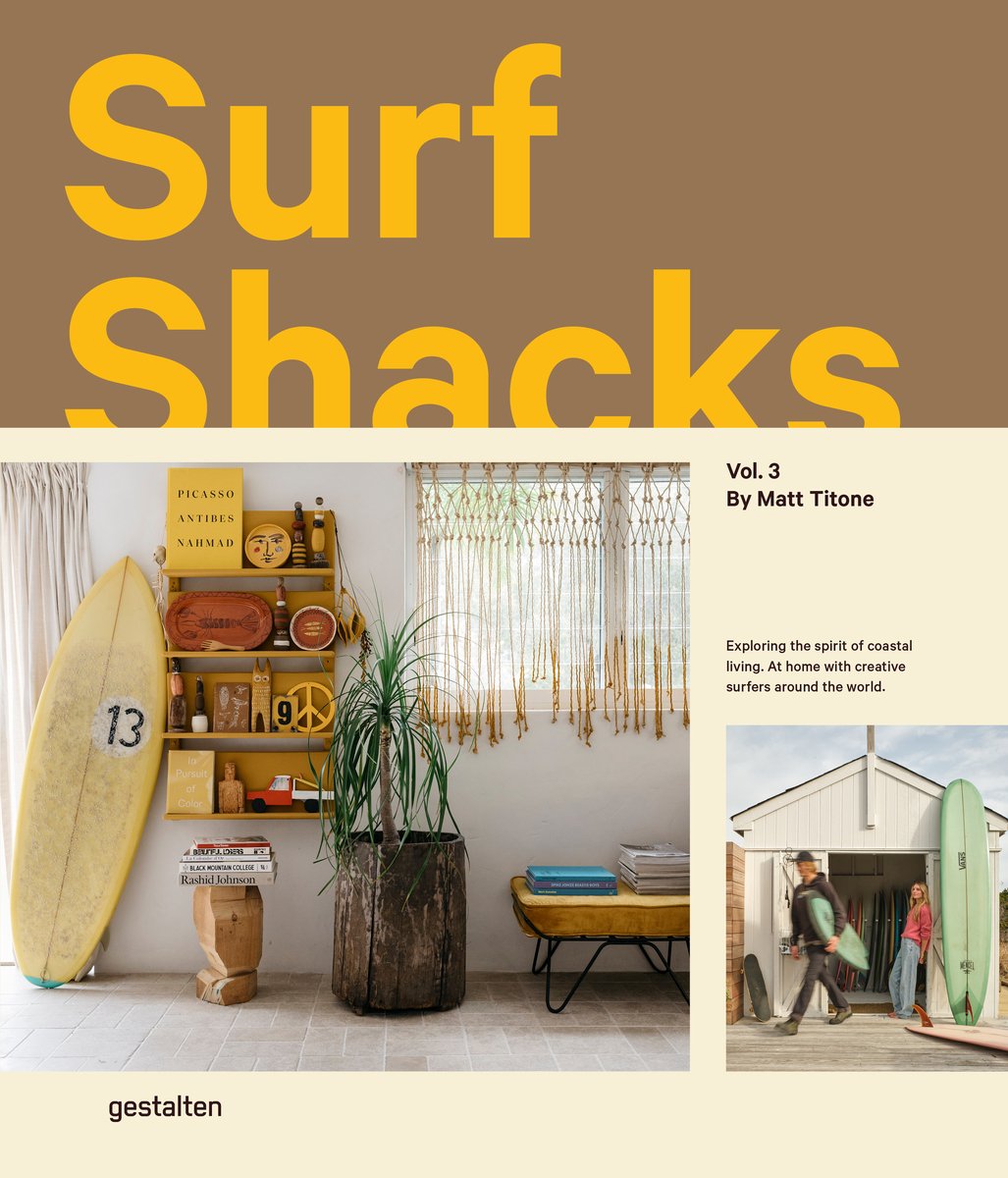
Surf Shacks Vol. 3
No matter how swanky the houses in the third iteration of Gestalten’s addictively voyeuristic Surf Shacks series, you know there’s sand on the floor—maybe not in the luscious pictures, but just before or after. What distinguishes these forty homes, from Leucadia to Ericeira to the North Shore, is that their style grew from the inside out. No designer imposing a concept—just bare wood and weathered boards, maritime trinkets, shelves of dog-eared surf books, art from friends next to kids’ drawings, nooks that accumulated rather than were styled. Matt Titone’s subjects—artists, shapers, photographers, pros, shop owners, watermen—have built homes that are extensions of the lives they’ve chosen, not stages for them. The real story, he writes, “is what happens in the spaces between swells.”
Surf Shacks: An Eclectic Compilation of Creative Surfers’ Homes from Coast to Coast and Overseas
Matt Titone is a SoCal graphic designer with a wide range of creative projects, including a Ventura, California gallery called Indoek. In this first of his three “surf shacks” books, he photographed surfers at their homes, not in the water, and the result is an intimate portrait of a subculture through its interiors. You see shapers’ garages, boards stacked in hallways, plants, records, wetsuits drying on a rail, a lot of plywood, secondhand furniture, and organic and expressive personal style. If you find yourself asking, why isn’t my house this cool? , use it for inspiration and change.

Surviving Death
Kean is a journalist who applied the same method here she used on UFOs: Go to the best-documented cases, interview the researchers, report what holds up. That means young children with detailed verifiable memories of previous lives, work from the University of Virginia division that has collected thousands of such cases, near-death experiences with verified perceptions, and mediums tested under controlled conditions, including sittings she participated in herself. She’s explicit that she started as a skeptic and about which parts she can’t explain and which she can.
Swallowed by the Great Land: And Other Dispatches from Alaska’s Frontier
Kantner’s collected dispatches — columns, essays, and reportage from northwest Alaska written over a couple of decades. Wolves and caribou and the biologists counting them, the economics of a village where a gallon of gas costs what it does, snow that arrives late, a bear at the cabin, tourists, the state legislature, and his own daughter growing up in a place unrecognizable from his own childhood there. Shorter and looser than his other books, which suits him. He’s one of the very few writing Alaska from the inside rather than from a season.
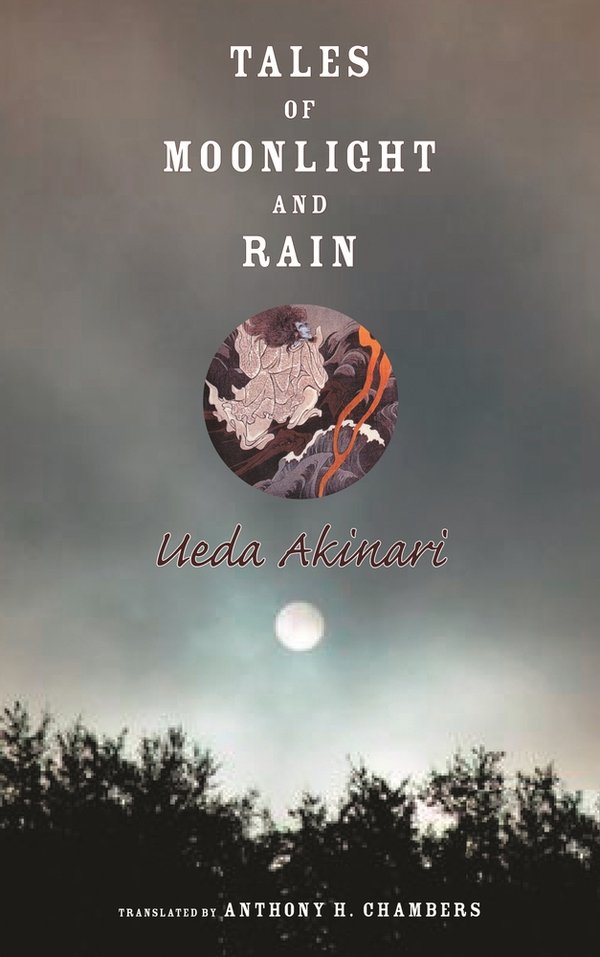
Tales of Moonlight and Rain
First published in 1776, the nine gothic tales in this collection are Japan’s finest and most celebrated examples of the literature of the occult. They subtly merge the world of reason with the realm of the uncanny and exemplify the period’s fascination with the strange and the grotesque. They were also the inspiration for Mizoguchi Kenji’s brilliant 1953 film Ugetsu. The title Ugetsu monogatari (literally “rain-moon tales”) alludes to the belief that mysterious beings appear on cloudy, rainy nights and in mornings with a lingering moon.
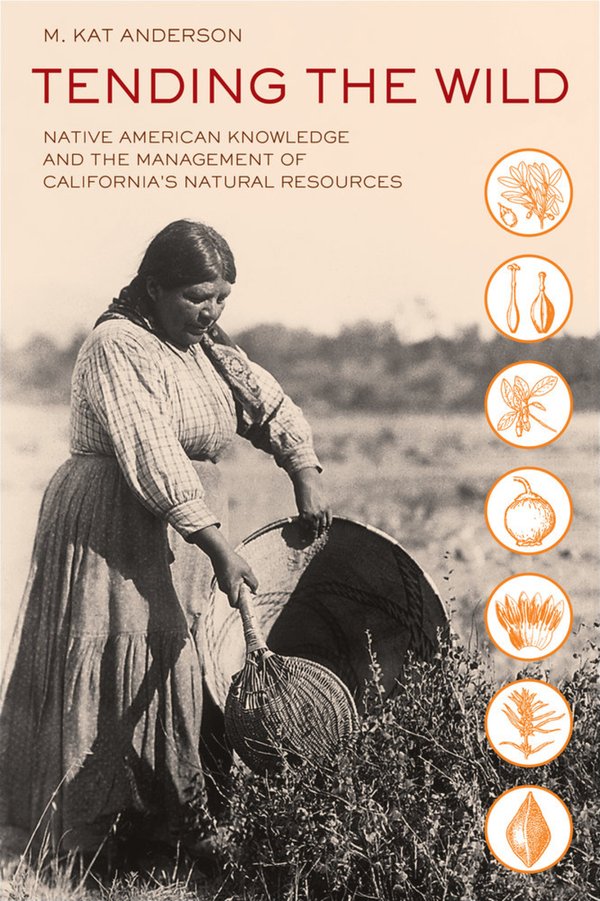
Tending the Wild
The California the Spanish and then the Americans walked into looked like untouched abundance, and Anderson’s book shows it was a garden. Indigenous Californians burned meadows on schedule, coppiced hazel and redbud so the shoots would come back straight enough for basketry, pruned oaks, dug bulbs in a way that propagated them, sowed grass seed. Twenty years of interviews with elders and tribal practitioners inform it, plus the ecological data. Yosemite Valley is the case in point — those open black oak groves in the old photographs were maintained, and once the burning stopped, the valley filled in with conifers and brush.
Tenth of December
This is the story collection that put Saunders on many people’s radars. There’s a boy imagining himself heroic in the woods and a dying man walking out onto a frozen pond to spare his family. Prisoners in a facility being dosed with drugs that produce love or obedience or despair on command, described in perfect marketing copy. A father who takes on a debt to buy his daughter the lawn ornament everybody has — young women from poor countries strung up on a wire as decoration. Saunders keeps putting people in impossible positions and then letting them choose well anyway.

The Abstract Wild
Turner spent decades guiding in the Tetons and this strident book stems directly from it. His argument is that we’ve replaced actual wild experience with representations of it — nature documentaries, photographs, managed parks, permits, interpretive signs — and that the abstraction is precisely what allows the destruction, because you can’t love a place you’ve only seen a picture of. He goes after conservation biology, ecotourism, the Park Service, and the photographers, and includes himself in the indictment. It’s short, it’s cranky, and thirty years on it has aged into being obviously and starkly right. With Jack’s permission (of course), I excerpted it in Adventure Journal in 2025, because what was true then is even more true now.
The Amazing Adventures of Kavalier and Clay
Josef Kavalier gets smuggled out of Prague in 1939 in a coffin with the Golem, a kind of Jewish Frankenstein’s monster, lands on his cousin Sammy Clay’s bedroom floor in Brooklyn, and the two of them invent a comic book hero called the Escapist who spends every issue punching Hitler. That makes them a fortune for somebody else, because they sign the rights away like everybody did. Around it: The golden age of comics, stage magic and Houdini, escape artistry as the book’s whole governing idea, Joe’s family still in Prague, Sammy’s life as a closeted man in the forties, and a stretch of Antarctic wartime service that is the strangest and best part. It won the Pulitzer.
The Antarctic Book of Cooking and Cleaning: A Polar Journey
Is it a cookbook? A field journal memoir? A photo album with cool archives, like a scan of a 1912 polar menu featuring “Plum Pouding Union Jack” and penguin? Yes, yes, and yes. But, cooking and cleaning...in Antarctica? Two young women, one an activist, the other a backcountry cook, organized a remote island cleanup project to pick up man-made litter. They cajoled 54 volunteers and constructed one makeshift kitchen to feed everyone for a summer. The experience is told by scrapbook: journal entries, maps, 40 recipes, menus, and to-do lists. Photos historical and modern show the characters drawn to the austral extremes over the last century, from Shackleton to today’s international scientists and adventurers. Maybe it’s the honey oatmeal bread, musings of Russian and Chilean researchers, or dreamlike images of icebergs and whale flukes, but taken together, in what would seem by the title to be the least likely compelling read, it’s a surprisingly hearty chronicle of the bottom of the world.
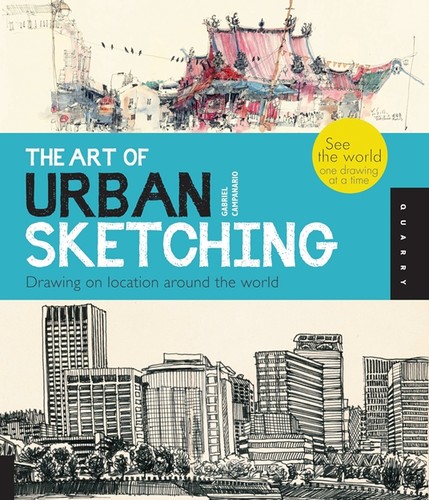
The Art of Urban Sketching: Drawing on Location
Campanario is the Seattle Times artist who started the Urban Sketchers blog in 2007 and turned it into a worldwide network, and this 2012 book is the movement’s first big showcase. More than a hundred sketchers from thirty-odd countries, work grouped by continent and city, each artist explaining their tools and how they work on location. Some of it is tight architectural ink, some is loose watercolor done standing in the rain. He lays out the group’s manifesto too — draw on location, indoors or out, from direct observation, tell the story of your surroundings, and share it.
The Back Country
Gary Snyder is the poet who worked Sierra trail crews and fire lookouts, spent a decade in a Kyoto Zen monastery, and later won the Pulitzer for Turtle Island. The Back Country, 1968, is four sections that map his life to that point: Far West, the mountain years; Far East, Japan; Kali, India; Back, the return to America. It’s full of short lines, hitchhiking, lovers, meditation, a plain vocabulary of trail, rock, and weather. He was translating Han Shan, the eighth-century Chinese hermit poet, around then, and the influence is all over it. This is the poetry to read alongside his essays.
The Backyard Bird Chronicles
Amy Tan started drawing birds in 2016 and kept a nature journal for six years, and this is a facsimile of it — her ink and watercolor drawings with her handwritten notes running around them. The Northern flicker, the scrub jays she named, a hummingbird nest, a hawk that clears the yard, a bird that hits the window. She’s a beginner at drawing and says so constantly, and the pleasure of the book is watching her get better and turn obsessed.
The Bear
Off in the future, society has collapsed, leaving behind only a girl and her father as the last people on the planet. They live in an idyllic setting, the stuff of Ralph Waldo Emerson’s dreams: a mountainside cabin near a lake, with loons and eagles and trout for neighbors. Together they pick blueberries, grow beets, and hunt and fish for food. The father teaches his daughter how to read the signs of nature, from the night sky to the painted turtle she keeps as a summer pet. Then one dark day, the girl discovers she’s all alone and far, far from home. The Bear has been a bookstore favorite from Miami to Santa Cruz and won a Banff Mountain Book Award. Some say it reads like a bedtime story, others feel it’s a post-apocalyptic parable, and I think it’s a little like oatmeal with peanut butter: simple yet satisfying, sticking with you long after you’re done.
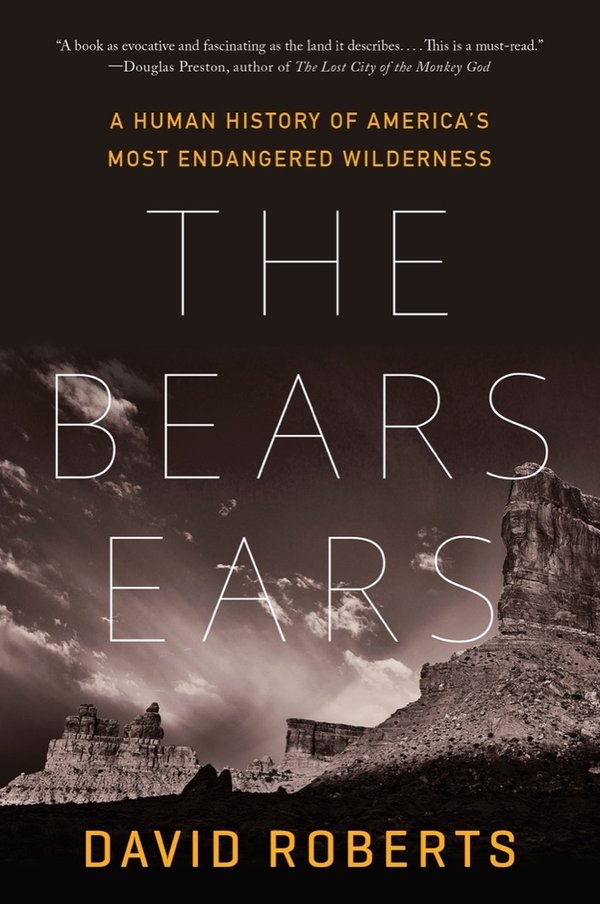
The Bears Ears
For thirty years, David Roberts made annual pilgrimages from his home in Massachusetts to Four Corners canyon country, land he loved passionately. The last time we almost crossed paths in person, he was renting a house in Bluff and I knocked on his door, but he was appropriately and unsurprisingly out in the field. The book he was working on was his last on the region before he died. Half is the archaeology and his own walking — the Cedar Mesa sites, Grand Gulch, the panels, the places he kept returning to. The other half is the history of how this became conflict ground: cattle, uranium, pothunting families, the 2009 raids that devastated the Blanding community, five tribes proposing a monument, Obama designating it, Trump cutting it by eighty-five percent. He knows most of the people on every side and doesn’t flatten any of them.
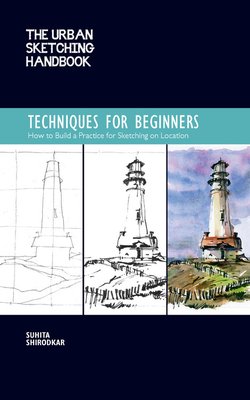
The Beginner’s Guide to Urban Sketching
Shirodkar sketches out of San Jose and this is the entry point to the urban sketching handbook series, of which I have most, if not all. (I’m guilty of looking at sketching more than actually sketching). It was published about ten volumes in, when somebody noticed there was no starting place for people like me. The subjects build from everyday objects at the kitchen table to people in motion to a street and it’s good on how to practice at home when you can’t get out.
The Beginning Comes After the End
A sequel of sorts to Hope in the Dark. Solnit takes the last sixty-odd years — her own lifetime — and lays out how completely underlying beliefs have shifted on race, gender, sexuality, disability, the environment, and what nature even is, arguing that the current ugliness is an old order fighting its own obsolescence rather than a return to it. It’s nine chapters, short, and specific: land returned to Indigenous people in California, dams coming out of the Klamath and salmon returning, the energy shift, the ideas that were unsayable in 1970 and are ordinary now. I hope she’s right.

The Blueprint
Set in an America where a second civil war broke out in 1954 and the wrong side won. By 2030, a white-run government called the Order classifies Black people as Descendants of Slavery and an algorithm hands out your job, your husband, and your address. DoS women get contracted to white men at fifteen, then matched with a Black husband later. Solenne Bonet is five years into a contract with Bastien Martin, the Order official who wrote the algorithm, living as his wife and half in love with him, waiting on a freedom he keeps not delivering. Running alongside her is the story she’s writing about Henriette, her own ancestor, kept as a concubine by the man who owned her in the 1800s. Rashad’s point is that the second story explains the first and Solenne uses it to figure out how to run for Louisiana, the one state where DoS can be free.
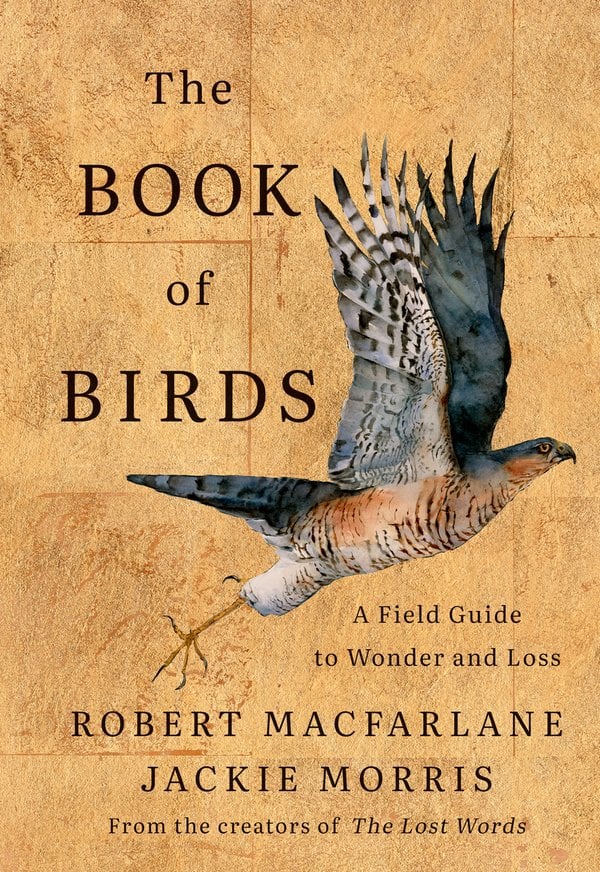
The Book of Birds: A Field Guide to Wonder and Loss
Forty-nine British birds, every one of them in decline, from avocet to yellowhammer. Macfarlane writes each as a short essay rather than an identification entry — habits, flight, song, myth, and threat — and he varies the form wildly, including a moorhen chapter written as a dating profile. Jackie Morris paints them from life in watercolor and gold leaf. We won’t save what we don’t love, so lets fall in love.
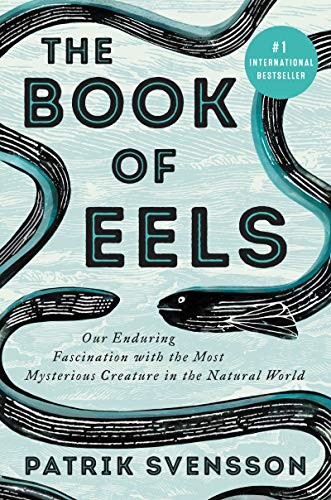
The Book of Eels
Who knew there could be an international bestseller all about eels? Turns out, as Patrik Svensson writes, quite a few knew. Centuries of leading thinkers — Pliny the Elder, Aristotle, Sigmund Freud, Rachel Carson — have been captivated by eels and their mysterious life cycles, the details of which remain elusive. Originally published in the author’s native Sweden, The Book of Eels is part natural history and part memoir, as eloquent in surveying modern science as it is in exploring Svensson’s relationship with his father, who grew up catching eels in a creek near his childhood home. With buckets of fishing gear, flashlights, a can of worms, and lyrical words, Svensson shows us “how little a person can really know, about eels or other people, about where you come from and where you’re going.” From birth to dying and all that lies between, this ode to faith and metamorphosis will move you to surprising depths.
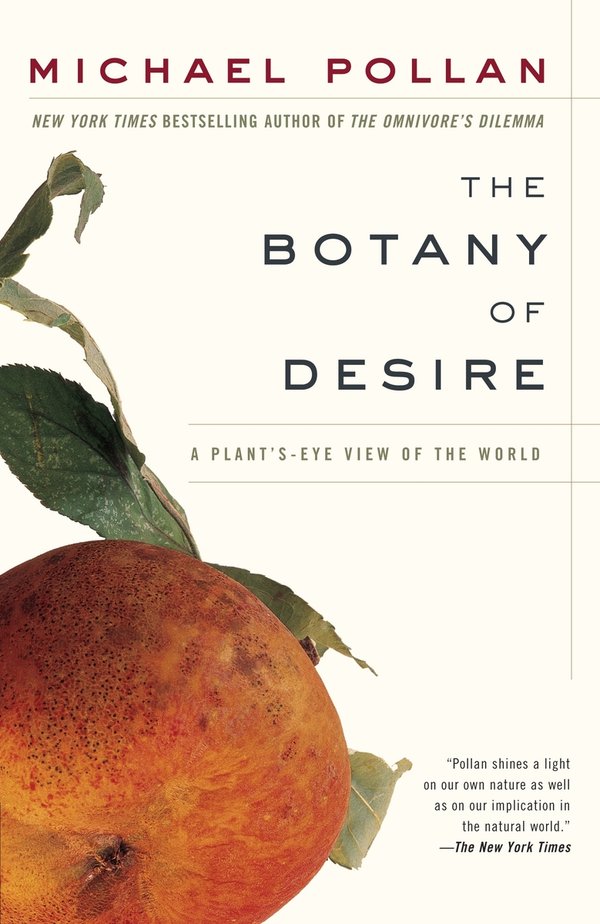
The Botany of Desire
Four plants, four human desires, and the argument runs backward: The apple, the tulip, cannabis, and the potato didn’t get domesticated by us so much as they figured out what we wanted and got us to plant them everywhere. Sweetness gets the apple, and Johnny Appleseed turns out to have been spreading cider trees across the frontier rather than eating apples. Beauty gets the tulip and the Dutch mania. Intoxication gets cannabis and a detour into the brain’s own cannabinoids. Control gets the potato, the Irish famine, and a Monsanto field Pollan plants himself.
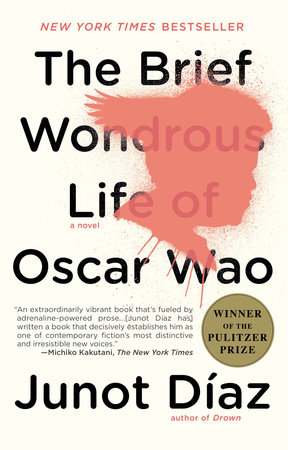
The Brief Wondrous Life of Oscar Wao
Oscar de León is an overweight, lovelorn Dominican-American kid in New Jersey — a science fiction and fantasy obsessive who wants, more than anything, to fall in love. The book follows him but keeps widening out: to his sister, his mother’s girlhood in the Dominican Republic under Trujillo, his grandparents, and the family curse called fukú that the narrator insists is behind all of it. It’s narrated by a friend of the family in a voice that runs Spanglish, street talk, and Tolkien and Marvel references together, with a lot of the Dominican history delivered in footnotes. It’s Díaz’s first novel and it won the Pulitzer.

The Bright Sword
I don’t know how I stumbled upon this book, because I mostly left my interest in fantasy behind in my teens (talkin’ to you, Tolkien). But, wow. I couldn’t put The Bright Sword down and even raved about it to my wife, who couldn’t give a hoot about medieval tales. Young Collum, intent on becoming a knight, arrives at Camelot two weeks too late: King Arthur has dead, most of the Round Table with him, and what’s left is the second string — Bedivere, Dagonet the fool, Palomides, Dinadan, Constantine, and this young man who came to join them and finds the job already over. They are a ragged and motley bunch. Now they have to figure out who’s gonna rule Britain, with the old gods still around and unhappy about the new religion, and the Saxons coming. Grossman gives each of the leftover knights their own long backstory, and the book is really about people who weren’t chosen and have to carry on anyway.
The Buffalo Hunter Hunter
In 1912, a Lutheran pastor in Montana takes the confession of a Blackfeet man named Good Stab, who comes to the church weekly and tells his story in pieces. Good Stab is a vampire, made by a white creature he was unlucky enough to encounter, and he wants to explain what he did to the men who slaughtered the buffalo. Much of the book is the pastor’s journal, found a century later by his descendant, who is transfixed by what appears to be the supernatural. Jones is Blackfeet and he uses the form of a horror novel to confront gross injustice in way no straight history would. I couldn’t put it down, though I was relieved when it came to its rightful close.
The Cactus Hunters
There’s a global black market in rare cacti and succulents, and Margulies spent years inside it — with collectors, growers, smugglers, customs officers, and conservation scientists across Europe, Asia, Mexico, and South Africa. Plants poached out of the ground in the Chihuahuan Desert end up on Instagram and in living rooms in Seoul and Prague. What the actual, man. Margulies takes the desire seriously rather than treating collectors as villains; he’s a geographer interested in what it is about these particular plants that makes people lose their judgment.
The California Deserts
Jaeger’s 1933 guide, and for decades it was the only real one: geology, water, weather, plants, animals, and the routes across the Mojave and the Colorado, written by a man who walked it for sixty years and taught at Riverside. There are chapters on how to travel that are dated in specifics and dead-on in substance, and a list of desert place names and what they meant. He’s good on the thing a lot of people miss — that the two California deserts are different countries, one high and cold, one low and brutal, with a different roster of things living side by each.
The Case Against Reality
Hoffman is a cognitive scientist who ran evolutionary simulations and got a result he didn’t like: Organisms that perceive reality accurately lose to organisms that perceive fitness payoffs instead. His conclusion is that space, time, and objects are a species-specific interface — like icons on a computer desktop, they are useful but not literally true. The desktop metaphor carries the book: A file icon isn’t what’s inside the computer, but you’d be a fool to drag it to the trash. Then he goes further than most readers will follow, into consciousness as fundamental. Take the first half as a serious argument about perception and the second half as speculation. Of course, when it comes to the nature of consciousness, it’s all speculation.
The Chaco Meridian
Lekson noticed that Chaco Canyon, Aztec Ruins, and Paquimé in Chihuahua sit within a few minutes of longitude of one another, hundreds of miles apart, and built at different times from one another over four centuries. His premise is it was deliberate — that the political center of the Southwest was moved north along a surveyed line and then far south, taking its rulers and its ideas with it, and that these were hierarchical societies with elites rather than the egalitarian pueblos the field prefers. Plenty of archaeologists think he’s wrong. Nobody thinks he’s boring, and the second edition takes on the objections directly. If you grab a map and look at the line connecting Paquimé through Chaco to Aztec, you can see what a tidy idea it is.

The Christmas Guest
A short one, told mostly as a diary, and it’s pulpy. Ashley, an American student in London in the nineties, is invited home to a friend’s family estate in the country for Christmas — an old house, a brother she’s already half in love with, a village with an unsolved murder in its recent past. She writes it all down as it happens. Then the frame shifts to the present, somebody else is reading the diary, and everything you’ve been told gets reweighted.
The Comfort Crisis
Easter went thirty-three days into the Arctic on a caribou hunt with no resupply, and he uses that trip as the backbone for the rest. His case? That we engineered away every discomfort humans evolved with — hunger, cold, heat, boredom, physical labor, silence, any encounter with our own mortality — and got sicker for it. So he reports on rucking, on Japanese forest bathing research, on a Bhutanese practice of contemplating death daily, on the misogi idea of one very hard thing a year, on what boredom does for creative thinking. To me, the Arctic sections aren’t the least bit interesting—they’re an adventure to prop up the science—and you can skip them for the alternating chapters with practical takeaways. You will probably conclude he’s correct and we need to make our lives more challenging.
The Coming of the Saucers
On June 24, 1947, a private pilot flying near Mount Rainier saw nine objects moving in formation and later described their motion as like a saucer skipping across water. A reporter turned that into “flying saucer” and the phrase went around the world in a week. This is Arnold’s own account, written with the pulp publisher Ray Palmer and printed by the two of them in 1952 because nobody else would. It covers the sighting, the press circus, and the Maury Island business in Puget Sound, where Arnold got pulled into a hoax that ended with two Army investigators dead in a plane crash. But legitimately strange stuff happened to him afterward, and the plainspoken midcentury vernacular feels truer than a polished account might.
The Control of Nature
I think this might have been my first McPhee book. It’s three long pieces about people trying to stop geology. The Army Corps of Engineers at the Old River Control Structure in Louisiana, holding the Mississippi in its channel against a river that wants to jump into the Atchafalaya and would take New Orleans and Baton Rouge’s economy with it. Icelanders on Heimaey spraying seawater at an advancing lava flow to save their harbor, and actually stopping it. And Los Angeles building basins in the San Gabriels against the debris flows that come off those mountains after fire. The Iceland segment is by far the most interesting. McPhee lets the engineers explain themselves at length, and the geology wins without him ever saying so. Nature always bats last.
The Creative Act
People went bananas over this book, but I’m not one of them. Rubin has produced records for Johnny Cash, the Beastie Boys, Slayer, and Adele, and he does not play an instrument or work a board. What he does is set conditions, and this is the closest thing to a description of that. It’s comprised of seventy-eight short chapters, a page or two each, on paying attention, on the difference between the source and the filter, on making a lot of bad things to find the good one, on shipping before you’re ready. There’s no music-business memoir and no gossip, which disappointed a lot of buyers. Read it in the same way you’d read a book of aphorisms — a page in the morning, not a sitting. Don’t be surprised if most of it comes across as obvious.
The Crossing of Antarctica
In 1957 and 1958, the Commonwealth Trans-Antarctic Expedition drove tractors two thousand miles across the continent through the pole, the first surface crossing ever made, with Hillary’s team laying depots from the far side. George Lowe was the expedition photographer and the last surviving member, and this book is his archive — hundreds of images, many never published — with his own recollections and Lewis-Jones supplying the history. Tractors in crevasse fields, huts, dogs, and the plateau going on forever.
The Crossing: Book 2 of The Border Trilogy
The second McCarthy border novel — a young man crosses into Mexico to return a wolf to the wild. The wolf doesn’t survive. Neither does the old world McCarthy is eulogizing. If McCarthy’s your jam, the prose is as good as anything written in the twentieth century.
The Dawn of Everything
The standard story of human civilization development argues we went from small egalitarian bands, to farming, to cities, and then inevitable hierarchy and the state. Graeber, an anthropologist, and Wengrow, an archaeologist, spent ten years arguing that’s baloney. Evidence shows enormous cities with no palaces and no evidence of rulers, societies that ran hierarchies seasonally and dismantled them in the off season, farming that picked up and dropped for millennia, and Indigenous critics of European society whose arguments shaped the Enlightenment more than anyone admits. Their point is that people used to experiment with how to live and somewhere along the way we got stuck with the Tax Man. What’s unclear is how we get unstuck when the Establishment is so, well, established.
If this had been written by Charles C. Mann, who penned 1491: New Revelations of the Americas Before Columbus, it might have been a page-turner. Instead, it spends 700 pages to land on its conclusion that we were once freer and the path here was complicated.
The Day After Roswell
Corso was a retired Army colonel who ran a Pentagon foreign technology desk and in 1997 he published the claim that he was handed a filing cabinet of debris recovered at Roswell in 1947 and quietly fed the pieces to American defense contractors, seeding integrated circuits, fiber optics, lasers, night vision, and Kevlar. Strom Thurmond wrote a foreword and then said he’d been misled about what the book was. It’s the origin of the reverse-engineering story that runs through everything since, and almost none of it holds up against the patent record. Your BS detector will be pinned in the red zone — I read it as lore rather than history.
The Day Of The Owl
A man is shot dead boarding a bus in a Sicilian town square in front of forty people and by the time the carabinieri arrive nobody saw anything. Captain Bellodi, a northerner and a former partisan, investigates, which means construction contracts, a protection racket, and a network reaching up into Rome. Sciascia published the book in 1961, when the official position was that the mafia did not exist, and it’s credited with breaking that silence. It’s a quick read, under a hundred and fifty pages, and the interrogation scenes are a masterclass in people saying nothing at length.
The Deep Sky
Eighty crew members, all women and nonbinary, on a ship carrying humanity’s last real hope to a habitable planet, ten years out from Earth. An explosion during a spacewalk kills three of them and knocks the ship off course, and Asuka — the alternate who only made the crew as a diversity pick, half Japanese, half American, never quite belonging to either — was the only one there. So she has to find the saboteur while everyone assumes it’s her. Kitasei runs it alongside flashbacks to the brutal training academy and to a mother she left behind, and lets the claustrophobia ratchet up the tension.
The Diary of Anaïs Nin, Volume 1
Set in Paris, 1931 to 1934. Nin is in her late twenties, married to a banker, in analysis, and just beginning to write, and the diary is her real work. This is the volume where she meets Henry Miller and June Miller and the three of them get on like a house on fire. She edited it heavily before publication, cutting her husband and the affairs, so think of it as a constructed self-portrait rather than a record (an early social media feed, perhaps?). What’s unmatched is the writing on other people — she can pin a person in just three sentences.
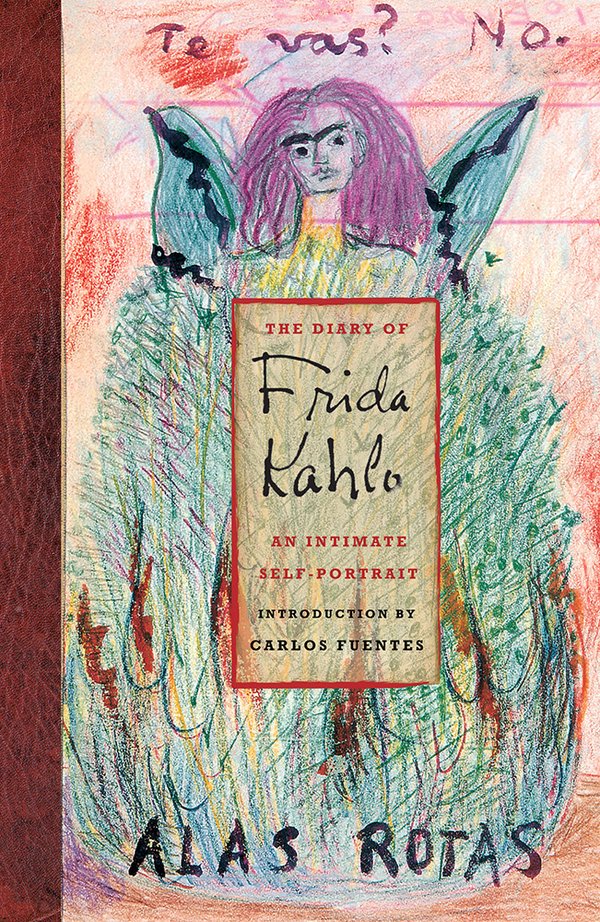
The Diary of Frida Kahlo
This is last ten years of her life in her own hand — a facsimile of the journal she kept from about 1944, reproduced in full color, so you can see the actual pages. There are watercolor and ink drawings, blots she turned into figures, dense automatic writing, love notes to Diego, and lists of colors with what each one means to her. (Green: warm and good light.) There’s a full translation and commentary alongside. It’s not a diary of events. It’s the inside of a mind that had been in pain for twenty years, and the drawings do things her finished paintings never risk.
The Dog Stars
One of my favorite books, full stop. It’s nine years after a pandemic, the location a small airport at the base of the Colorado Rockies. Hig (Big Hig to his friends) lives in a compound with his beloved dog, Jasper, and a survivalist and arms aficionado named Bangley, who saw all this coming. Curmudgeonly Bangley is as happy as he’ll ever be, but Hig misses his wife and longs for contact. He hikes into the mountains to fish and he flies a small plane to look for signs of life. No good can come of this, argues Bangley, and events prove him right...or do they? Heller, who made his bones writing magazine stories, delivers a strangely optimistic and regenerative dystopian tale, one that might—might—satisfy even Bangley.
The Earth Said Remember Me
Working as an organic farmer, activist, and editor of Sierra magazine, Jason Dove Mark has spent twenty-five years trying to make the world more livable. In his second book, which weaves memoir with science, he’s concluded the biggest obstacle to solving the compounding effects of climate change is blithely accepting ever-worsening “new normals” in the environment. He’s talking about shifting baselines, a clinical term for forgetting how bountiful nature used to be. In this forgetting, we become deadened, he argues, the way “a freak heat wave can go from whoa to meh in less than a decade.” But all is not lost. Baselines can shift in the right direction. He argues for four action steps (with real-world success examples of each): Go outside, bear witness, make a record, and pass it on. Want inspiration? Here it is.
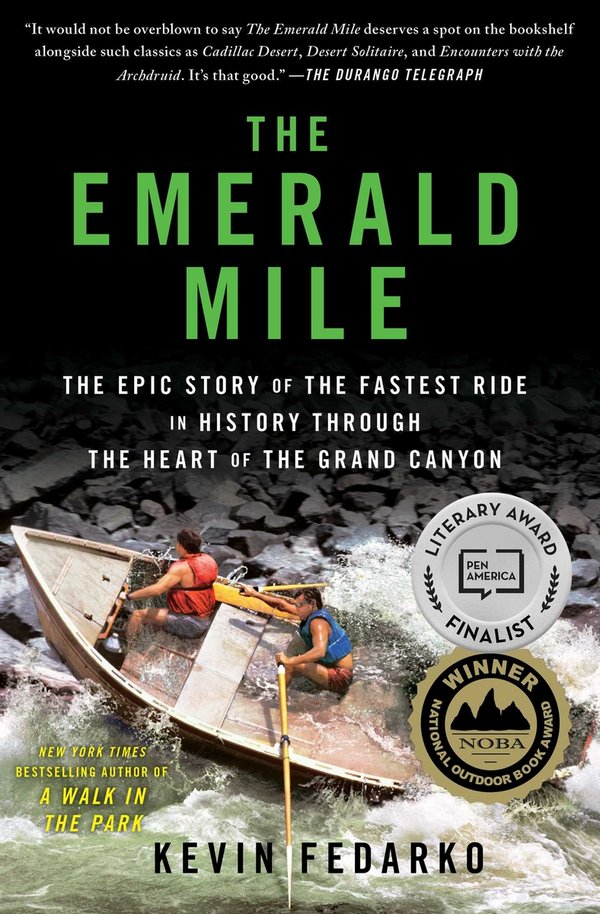
The Emerald Mile
In June 1983, the snowpack came off the Rockies faster than anyone predicted and Glen Canyon Dam started to come apart, spillways cavitating, plywood bolted onto the top to hold the reservoir back. With the Grand Canyon closed to boats and the river running at a level nobody had ever rowed, three men put a wooden dory called the Emerald Mile in the water at Lees Ferry and went for the speed record. They did two hundred seventy-seven miles in under thirty-seven hours, at night, through Crystal and Lava Falls at flood. Fedarko builds the whole history of the canyon, the dam, and the dory-running tradition around that single run, and he wrote one of the best adventure books you’ll ever read.
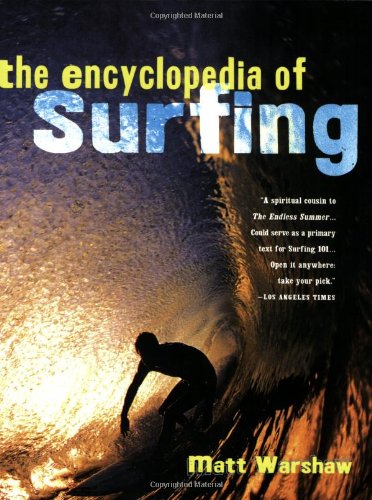
The Encyclopedia of Surfing
Warshaw spent years assembling this — fifteen hundred entries covering surfers, breaks, board designers, films, magazines, contests, terminology, and the odd corners nobody else bothered with. It’s alphabetical and it’s browsable to a dangerous degree: You look up one thing and lose an hour. The tone is what makes it, because he writes short biographies with real judgment in them rather than press-release summaries. I’ve known Matt for nearly forty years, and I love his intelligence, his insistence on taking a stand, and his commitment to using salty language whenever and wherever possible.
The Ending Writes Itself
A locked-room mystery published under the pseudonym Evelyn Clarke, which is V.E. Schwab and Cat Clarke writing together. Arthur Fletch, a reclusive bestselling novelist, invites six struggling midlist authors — one each from thriller, romance, YA, sci-fi, horror — to his private Scottish island. They arrive to find he’s dead and his final book unfinished. His agent and editor make the offer: There’s seventy-two hours to write an ending and the winner gets a million dollars and a three-book deal. But then people start dying. It’s a closed-circle Agatha Christie structure, with the publishing industry as the target.
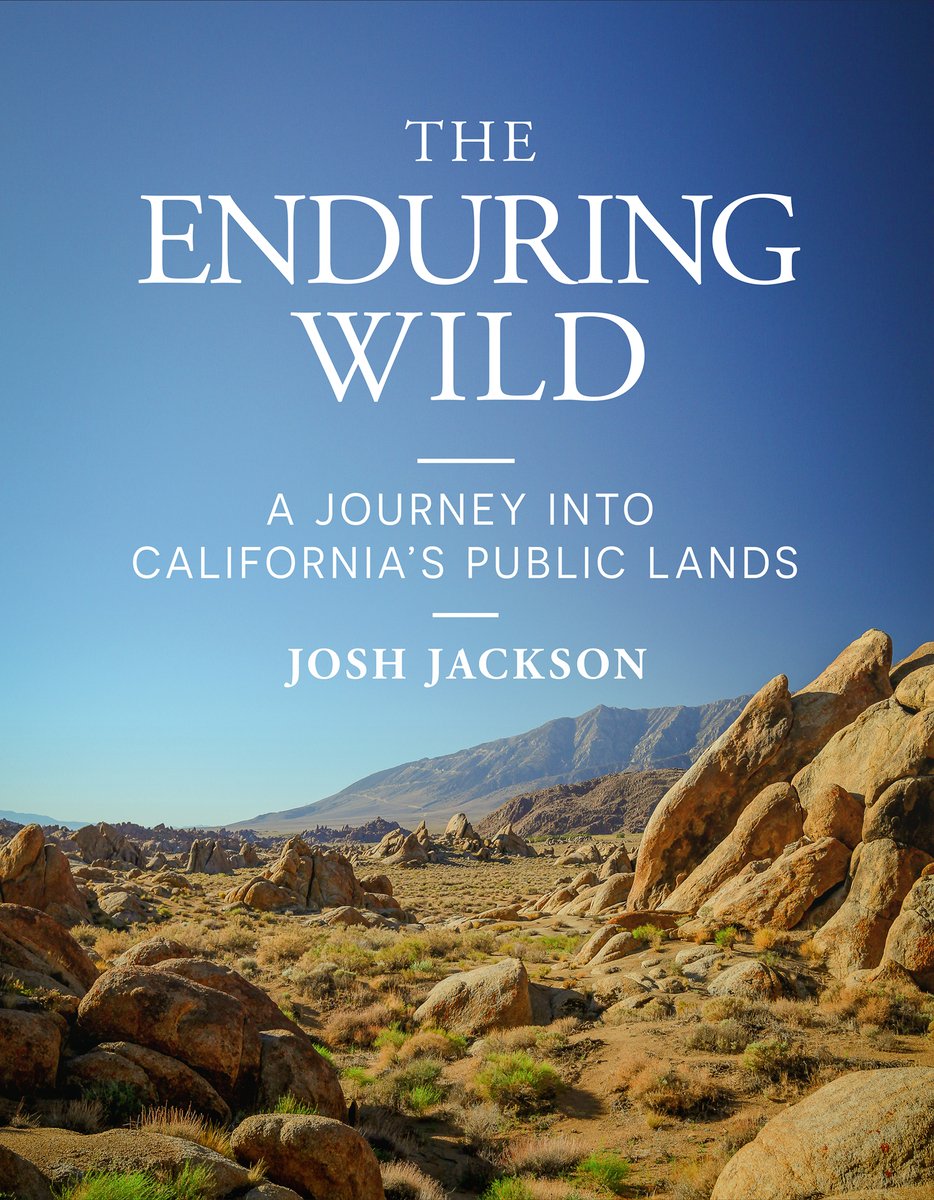
The Enduring Wild: A Journey into California’s Public Lands
Los Angeles-based furniture maker Josh Jackson had never heard of the Bureau of Land Management and wasn’t all that clear on “public lands”—he just wanted a last-minute place to camp. Then a friend mentioned “BLM lands” and he fell down a rabbit hole from which he has yet to emerge. He discovered the BLM got stewardship of hundreds of millions of acres because no other agency wanted them. They were perceived as useless, lacking resources, and ugly. Jackson finds out these lands are, in fact, magical, but sorely in need of protection and more people to love them. The Enduring Wild chronicles his journey into these spaces, a journey that slows him down, helps him see, and converts him into a passionate lands advocate.
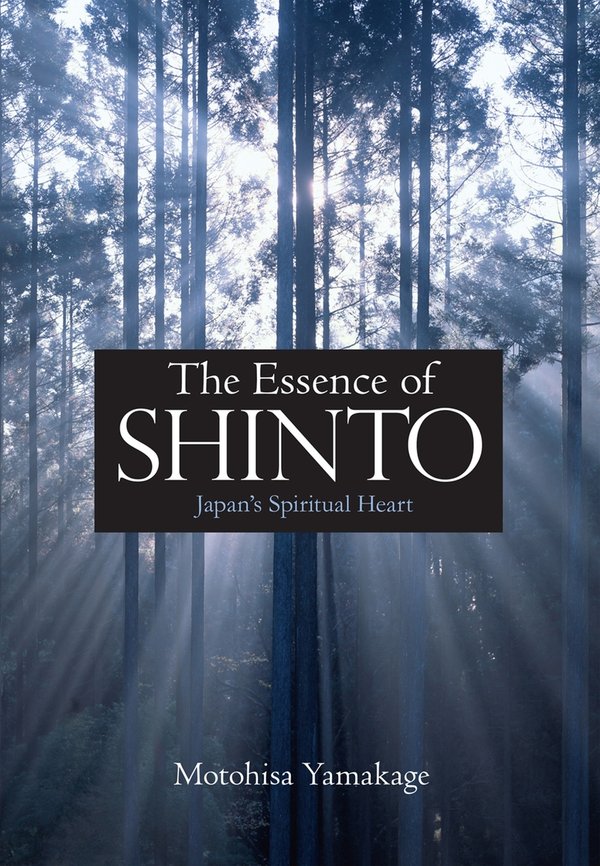
The Essence of Shinto
Yamakage was a Shinto priest in a lineage going back generations, and this is an insider’s explanation for outsiders: Kami as presence rather than deity. Purification as the central practice and why it matters more than belief. Ceremonies through the year, the household altar, ancestors. He’s clear that Shinto has no founder, no scripture, and no doctrine to sign up to, which is what makes it hard to explain, and he keeps returning to the idea that it’s a way of relating to the natural world rather than a religion in the Western sense.
The Examiner
Hallett builds novels out of documents, and this one is a mixed-media master’s course file: Six students, their emails, group chat, forum posts, submitted essays, and the tutor’s marking notes, all bundled and handed to an external examiner months after the course ended. The examiner’s job is to check the grades. What she finds instead is that the record doesn’t add up and that one of the six may not have survived the term. There’s no narrator and no detective — you assemble it yourself out of what people wrote...and what they conspicuously didn’t.
The Exceptionally Simple Theory of Sketching
Hlavics argues that sketching is a set of decisions, not a talent. He breaks it into a small number of things you’re actually choosing — line weight, edge, value, what to include — and shows how varying just those changes everything. The demonstrations are the strength: The same subject drawn several ways to show what each decision entails. It’s aimed at designers and architects who need to think on paper fast rather than at people making finished pictures, and it’s straight about the fact that most sketching problems really are seeing problems.
The Foreign Girls
Verónica Rosenthal, a Buenos Aires journalist on holiday in the north of Argentina, spends a few days with two young women travelers — one Italian, one Colombian. Days later, both are found raped and murdered in the hills of Tucumán. The police work is a shambles, and Verónica starts asking questions that lead toward the province’s judges, police, and landowning families, who have arrangements going back decades. Olguín writes her as genuinely reckless rather than plucky, and the book is angry about femicide in Argentina without ever pausing to lecture.

The Fraud
Eliza Touchet is a Scottish widow running the household of her cousin, a once-famous novelist now writing books nobody reads, in Victorian England. She becomes obsessed with the Tichborne trial — a butcher from Australia claiming to be a missing aristocratic heir, a case that gripped the country for years — and above all with Andrew Bogle, the formerly enslaved Jamaican man whose testimony holds the impostor’s story together. Smith gives Bogle his own long section on a Jamaican plantation, which is the heart of the book. It’s her first historical novel and a lot of people are obsessed with it.
The Future
Three tech billionaires have bunkers, and their prediction models are telling them when to run. Around them, a handful of people who know the systems from the inside — a survivalist forum obsessive, a daughter, a lover, an ex-employee — put together a plan while everyone else is watching the countdown. Alderman spends the book on how the doomsday-prep industry works as a business, which is funnier and grimmer than the collapse itself. She threads in retellings of Lot and Noah, on the theory that the story where a chosen few get advance warning and everybody else drowns is the oldest one we have.
The Genius of Birds
Birdbrain is a slur for which we should apologize to our feathered friends. Ackerman goes out with researchers and comes back with the feats birds pull off. New Caledonian crows manufacture hooked tools out of twigs and keep the good ones. Scrub jays cache thousands of seeds and remember not just where but when, and which ones will have rotted. Bowerbirds build and decorate structures they don’t live in, arranging objects by size to fake perspective for the viewer. Chickadees grow their hippocampus in fall and shrink it in spring. She’s good on the fact that bird brains are wired nothing like ours and get to similar places anyway.
The Gentle Art of Swedish Death Cleaning
Marie Kondo pushed me, and Magnusson made me jump—that and having to fill two Dumpsters with junk when my dad died. Döstädning is a real Swedish word and a real practice: Going through your things while you’re still able, so your children aren’t left doing it in a week of grief and rental bins. Magnusson, who gives her age as somewhere between eighty and a hundred, works through it room by room — start with the attic, leave photographs for last because you’ll get stuck, ask people whether they actually want the dinner service before you leave it to them, and keep a box marked to be thrown away unopened. She’s funny and unsentimental, and the book is short because the job is simple and nobody wants to start. The best things in life aren’t free, right—so, why do you have so many things?
The Girl in the Woods
A four-year-old girl goes missing near Fjällbacka, Sweden, and the case is a mirror of one thirty years earlier, when two teenage girls confessed to killing a child and were later released. Both women are back in town. Detective Patrik Hedström works the present case while his wife Erica, a true crime writer, digs into the old one, and Läckberg braids in a much older thread from the seventeenth-century witch trials in the same district. It’s tenth in the Fjällbacka series, and the small coastal town, everyone knowing everyone, is what the whole run is built on.
The Girl With All The Gifts
Melanie is ten, brilliant, and loves her teacher. Every morning, soldiers strap her into a wheelchair at gunpoint to take her to class. Carey lets you work out why on your own, and once you have it, the book turns into a run across a ruined Britain with the teacher, a sergeant who wants Melanie dead, and a scientist who wants her on a table. What separates it from the pile is Melanie herself, who is entirely sympathetic and entirely dangerous, plus an ending that refuses the reset everybody else in the genre reaches for.
The Girl with the Dragon Tattoo
Mikael Blomkvist, a financial journalist just convicted of libel, gets hired by an aging industrialist to solve a forty-year-old disappearance on the family’s private island north of Stockholm. Working with him, eventually, is Lisbeth Salander — a researcher and hacker, a ward of the state, small, silent, and extremely dangerous. The Vanger family is a nest of Nazis and worse, and what the two of them uncover goes far past one missing girl. Even if you saw the movie, read the book. It’s gnarly, in the best way. Larsson was a journalist who spent his career on the Swedish far right, delivered three manuscripts, and died before any of them were published.
The Golden Spruce
The tree of the title was a three-hundred-year-old Sitka spruce on Haida Gwaii with a genetic mutation that made its needles gold — a tree sacred to the Haida, protected in a small reserve, and a tourist attraction. In 1997, a former logging engineer named Grant Hadwin swam the Yakoun River with a chainsaw and cut it down as a protest against industrial forestry, then disappeared on a kayak crossing before his trial. Vaillant builds the whole history of coastal logging around the act — how the trade worked, what it did to the coast, and what happened to a man who spent his life in it and then broke. It covers a lot of ground and occasionally gets a little lost in thicker woods, but only occasionally. It’s a crazy story extremely well told—exactly what I’ve come to expect from this Canadian master of long-form narrative nonfiction.
The Goldfinch
Theo Decker is thirteen when a bomb goes off in the Metropolitan Museum of Art, killing his mother, and in the smoke a dying old man tells him to take a small Dutch painting off the wall. He does, and he keeps it for years — through a rich family on Park Avenue, an abandoned Las Vegas subdivision where he half-raises himself with a Ukrainian kid named Boris, and back to New York and the antiques trade and the criminal end of the art world. Tartt took eleven years on it and it runs eight hundred pages. It won the Pulitzer and split critics down the middle. This one lands on “terrific.”
The Guest
Alex is twenty-two, broke, running from people in the city she owes money to, and spending August on Long Island with a much older man who is done with her by the second chapter. He puts her on a train. She doesn’t get on it. Instead she spends six days drifting between the summer houses of the east end, reading each new room fast enough to be handed a drink and a bed, telling whatever story fits, because she has decided that if she can just last until Labor Day he’ll take her back. Cline writes her without excuse or judgment, and the tension is pure dread.
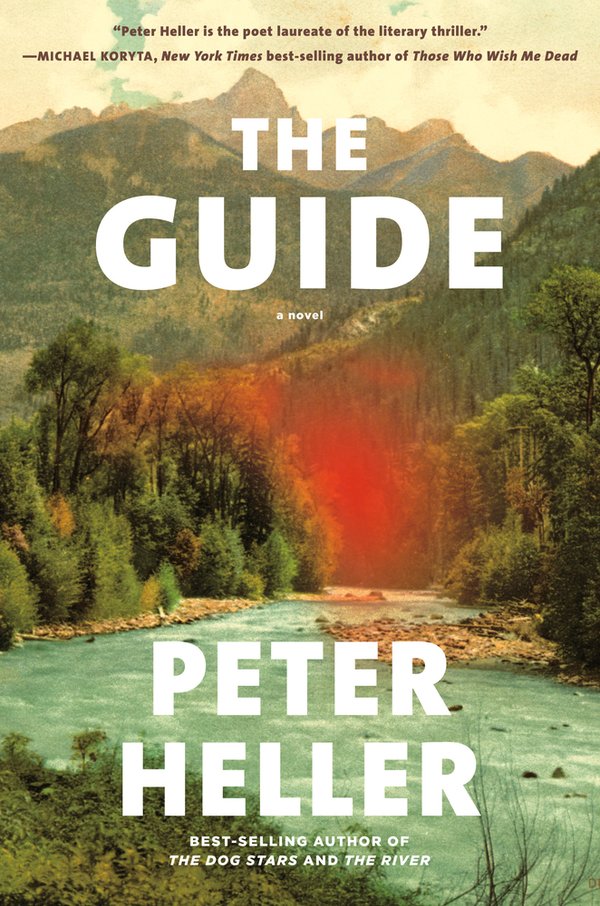
The Guide
Peter Heller’s novel The River,moved as swiftly and eventfully as class V whitewater, but not all readers were pleased with its denouement (one AJ editor and Heller fan threw his copy against the wall in protest). The Guide, though, will likely salve. It opens three years after The River, when Jack, a young Colorado rancher and guide, takes a last-minute gig at an ultra-exclusive fly-fishing lodge near Crested Butte. Spinning with grief, he’s hoping for healing, or at least distraction, but finds trouble the moment he drives up the narrow canyon. The property is bordered, his irritable manager warns, by one neighbor who shoots at interlopers and another whose dogs killed a trespassing angler. Heller, a fly fisherman himself, casts words as poetry, whether describing a backlit hatch, rigging a rod, or “the spreading rings of rising trout, dapping silently like slow rain,” but it’s the mystery that hooks you. Why is there a hidden camera in Jack’s cabin thermostat? And why do you need a gate code to get out?
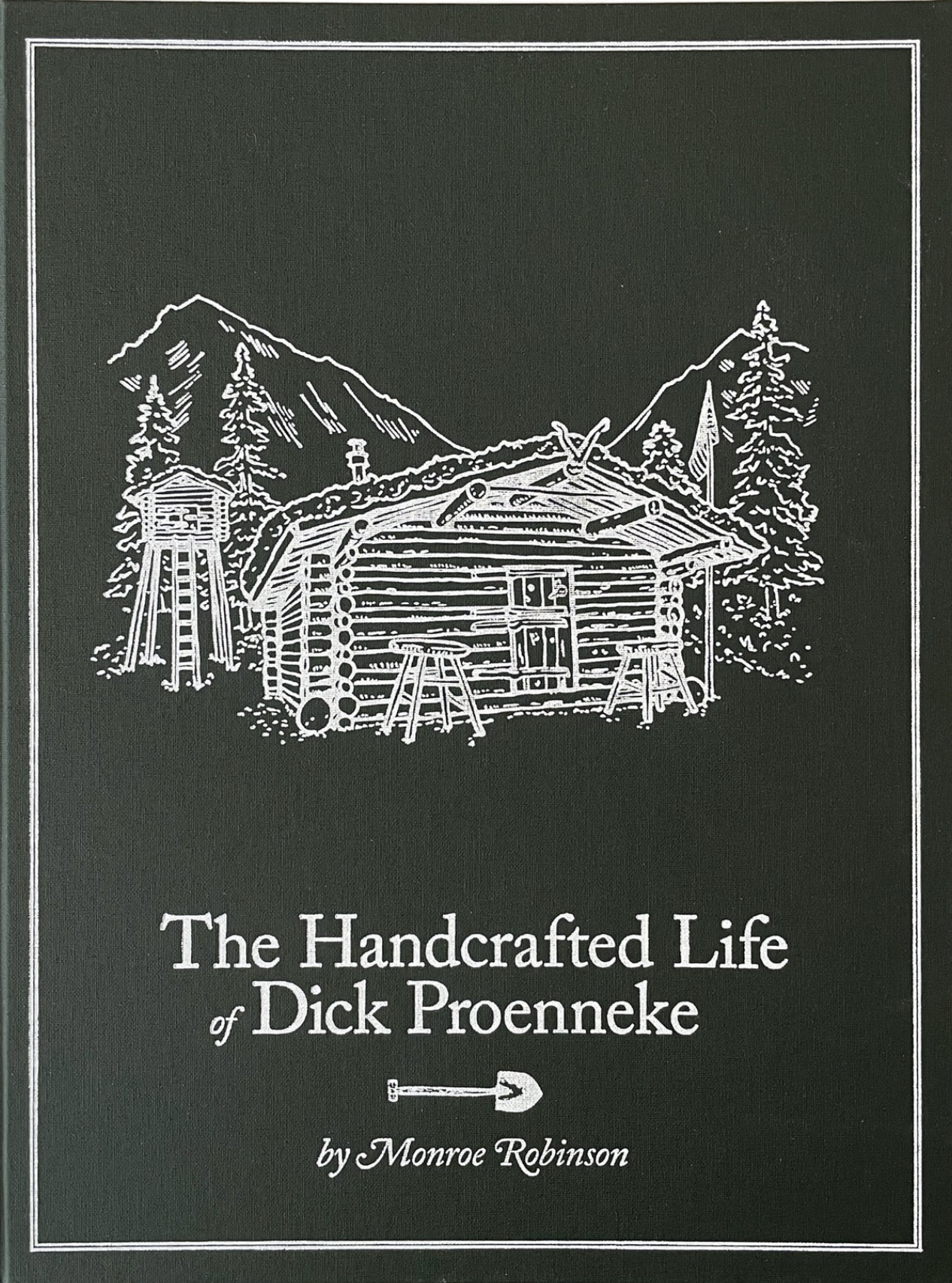
The Handcrafted Life of Dick Proenneke
In 1967, at age fifty-one, Dick Proenneke retired from a peripatetic life as a diesel mechanic, salmon fisherman, and repairman and settled in southwest Alaska, where he spent the next thirty years living intimately with the land. A master craftsman, Proenneke singlehandedly built his cabin, furniture, tools, and most everything else he needed. He also meticulously recorded his life in journals and on film, and a PBS documentary and subsequent books won him legions of fans.
Proenneke appreciated that acclaim, especially for his wilderness ethos (do no harm), but he would have been most pleased with the posthumous Handcrafted Life, assembled and edited by his dear friend and fellow craftsman Monroe Robinson. Over four hundred pages and drawn almost exclusively from his journals, the book tells the story of Proenneke’s remarkable life through his tools, workmanship, and own words. “Did you ever pick very large blueberries after a summer rain, walk through a grove of cottonwoods, open like a park, and see the blue sky beyond the shimmering gold of the leaves?…The world is full of such things.”
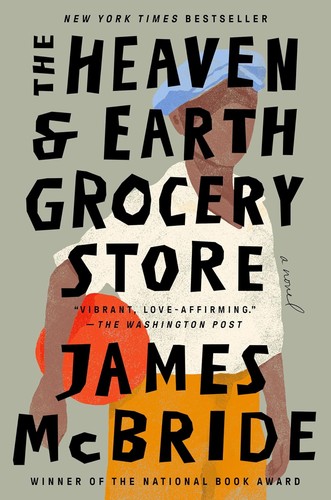
The Heaven & Earth Grocery Store
A skeleton turns up in a well in Pottstown, Pennsylvania, in 1972, and the story goes back to Chicken Hill in the 1920s and 30s — the neighborhood where Jewish immigrants and Black families lived alongside each other on the wrong side of town. Moshe runs a theater, his wife Chona runs the grocery store of the title and won’t observe anyone’s rules about who gets served, and when the state comes for a deaf Black boy named Dodo the whole neighborhood conspires to hide him. It’s a novel about a community that protects its own across every line it was supposed to respect, and it’s very funny for a book with that much at stake.
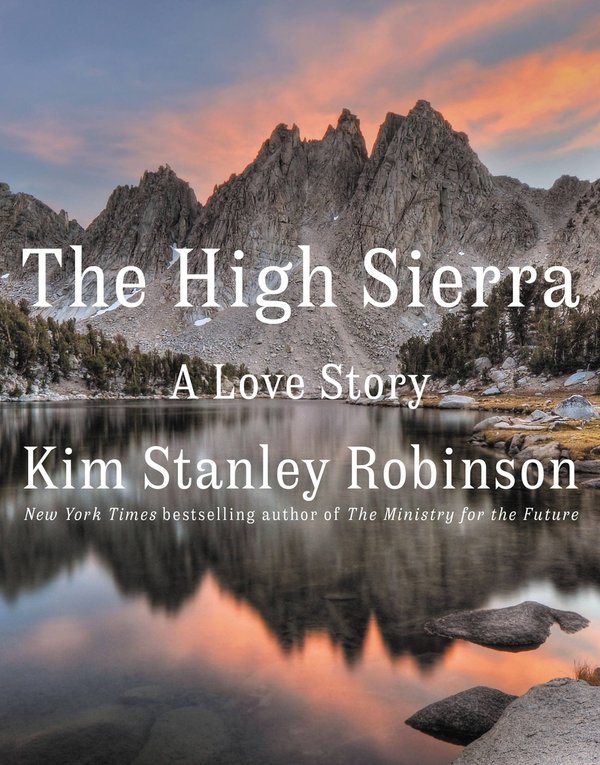
The High Sierra
Robinson has been walking the Sierra Nevada since 1973 and has done something like a hundred trips, and this is everything he knows about it in one enormous, wandering book. Route descriptions and gear lists sit next to the geology of a granite batholith, the history of Norman Clyde and the Sierra Club, John Muir taken seriously and then criticized, the Paiute who used those passes for millennia, and long passages on what he calls psychogeology. He wanders on purpose. Read it as the notebook of a man who found the one place that does it for him and kept going back for fifty years.
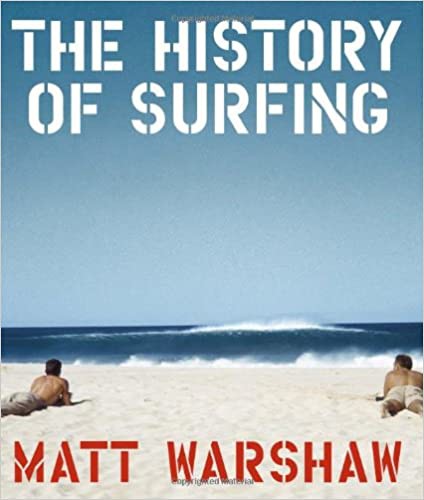
The History of Surfing
If sports could wish, every sport wishes it could be treated with the depth, breadth, love, and wit that Matt Warshaw has given surfing. The former editor of Surfer magazine, Warshaw is the preeminent chronicler of surfing history, and no one else is even close. But if the word “history” sounds musty, fear not: The writing crackles with vitality, the pace moves quickly, and Warshaw is mindful to place surfing’s tides within broader cultural currents, showing how each influenced the other. Surfer or not, this is a book any adventurer will love.
The Hunter
The second Cal Hooper mystery. Cal, a retired Chicago cop, has settled into the west Ireland village of Ardnakelty, is with Lena, and is teaching a teenage girl named Trey carpentry. Then Trey’s father comes back, four years gone, with an English money man and a story about gold in the mountain, and he starts selling shares to the neighbors. Trey wants him destroyed for what he did to her family and sees the con as her chance. Cal can see what’s coming. It’s the driest summer on record, the fields are burning, and French turns the screws slowly with everybody being polite about it.
The Intrigue
Noir set in 1943 in a small mountain town in Veracruz, Mexico. Ulises is a con man who works through the mail and marries lonely women for their money. His current mark is Perla, a spinster who owns a boardinghouse — but her niece Inés, stuck in the house and looking for a way out, sees through him immediately and offers to help him instead of exposing him. Told from all three points of view, none of them clean. Moreno-Garcia cites costumbrista novels and telenovelas as inspiration, and reviewers keep reaching for Double Indemnity and James M. Cain.
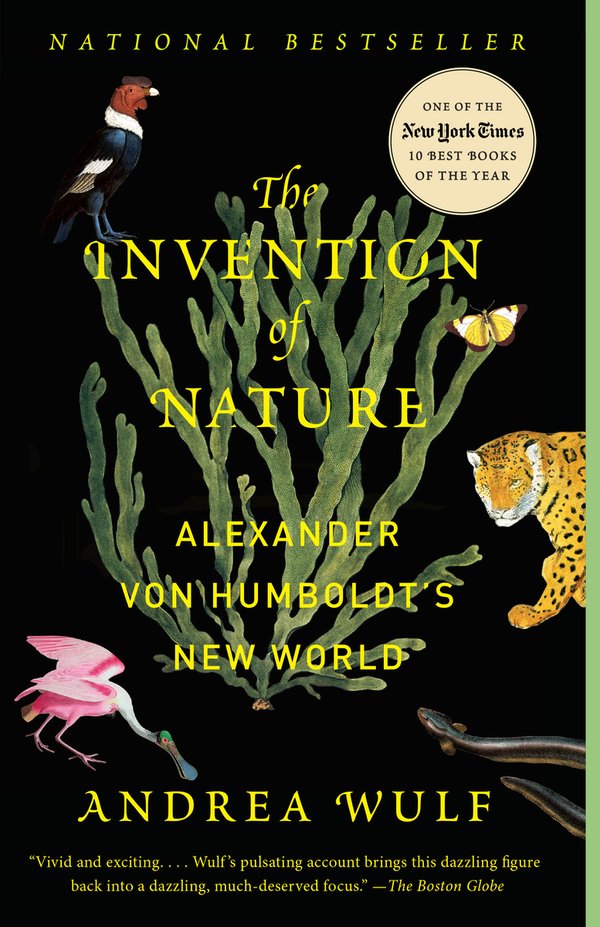
The Invention of Nature
Alexander von Humboldt was the most famous scientist in the world in his lifetime and is now mostly a list of place names. Wulf brings him back: Five years in South America, climbing Chimborazo higher than anyone had gone, and coming down with the idea that the natural world is a single interconnected web — which is where ecology starts. He predicted human-caused climate change in 1800 after seeing what colonial plantations did to a Venezuelan lake. Then the second half traces what he set off in Darwin, Thoreau, Muir, Haeckel, and Marsh. She writes it as an adventure story, which it was. It’s also long and I gave up about three-quarters of the way through. Von Humboldt was amazing, but I got my fill.
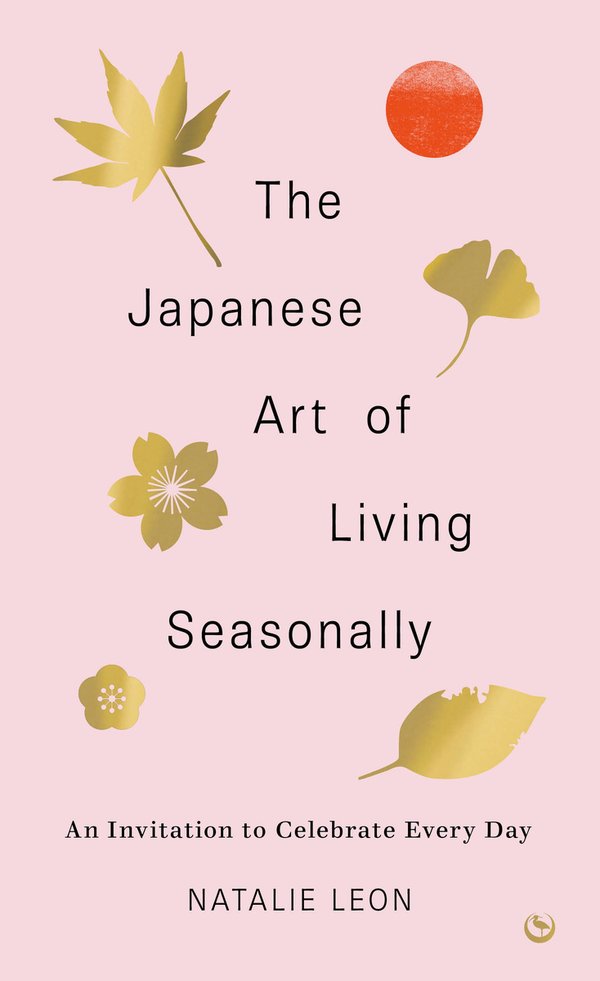
The Japanese Art of Living Seasonally
The old Japanese calendar splits the year into twenty-four sekki and then into seventy-two ko — microseasons of about five days each, with names like east wind melts the ice and rotten grass becomes fireflies. Leon studied tea and spent years on Japan’s seasonal culture, and this walks through what that awareness, kisetsukan, touches: Food eaten at its brief peak, kimono motifs that would be wrong a week later, flower arranging, moon viewing, festivals, visible mending. It’s a dip-in book, and its real proposal is that you can run the same attention on whatever five days are happening outside your own window.
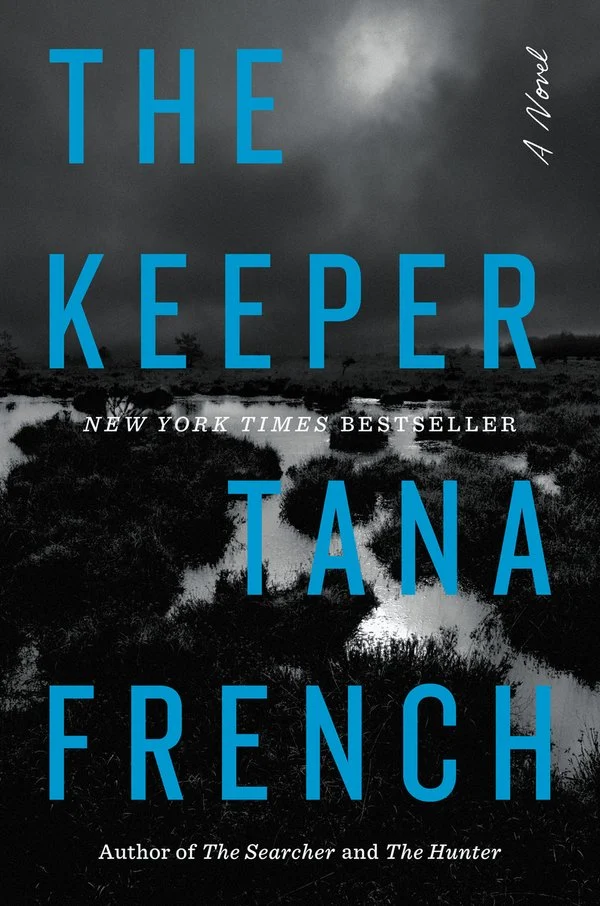
The Keeper
This the last book in French’s Cal Hooper series. Rachel Holohan, about to be engaged to the son of the local big man, is found drowned in the river. Her father wants Cal to look into it, which is the last thing Cal wants, and the village would rather everyone let it be. Meanwhile, large parcels of farmland around Ardnakelty, Ireland, are being quietly bought up by a developer with political connections, and nobody will say what’s going on. Almost the whole book happens in conversation, in which people say pleasant things and mean the opposite.

The Kremlin’s Candidate
The last of the Dominika Egorova spy trilogy, finished as Matthews was dying. Russian intelligence has a mole of its own, in place for decades and about to be appointed to run the CIA, and double-agent Dominika is the only person who can identify her — which means she has to expose her without exposing herself to the Kremlin and Putin, who keeps a very close and personal eye on this ballerina turned agent. It runs through Washington, Hong Kong, Istanbul, and Moscow, and Matthews spends it closing out everybody’s account. He was a CIA case officer for thirty-three years and it shows in the small things: What it costs to run an agent, how people actually get caught, and how rarely it ends well. And he brings the trilogy to a close with the same cold-eyed detachment of career spy. Like the ending or not, it rings true.
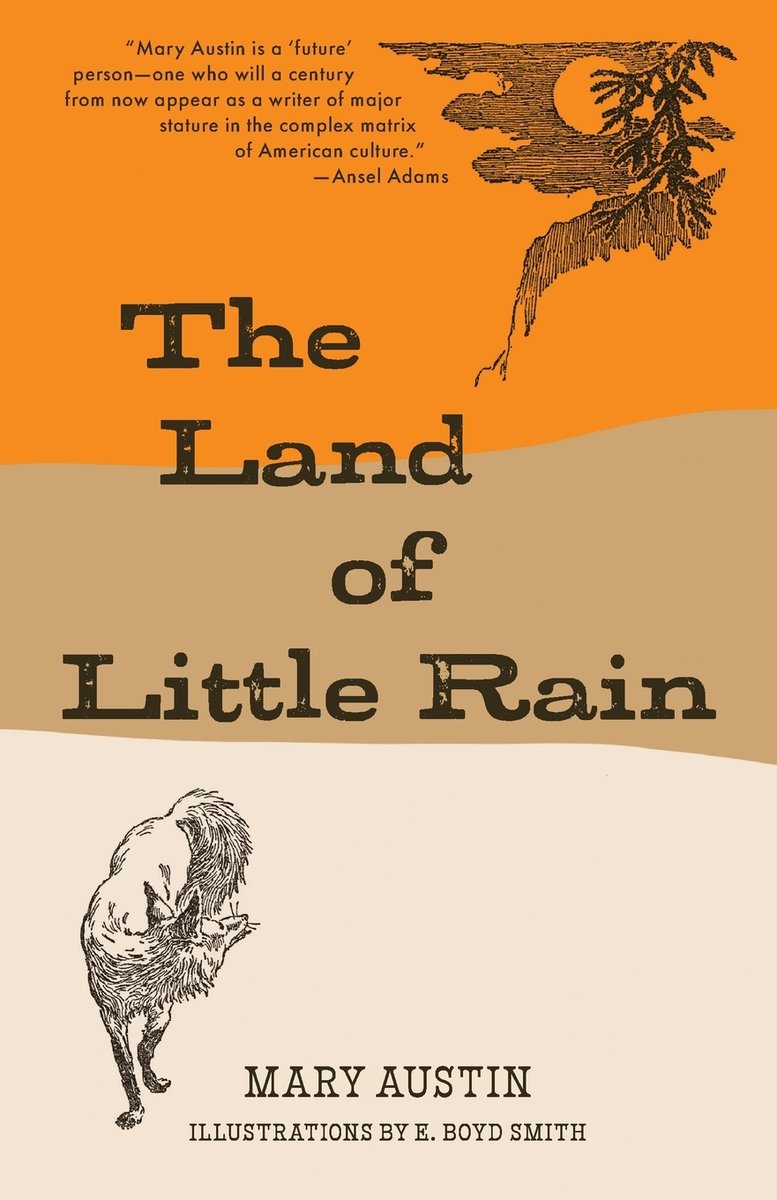
The Land of Little Rain
Austin published this in 1903, out of years living in the Owens Valley between the Sierra and Death Valley, and it’s the book that taught American writers how to look at the desert. Short chapters: A buzzard, a scavenger’s territory, a water trail that every animal in the country uses, a Paiute basketmaker named Seyavi, a mining camp, a Mexican town. She writes the desert as full rather than empty, and she pays attention to the people already there when almost nobody else was. Not long after, Los Angeles took the valley’s water, and she saw that coming too.
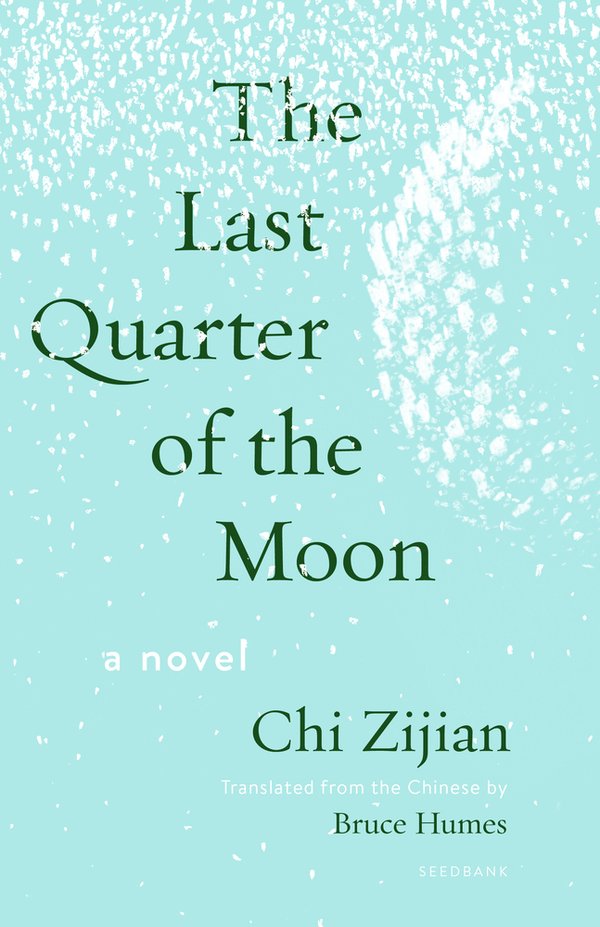
The Last Quarter of the Moon
A ninety-year-old Evenki woman, wife of this northern China clan’s last chieftain, tells the story of a century of her reindeer-herding people’s life to “the rain and the fire” over the course of a single day, as the last of her people board trucks for a government settlement and she chooses to stay behind. It’s one day holding a hundred years, with the last-quarter moon bearing witness overhead. Immediately immersive, the graceful translation by Bruce Humes trusts you with the specificity — urireng, shirangju, the soul called umai — without burying you in glossary; you figure it out. The deaths, and there are many, land because they’re told flatly, the way I imagine a very old person might. Last Quarter is elegy, and a beautiful one.
The Last Ranger
Ren Hopper is a park ranger in Yellowstone, still grieving the death of his wife, and his job is mostly managing tourists who get too close to the animals. His friend Hilly is a wolf biologist whom the anti-wolf faction in the surrounding valleys would like gone. Then she turns up caught in an illegal leghold trap set for her, and Ren starts asking questions that the county, the poachers, and his own bosses all want him to stop asking. Heller writes fly fishing and mountain weather better than the plot mechanics, and the wolf-reintroduction politics are drawn straight from life.
The Last Season
Randy Morgenson spent twenty-eight summers as a backcountry ranger in Sequoia and Kings Canyon, walking a district most people never see, and in July 1996 he didn’t answer the radio. What followed was one of the largest searches in Park Service history. Blehm builds the book from Morgenson’s own journals and from the rangers who knew him, and what comes out is a man who knew that country better than anyone alive and was coming apart — a marriage failing, decades of low pay and no pension, and mounting anger at what the parks were becoming. Where he went and why is answered, eventually, and it takes five years.

The Last Wild Men of Borneo: A True Story of Death and Treasure
Two men, thirty years apart. Bruno Manser, a Swiss shepherd who walked into the Sarawak rainforest in 1984, lived six years with the nomadic Penan, then led their blockades against the logging companies and became a wanted man before vanishing in 2000. And Michael Palmieri, an American draft dodger turned dealer who spent decades going up the rivers buying tribal art and selling it to collectors and museums. One tried to save a world, one made a living off its dispersal, and Hoffman refuses to make either of them simple.

The Laughing Monsters
Roland Nair, a Danish-American with a NATO intelligence job and a private agenda, flies into Freetown to meet his old friend Michael Adriko, a Ugandan special forces soldier who is charming, unreliable, and possibly running a scam involving enriched uranium. They head east through Sierra Leone into Congo and Uganda with Michael’s American fiancée, and everybody is lying to everybody, including to themselves. Johnson wrote it late, and it’s his spy novel — funny, paranoid, and beautifully written, with a very clear view of the aid workers, contractors, and intelligence people circulating through that part of the world.
The Light Eaters
Plants can hear a caterpillar chewing and respond with defensive chemistry. They warn their neighbors. Some appear to count, some to remember, and one Chilean vine imitates the leaves of whatever it climbs, including plastic ones, with no known mechanism for seeing. Schlanger, a climate reporter, spent years with the botanists doing this work and with the ones who think their colleagues have lost the plot, and the fight itself is half the book — what counts as intelligence, whether the word is even usable without a brain, and how much of the resistance is about protecting the line between us and everything else.
The Listeners
June Hudson runs the Avallon, a grand hotel built over mineral springs in the West Virginia mountains, and she came up from the hollers to do it. In 1942, the State Department requisitions the place to intern Axis diplomats and their families for the duration — Germans, Japanese, Italians, with their own chefs and their own politics, held in luxury behind a fence with an FBI agent watching. June has to keep the hotel running and the guests from killing each other. Under it all is the sweetwater in the springs, which behaves in ways the book never fully explains and every local understands. That hint of magical realism adds a touch of mystery to the machinations of humans and their silly little tribes.
The Little Prince
A pilot crashes in the Sahara with eight days of water and a broken engine, and a small boy appears out of nowhere asking him to draw a sheep. The boy is from an asteroid the size of a house, with three volcanoes and one demanding rose, and he has been traveling — meeting a king with no subjects, a drunk, a businessman counting stars he thinks he owns, a lamplighter, and finally a fox who explains what taming is and hands over the line about the essential being invisible to the eye. Saint-Exupéry really did crash in the desert, in 1935, and nearly died there. He drew the pictures himself.
The Living Mountain: A Celebration of the Cairngorm Mountains of Scotland
British author Robert Macfarlane, who wrote the introduction to the 2011 edition of this classic, is no slouch for words, but he struggled to label The Living Mountain, calling it a “formidably difficult book to describe.” He comes close when he offers “field-note, memoir, natural history, and philosophical meditation,” but what Nan Shepherd’s tidy book really is is a love letter to her beloved Cairngorm Mountains in Scotland. Her observations are as sharp the first fall frost, her words as clear as a high mountain stream. The “light is luminous without being fierce, penetrating to immense distances with an effortless intensity,” she writes. John Muir raptured over the Sierra, but Shepherd writes of the Cairngorms with mentholated coolness, and hers is the superior effort, at least when it comes to knowing the “essential nature” that she was seeking from the very first page.
The Lost City of Z: A Tale of Deadly Obsession in the Amazon
In 1925, Percy Fawcett, the most experienced explorer in the Amazon, walked into the Mato Grosso with his son and his son’s friend looking for a city he called Z, and none of them came out. Something like a hundred people have died or disappeared going after them since. Grann tells Fawcett’s story — the Royal Geographical Society, decades of surveying, the obsession — and then, being a New Yorker writer with no relevant skills, goes to the Xingu himself to follow the trail. What he finds is the archaeology that has since shown large, complex settlements really were out there, which means Fawcett was wrong about almost everything except the main thing.
The Lost World of the Old Ones: Discoveries in the Ancient Southwest
The sequel to In Search of the Old Ones, twenty years on. He revisits sites and finds some wrecked by visitation and others still untouched, and pushes into new country — Range Creek in Utah, kept private by one family for fifty years and effectively a time capsule; the Sinagua and Hohokam south of the Colorado Plateau; the Fremont; a Comb Ridge panel nobody can explain. Also, there’s a chapter on the Everett Ruess bones episode Roberts was central to. It’s the same mix as before: Hard hiking, arguments with archaeologists, and real curiosity about people who left no writing. Not as powerful as In Search, but a worthy companion nonetheless.
The Man Who Died
Jaakko Kaunismaa runs a small matsutake mushroom export business in a Finnish town, shipping to Japan, and a doctor tells him he’s been systematically poisoned and has weeks left to live. So he sets out to find out who’s killing him, which is complicated by a wife who’s sleeping with somebody, a competing mushroom outfit that has just opened across town staffed by very strange men, and his own increasing physical uselessness. Tuomainen writes deadpan Finnish comedy about death, and the joke is that Jaakko becomes decisive and rather happy the moment he has nothing left to lose.
The Meadow
A hundred years of one meadow on the Wyoming-Colorado line, at ten thousand feet, told out of order. Author James Galvin owned part of it and knew the people who worked it, chiefly Lyle Van Waning, a man who built his own house and his own tools and lived alone there for decades doing everything exactly right. The book moves between decades chapter to chapter — homesteaders who failed, a woman who froze, cattle, snow, a hay crop that comes in or doesn’t — and the meadow itself is the only continuous character. Galvin is a poet and it reads like one, in short hard sentences.
The Memoirs of Stockholm Sven
As a young boy in Sweden at the beginning of the twentieth century, bookworm Sven Ormson was obsessed with polar adventure, but decades of lethargy and dead-end jobs have led to a man who is, at best, stuck. Spurred by his sister Olga, he accepts a two-year contract working as a miner on Spitsbergen, an island halfway between Norway and the North Pole. Early on, a mine shaft collapses, killing nine and grievously wounding Sven. His face is crushed, one eye gone, but the accident is one of the externalities that propel him forward when he can’t do so himself. Wry, sardonic, and funny, Sven narrates his path from victim to legendary Arctic fur trapper, accompanied by a handful of friends (human and canine) who see his worth even when he doesn’t. Based on a real hunter about whom little is known, fictionalized Sven is a cracking good observer of northern scapes, solitude, and the healing power of the human heart.
The Mind of a Bee
Chittka has spent his career designing experiments for bees, with astounding results. Bees count. They recognize human faces. They learn to roll a ball into a goal for a sugar reward by watching another bee do it, then improve on the method. They play with wooden balls when there’s nothing in it for them. They can be pessimistic after a bad experience. All of this out of a brain with under a million neurons. He walks through how bees see color and polarized light, how they navigate, how the waggle dance actually works, and ends where the evidence points, which is at the question of whether a bee feels anything.
The Ministry for the Future
It opens with a heat wave in Uttar Pradesh that kills twenty million people in a week, and the rest of the book is the world reacting. A UN agency is set up in Zurich to represent people who aren’t born yet, run by an Irish administrator with no real power, and Robinson spends four hundred pages on the unglamorous machinery of how it might actually get done — central banks, a carbon coin, glacier engineering, refugee law, rewilded corridors, and a violent wing nobody officially condones. He tells it in fragments: Minutes of meetings, eyewitness accounts, riddles told by an atom of carbon. It’s the most detailed optimistic future anybody has written.
The Ministry of Time
A near-future British government has time travel and no idea what to do with it, so it pulls a handful of people out of history moments before they would have died and assigns each one a “bridge” — a civil servant who lives with them for a year and helps them adjust. The narrator gets Commander Graham Gore, a real officer off Franklin’s lost Arctic expedition of 1845. Most of the book is the comedy of that: A Victorian naval officer discovering Spotify, cigarettes, and washing machines, and the bridge falling for him while filing weekly reports on him. Then the spy plot arrives. Bradley’s mother was a Cambodian refugee, and the book’s real subject is what it costs to be told to assimilate.
The Mojave: A Portrait of the Definitive American Desert
Darlington spent years driving and walking the Mojave in the years around the fight over the California Desert Protection Act, and the book is built out of the people who live there and can’t agree on anything. Miners who see a park as theft. Cattlemen with allotments going back generations. Off-roaders, the Sierra Club, the Marine base, the Park Service. Desert tortoise biologists counting a species going down. He gives everybody their say at length, drives a lot of dirt road, and gets at what makes this particular desert — high, cold, empty, unlovely at first look — the one people fight hardest over.
The Monkey Wrench Gang
Four people meet on a river trip and decide to start wrecking things: a Vietnam surgeon with three ex-wives, a Mormon river guide with three current ones, a Bronx kid turned desert fanatic, and a woman from the Bronx who keeps them all pointed. They burn billboards, pour sand in bulldozer crankcases, and pull up survey stakes, working their way toward the one target that matters, Glen Canyon Dam. Abbey wrote it funny and profane and never pretended it was a manual, but Earth First! took it as one anyway, and the phrase monkeywrenching came straight out of these pages.
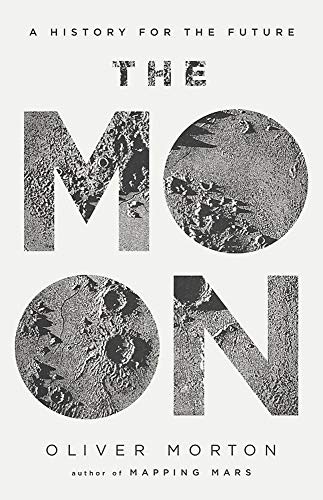
The Moon
Morton is a science writer and this is the moon from every angle at once: how it formed and why that mattered for life here, what Apollo was as a political project, the geology of a dead world and what the samples told us. Then the long strange history of the moon in imagination — the fiction, the hoaxes, the paintings — and finally the present push to go back, the water at the poles, and who thinks they’ll own it. He’s good on the emotional fact underneath it all: A generation watched people walk up there and then nobody went again for fifty years.
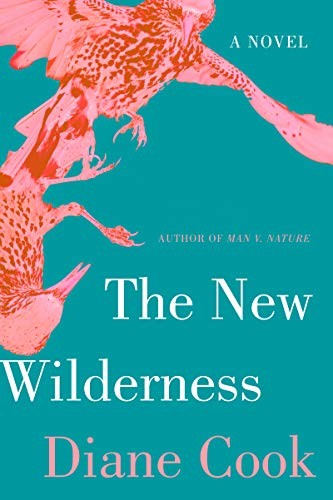
The New Wilderness
Many dream of the camping trip that never ends. Surely our best selves are found in nature, right? In Diane Cook’s novel The New Wilderness, a mother saves her daughter from pollution-induced asthma by moving to the Wilderness State, an experimental preserve where a small group of volunteers live nomadically as hunter-gatherers. The air is clean, the water runs clear, and the night sky sparkles. There’s also a Manual, capital M, a sort of Leave No Trace set of rules to keep the Wilderness State pristine, and Rangers for reinforcement. All effort is toward survival; when a person dies—from a cougar mauling, river crossing, or simply being left behind due to injury—there are no funerals. As years go by, the utopian vision oozes into disturbing desperation. Fans of Ursula K. Le Guin and Margaret Atwood will love this dark, all-too-real story of our relationship with nature and each other. I’ve read it three times just for immersion in her built world.
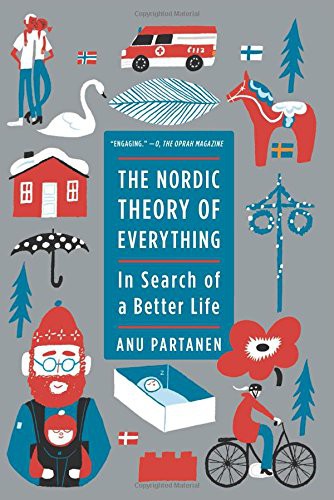
The Nordic Theory of Everything
Partanen moved from Finland to New York, married an American, and found herself suddenly anxious in ways she never had been — about health insurance, about childcare, about student debt, about what happens if a job ends. Her argument is that the Nordic model isn’t about generosity or collectivism; it’s about independence. Universal healthcare, childcare, and education mean no adult is financially dependent on a spouse, a parent, or an employer, which is a more thoroughly individualist arrangement than what Americans have. She’s specific about costs and outcomes and honest about what the Nordics get wrong, but as an America reader, the mirror she holds up to the US is sharp-edged.
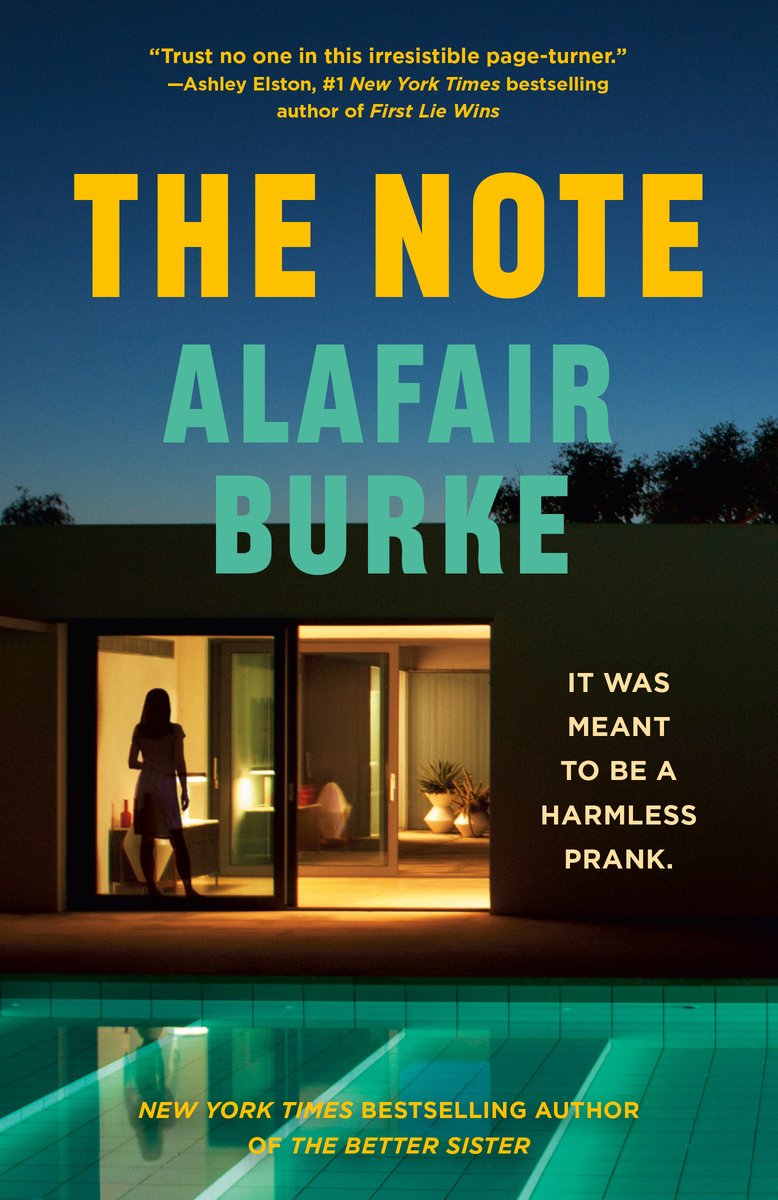
The Note
Three women who met as teenagers and have a bad summer in their shared past take a weekend in the Hamptons to patch things up. A car cuts them off, they’re annoyed, and one of them leaves a note on the windshield as a joke. The driver vanishes, the note becomes evidence, and every reporter who covered their old scandal comes back around. Burke was a prosecutor and it shows in the mechanics — how quickly a stupid impulse becomes a legal problem, how the press rebuilds a story from fragments. The rub is what the three of them decide to tell each other and what they hold back. It’s not at all like the Apple series “Imperfect Women,” but not unlike it, either.

The Notebook
A history of the blank book, and it’s better than that sounds. Allen starts in medieval Italy, where merchants worked out double-entry bookkeeping and needed something to keep it in, and paper had just gotten cheap enough. From there the notebook goes everywhere. Ships’ logs. Commonplace books where readers copied out what struck them. Leonardo’s mirror writing. Darwin’s field notes. Anne Frank’s diary. Police notebooks. Patient journals used as therapy. Bullet journals. His argument is that the notebook isn’t a passive container, it’s a thinking machine, and a fair chunk of what humans have figured out got figured out in one.
The Old Ways
Macfarlane writes that an old path is a record of everyone who wore it, that walking one puts you in their company whether you want it or not, and that this does something to the inside of your head — which is where he thinks a lot of thinking and most poetry actually comes from. So he goes looking for the oldest ways still walkable. The chalk of the Icknield Way. The peat roads of Lewis. An open boat on the sea roads to the Shiants. Six miles of tidal sand off Essex where the horizon disappears and the tide comes back faster than a man walks. His test case is Edward Thomas, who walked England compulsively, was talked into poetry by Robert Frost at forty, enlisted in WWI fight, and died at Arras. The last chapters walk to where he fell.
The Omnivore’s Dilemma
This book disabused me of my illusions about “organic” and introduced me to Michael Pollan. He tackles four meals, traced all the way back to their sources. There’s a fast food dinner eaten in the car, which turns out to be corn dressed up as burgers — Pollan buys a steer and follows it from a South Dakota ranch to an Iowa feedlot. There’s an industrial organic meal, which is the same system as non-organic, but with better labeling. There’s a meal from Joel Salatin’s Virginia farm, where grass, cattle, and chickens are rotated into an actual working cycle — not organic, but closer to the roots. And then one he hunts, gathers, and forages himself, including shooting a pig in Sonoma. His famous takeaway: Eat food, mostly plants, not too much.

The Overnight Guest
Wylie Lark is a true crime writer holed up in a rented Iowa farmhouse over Christmas, working on the 1980s murders that happened in that house — two parents shot, a girl missing, a boy who survived. A blizzard comes in, the power goes, and she finds a small child unconscious in the snow in the yard. Gudenkauf runs three timelines: The night of the killings, a woman and a boy held in a locked room somewhere, and Wylie in the storm. They come together in the way you hope they won’t. The weather does half the work — a whiteout on flat ground with no neighbors.
The Overstory
I was skeptical about this book, with its nine human characters, sprawling timeline from nineteenth century New York to Occupy Wall Street, and magical realism meets science fiction meets eco-terrorism fable. Wait, what? But Richard Powers, who’s won a National Book Award and a MacArthur Fellowship, knows how to build a fire. The Overstory earned the 2019 Pulitzer Prize, thousands of impassioned reader reviews (both good and bad but mostly good), and, more important, the wholehearted love of the Lorax. In this novel (and in real life, too), the trees are as alive as the people—mulberries bleed, chestnuts groan, walnuts choke—and they create communities, transform the landscape, and talk nonstop: “We’d drown you in meaning” if only humans knew how to listen. Though massive as a redwood, Overstory’s tiniest moments whirl cinematically, like maple seeds spinning, searching for a spot to take root.
The Pacific Crest Trail
Not a guidebook. Powell hiked the PCT and made a visual compendium of it — hand-drawn maps, charts, and diagrams covering the whole 2,650 miles from Campo to Manning Park. Elevation profiles, snowpack, water sources, the mileage between resupply towns, gear weights, what people actually eat, how many hikers start versus finish, and the geology and ecology changing as you go north through desert, Sierra, and Cascades. It’s a browsing object for anybody who likes seeing a big thing rendered as data and a decent planning aid alongside the real guides. Data doesn’t usually mean fun, but it does here.
The Painter
Jim Stegner is a painter with a real market, two dead marriages, a daughter who was murdered, and a prison term for shooting a man in a bar. He’s living in Colorado trying to fish and paint and stay level. Then he comes across a man beating a horse half to death on a back road, and he does something about it, and the man’s family comes for him. The rest is a chase through Colorado and New Mexico with Stegner painting the whole way — Heller writes the act of making a picture better than almost anyone, which is what lifts this above the thriller it otherwise is.
The Passenger Seat
Two teenagers, Adam and Teddy, in a small town at the end of a summer. Adam is the one with the ideas, deep in video games and internet grievance; Teddy is the one who goes along to see what happens. They buy a rifle — the security camera in the store watches them do it — and drive north toward the Arctic in a camper van with no plan. On the highway, they come across a young couple, and Adam decides to have some fun with them. Khurana calls the pair boys-or-men throughout and writes in short flat chapters alternating between the two characters. Based loosely on a real Canadian case.
The Peacock and the Sparrow
Shane Collins is fifty-two, divorced, twenty-five years in the CIA, and finishing his career in Bahrain during the Arab Spring, chasing evidence of Iranian support for the Shia uprising that his bosses in Washington badly want to exist. He’s tired, drinking, and reporting to a station chief half his age. Then he meets Almaisa, a Bahraini artist who shows him the parts of the island the expat compounds never touch, and his informant gets tangled in a killing. Berry spent six years as a CIA operations officer, including two in Bahrain during the uprising, and it shows in the tradecraft and the fatigue. It won the Edgar for best first novel.
The Pine Barrens
A million acres of sand and pitch pine in the middle of the most crowded state in the country, sitting on an aquifer holding trillions of gallons of clean water, with almost nobody living in it. McPhee spent months there in the sixties with the people who did — the Pineys, families going back generations, gathering sphagnum moss, cutting cedar, running a gas station, telling him about the place while a plan sat on a desk in Trenton to put a jetport and a city of a quarter million people in the middle of it. The book is a big reason that never happened.
The Power
Teenage girls start producing an electrical charge from a strand of muscle across the collarbone, enough to hurt, enough to kill. They can wake it in older women. Inside a decade, the whole arrangement of the world has flipped. Alderman follows four people through it: A Nigerian journalist filming everything, a London crime family’s daughter, an American politician, and a girl on the run who hears a voice and becomes a religious figure. The move that makes it work is that nothing gets better. Power just changes hands and behaves the same way, and the framing device around the novel makes that the joke and the knife.
The Power of Trees
Wohlleben’s argument is that forests are better at adapting than we credit and that most of what we call forest management gets in the way. Trees pass on learned drought responses to their offspring, which is inheritance without genetics. Old trees shelter young ones and regulate the microclimate for miles. He slams commercial forestry — plantation monocultures sold as climate solutions, the wood-pellet trade, the salvage logging after fires — and argues the fastest carbon strategy available is to leave large areas alone and let them do it themselves. It’s a worthy companion to The Golden Spruce and The Overstory.
The Practice of the Wild
Over nine essays, Snyder strives to separate wilderness from wildness. Wilderness is a legal designation; wildness is a quality of self-organizing process, present in an old-growth forest and equally in your own body and in language. He writes about walking, about the etymology of wild, about the difference between a place and a piece of real estate, about bioregionalism and learning the watershed you live in, and about the ethics of eating. He’d been a logger, a fire lookout, and a Zen student in Japan and never gets mystical about it.
The Quiet American
It’s Saigon in the early fifties, the French war going badly. Fowler is a British reporter, middle-aged, opium in the afternoons, living with a young Vietnamese woman named Phuong and determined to have no opinions about anything. Pyle is a young American just arrived, earnest, armed with a book about a Third Force that will save the country from both colonialism and communism. He steals Phuong, he starts arranging things, and people die in a city square. Greene wrote it in 1955 and Americans hated it for a decade, at which point it began to look more like reporting than fiction.

The Revenge of Analog
Sax noticed—in 2016, the year I launched AJ in print—that vinyl, paper notebooks, film, board games, and independent bookstores were all growing while the industries around them digitized, and he set out to find out why. It isn’t nostalgia — the buyers are often young and have no memory of the originals. He reports from a record pressing plant running flat out, a Moleskine factory, Impossible Project buying Polaroid’s last machines, a Toronto board game café, and inside the tech companies whose employees send their kids to schools with no screens. His point is that analog things impose limits and friction, and that people are choosing that on purpose.
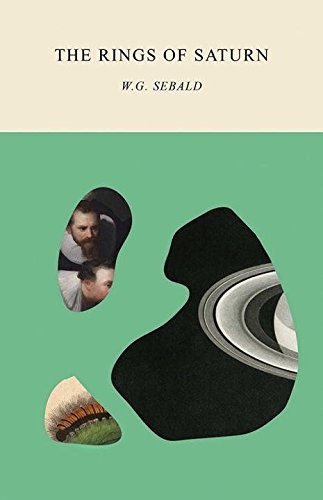
The Rings of Saturn
A man walks the coast of Suffolk, England, and the walk keeps opening into other things. A skull, a herring fishery, Thomas Browne’s missing remains, the silk trade, Joseph Conrad in the Congo, the Taiping rebellion, a collapsing country house, the hurricane of 1987 that flattened the woods. Sebald moves by association with no chapter breaks and grainy photographs dropped in unlabeled, and the cumulative subject is destruction — how much of it there has been, and how the landscape holds it quietly. Nobody else writes sentences like this, and the book invented a whole mode that people are still copying. I’d happily write that way, too, if I ever finished the book. It’s digressive, discursive, transgressive—all good, but the density of British place names and dated cultural references made it tough sledding for this Amurican.
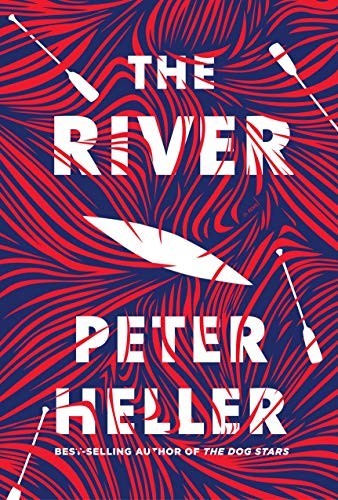
The River
Award-winning writer Peter Heller has traveled the world as an expedition kayaker from the High Pamirs of Tajikistan to Central America to Peru. Which is to say, few can write about rivers — their shifting colors, sounds, and moods — like Heller. Now the Colorado author of the bestselling dystopian novel The Dog Stars merges his paddling experience with his mastery of suspenseful stories. The River tells of two earnest young men, college best friends from different backgrounds: Wynn, a Vermonter with a goofy smile who learned to canoe at summer camp, and Jack, a tough, skeptical rancher from the Rockies who grew up working outside. With fly rods and smoking pipes and a few good books, they’ve set off on a monthlong canoe trip in the Canadian wilderness, but the adventure takes an ominous turn from the start.
The Rose of Tibet
The time is the early 1950s. The place is Central Asia. The backdrop is geopolitics, with the great powers of Britain, China, and others wrestling in the shadows for influence over India, Tibet, and Nepal. Into this cauldron stumbles fictional London art teacher Charles Houston, who is searching for his brother, who disappeared on a film shoot in the Himalaya. Houston is a heavy drinker, enamored with women, unprepared for expedition or adventure, and yet he finds himself at the center of intrigue, lost treasure, and forbidden love. To locals, he is the embodiment of a prophecy and a bad omen; to officials, he is a nuisance and a threat. For readers, he’s the protagonist of a tale still rollicking sixty years after it was written.
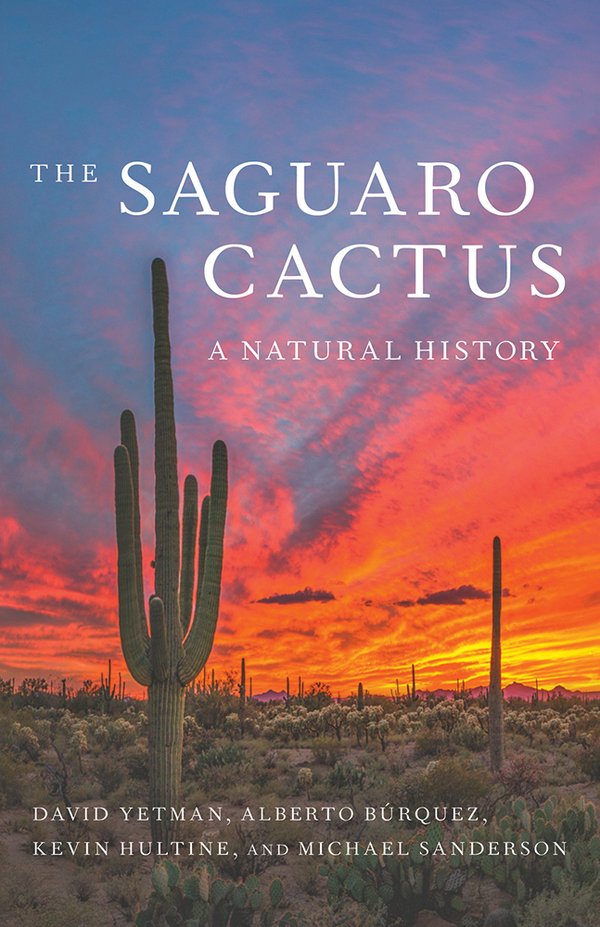
The Saguaro Cactus
Yetman and his coauthors cover the saguaro’s biology and its absurd arithmetic — it takes decades to reach a few inches, a hundred and fifty years to full height, thousands of seeds a year of which almost none survive — plus the nurse trees it needs to start, the bats and doves and woodpeckers that depend on it, and its exact range, which is smaller than most people think. Then there’s the human history: The Tohono O’odham harvest and the wine ceremony that begins their year, and the plant’s slide into being a cartoon shorthand for the whole American West. It’s all academic until you meet one in person; I was recently visiting a friend, who introduced me to a foot-high saguaro he’d planted himself. That little guy represents countless of generations of success.
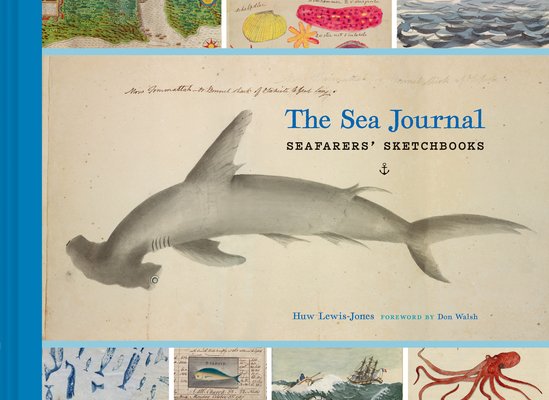
The Sea Journal: Seafarers’ Sketchbooks
Facsimile pages from the private logbooks and sketchbooks of people at sea across four centuries. Naval officers, whalers, a ship’s surgeon, naturalists, a young woman on an emigrant voyage, modern sailors and marine biologists. Watercolors of coastlines drawn as navigational aids, sketches of animals nobody had names for, weather notes, complaints about the food, drawings of shipmates. Each contributor gets a short bio and a few spreads of the real pages. Companion to Lewis-Jones’s explorer and writer sketchbook volumes.
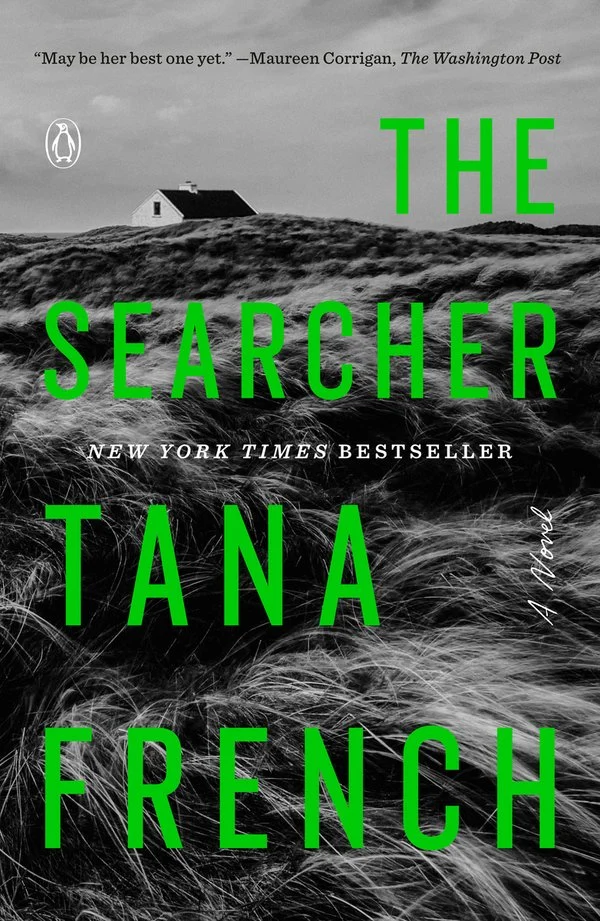
The Searcher
Cal Hooper takes early retirement from the Chicago police after twenty-five years, a divorce, and a daughter who barely speaks to him, buys a wrecked cottage in the west of Ireland, and plans to fix it up and shoot rooks and be left alone. A kid keeps watching him from the trees. The kid turns out to be Trey, thirteen, whose older brother walked out of the village six months ago and whom nobody is looking for. Cal starts asking around, politely, and finds out how a small place closes ranks. It reads like a western.
The Secret Dinner
Brazilian thriller from 2016, first published in English by Celadon in August 2026. Four childhood friends leave rural Brazil for a shared apartment in Copacabana — students working part-time jobs, chasing the city and a future. When the rent jumps beyond what they can cover, they hit on a scheme to keep the place and get pulled into a circuit of private dinner parties staged for wealthy Rio clients with very particular appetites. It’s a satire of hustle culture as much as horror, and reviewers are open about the cannibalism premise, so it’s not a hidden turn — it’s the secret sauce.
The Secret Hours
A standalone in the literary spy world of Slough House. A pointless government inquiry called Monochrome has been given a windowless room and no real powers, and two civil servants have spent two years finding nothing — until a classified file lands on their desk that nobody meant to send them. It concerns an operation in Berlin in the nineties that went badly wrong. The book moves between the inquiry and that operation, and the pleasure is watching Herron write young versions of people you already know without ever naming them until he’s ready. It’s funny, cynical, and a great entry point for anybody who hasn’t started the series (book or TV).
The Secret Knowledge of Water
Two things are true in the desert: There isn’t enough water, and there is way too much of it. Childs spends the book hunting the first and getting caught by the second. He maps water holes in the Arizona desert, sleeps beside tinajas counting how long they hold, watches bees and doves lead him to seeps. Then the flash floods — a wall coming down a slot canyon, the physics of a wash that was bone dry an hour ago, and the bodies floods leave behind. He nearly dies more than once and reports it flatly. It made his name, and the water-hole fieldwork underneath it is real research.
The Secret Lives of Color
Seventy-five colors, two or three pages each, and every one has a story with a twist. Mummy brown was made from actual ground-up mummies, and Victorian painters kept buying it until they found out. Scheele’s green was arsenic and it poisoned the wallpaper of half of Europe. Ultramarine came from one mine in Afghanistan and cost more than gold. Tyrian purple took thousands of sea snails per gram. Indian yellow was supposedly made from the urine of cows fed only mango leaves. St. Clair organizes it by shade, writes short, and gets at how much of art history was decided by which pigments a painter could actually get.
The Seep
An alien species arrives and instead of invading it just seeps into everything — the water, the food, the bodies — and makes the world gentle. There’s no scarcity, no illness, no death you don’t choose. Trina Goldberg-Oneka, a trans woman in her fifties, hates it. Then her wife decides to use the Seep to be reborn as a baby and start over, and Trina is left alone in a paradise with a grief nobody around her can even conceptualize anymore. It’s under two hundred pages, very funny, and it works as a book about utopia and a book about a bad breakup at the same time.
The Serviceberry
A short book — essay length, illustrated — built on one plant. The serviceberry ripens in June and everything eats it: Birds, bears, people. Kimmerer uses it to lay out what she calls a gift economy, the way it works in the woods and the way it used to work among people, where abundance gets circulated rather than stockpiled and status comes from what you give away. She sets that against an economy built on manufactured scarcity, and points at the places gift logic still runs — seed libraries, tool shares, food banks, neighbors. It takes an hour and it’s the distilled version of her whole argument.
The Snow Child
This Pulitzer Prize finalist feels like winter—wet snowflakes on eyelashes, the smell of a woodstove, fear of long, dark nights. Inspired by an old Russian folk tale, it’s a fictional story about a novice homesteading couple in 1920s Alaska who are unprepared for the frontier’s harsh demands. One day on a whim, they build a childlike snowman; overnight, the snowman vanishes and a mysterious little girl appears from the woods. She is skittish around people yet sure-footed as a mountain goat in the snow, trapping animals for food with a wily red fox as her hunting companion. Named after alpenglow, she is fearlessly at home in the very wilderness that threatens the homesteaders. Where is she from and why does she disappear at night? Is she a fairy tale come to life? The Snow Child shifts between the fantastical and the real, an immersive, haunting fable about finding hope in wildness that stays wild.
The Songlines
Chatwin went to central Australia to find out how Aboriginal songlines work — the invisible tracks across the country laid down by ancestral beings, sung into being, where the melody carries the shape of the land so a man can navigate a thousand miles by singing his way along it and trade the verses with people who speak other languages. Half the book is him traveling with a Russian-Australian fixer named Arkady, meeting people who tell him some of it and pointedly don’t tell him the rest. The other half is his old notebooks, a lifetime of quotes and field notes arguing that humans are built to walk and go wrong when they settle. Read it knowing he shaped what he heard. Chatwin is, after all, one of the most famously unreliable narrators.
The Soulmate
Pippa and Gabe move their family to a cottage on a cliff in coastal Australia — a beautiful spot with an ugly reputation, because people come there to jump. Gabe has talked several of them down, which has made him a local hero. Then a woman goes over while he’s up there with her, and his account of it doesn’t match what Pippa saw from the window. The story alternates between Pippa now and the dead woman’s own voice working backward through her life, and the two marriages turn out to be tangled together well before that night.
The Sparrow
A radio telescope picks up singing from Alpha Centauri, and the Jesuits — who have been doing astronomy and first contact for four centuries — quietly fund and crew the first mission. Eight people go. One comes back, mutilated and disgraced, and the book alternates between the joy of the voyage out and the inquiry that is taking him apart afterward. Russell is an anthropologist, and the alien world is built as an anthropologist would build it, with two species in a relationship the humans read completely wrong. It’s a book about faith and what happens to it, and the reveal is one of the harder ones in science fiction, though I’m not sure it’s as hard as she thinks.
The Spell of the Sensuous
Abram’s first book and the argument the rest of his work rests on. He apprenticed himself to traditional healers in Indonesia and Nepal, expecting to talk about magic, and found their real work was keeping relations square with the land. Then he asks the question the book turns on: What happened to us? His answer is the alphabet. Older writing systems kept pictures of the world in them, and the phonetic alphabet cut that cord, so letters came to refer only to human sounds and the world went quiet. He runs it through phenomenology without making you suffer, and the passages on being outdoors after all that thinking are the payoff.
The Stranger at the Wedding
Annie is a university professor who never much believed in love until Mark, a surgeon she kept passing on the morning commute and then met properly at a support group for trauma survivors. Both of them are carrying something they haven’t said out loud. The wedding goes perfectly until she scans the pews and sees a man nobody invited. From there, author Gauntlett reels it backward: Mark’s first marriage coming apart over drinking and infertility, the mysterious friend his first wife made shortly before she vanished, and the question of whether Annie and Mark meeting was chance at all. Gauntlett is a London literary agent who wrote it in secret while representing other people’s books.
The Sunset Route
This book stopped me in my, ahem, tracks, and I was obsessed with the idea of excerpting it in Adventure Journal (we did—thanks, Carrot!). Quinn grew up in Anchorage with a mother deep in untreated schizophrenia — no heat, no food, dumpsters — and a father gone. She got out to Colorado, then spent years riding freight trains around the country with a stolen crew-change guide, sleeping in ditches and jungles, and eventually walked thousands of miles of long trails. The book alternates the childhood with the riding, and she writes both without asking for sympathy. The freight material is the real thing: How you catch one, where you hide, what a rail yard sounds like at four in the morning, and how insanely cold an open car can be in winter over the Cascades.
The Survival of the Bark Canoe
Henri Vaillancourt was in his twenties in Greenville, New Hampshire, building birchbark canoes by hand — no plans, no power tools, bark peeled off standing trees, split spruce root for lashing, pitch for the seams — because almost nobody was still doing it and the men who knew how were dying. McPhee spent time in the shop watching, then went with him and three others on a one-hundred-fifty-mile trip through the Maine woods, roughly Thoreau’s route. The canoes are magnificent and the book is revered. On the water, McPhee draws him as a superb craftsman and a lousy companion, bad at reading water and worse at admitting it. When we went to excerpt the book in Adventure Journal and I called Vaillancourt about photos, he told me McPhee grossly misrepresented him and wanted nothing to do with it. That killed the excerpt.
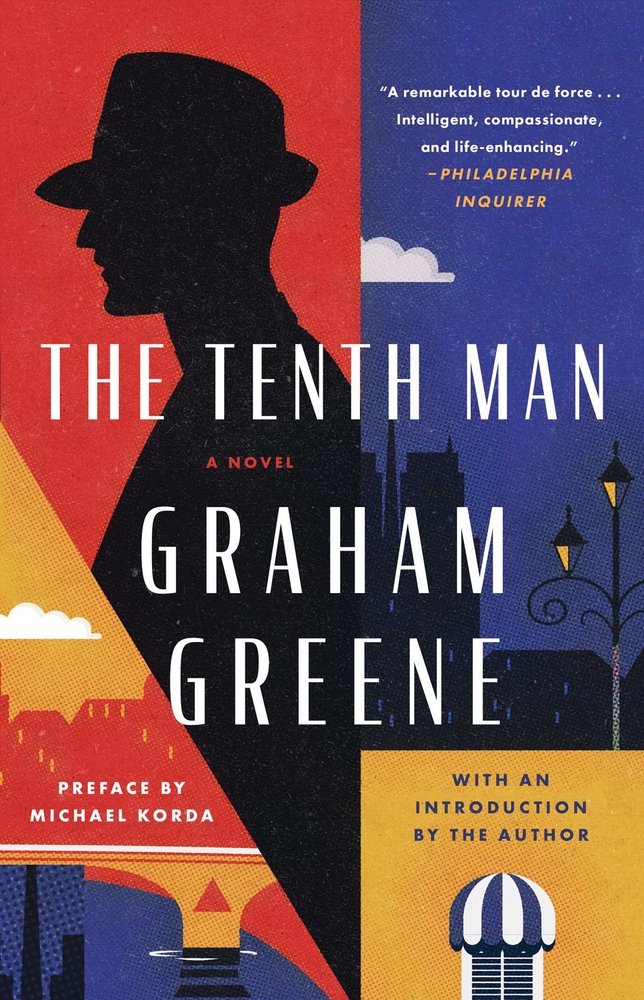
The Tenth Man
It’s set in a German prison in occupied France, with thirty hostages, three to be shot, lots drawn to see who goes. Chavel, a wealthy lawyer, draws one of the marked slips and offers everything he owns — house, money, all of it — to any man who will take his place. A young man named Janvier does it for his mother and sister. Chavel survives the war with nothing and drifts back to his own house, now theirs, where nobody recognizes him, and he takes a job as their handyman. Greene wrote it for a movie for MGM in the forties, forgot about it, and it surfaced in a studio vault in 1983.
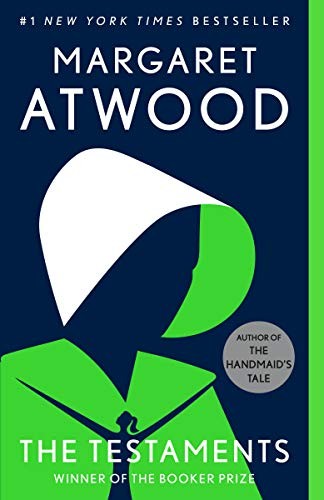
The Testaments
It’s thirty-odd years after The Handmaid’s Tale, told by three women. Aunt Lydia, the most senior of the Aunts, who runs Ardua Hall and has spent years quietly compiling files on everybody who matters. Agnes, raised inside as a commander’s daughter, being prepared for marriage at thirteen. Daisy, a teenager in Toronto who finds out her life is not what she was told. The crux is Lydia. Atwood gives her a past as a family court judge, shows the day the regime took her, and lets her explain exactly what she traded and what she’s been building since. It won the Booker and it moves like a thriller.
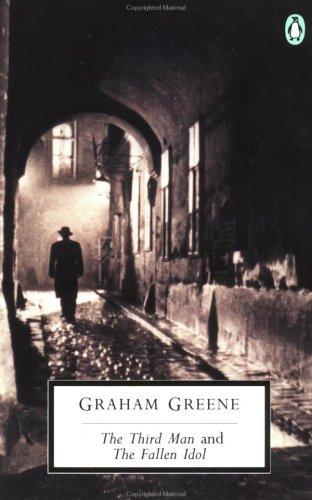
The Third Man
Vienna after the war, the city carved into four occupation zones and half of it rubble. Rollo Martins, a broke writer of pulp westerns, arrives to take a job from his old friend Harry Lime and finds Lime’s funeral instead. Witnesses disagree about how many men carried him from the street. Then Martins learns what Lime was selling on the black market — diluted penicillin — and where it ended up. Greene wrote this as the treatment for Carol Reed’s 1949 film rather than as a novel and the two have different endings, so read it and then watch the movie.
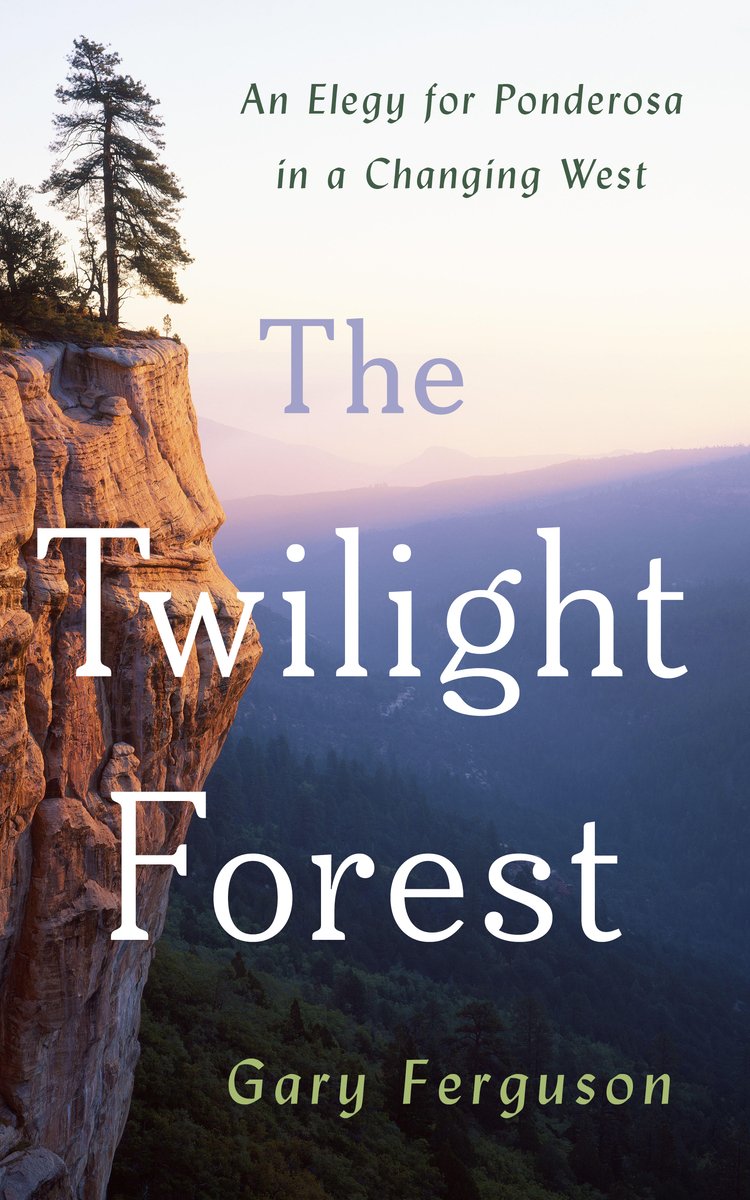
The Twilight Forest
Ponderosa is the tree that makes the Southwest the Southwest— cinnamon bark, high open groves you can ride a horse through, vanilla smell in the sun. In the last decade, from Santa Fe to the Sierra, more than two hundred million of them have died, and the projection is that under five percent of southwestern ponderosa may be left by mid-century. Ferguson drove New Mexico, Arizona, Utah, and California asking why — climate, drought, beetles, and a century of putting out every fire — and wrote the natural and human history alongside it. It’s short, it’s warm, and he’s writing about a thing he loves while it goes.
The Underground Railroad
Cora is a teenager on a Georgia cotton plantation, working a patch of dirt her grandmother claimed, abandoned by a mother who ran and never sent word. When Caesar asks her to go with him, she says no, then says yes. Whitehead’s move is to make the underground railroad an actual railroad — boxcars, engineers, tunnels hacked out under the fields — and then use the stops the way a fabulist would. Each state she surfaces in is a different American experiment on Black people. South Carolina looks like uplift and turns out to be sterilization and medical trials. North Carolina has outlawed Black existence entirely and hangs the evidence along the road. Behind her the whole way is Ridgeway, a slave catcher whose fixation on her is really about the mother who got away. It won the Pulitzer and the National Book Award.
The Unveiling
Striker is a Black film scout on a luxury Antarctic cruise, photographing locations for a big-budget movie about Shackleton, and she’s the only Black passenger aboard among tech money and blended families she watches with a very dry eye. Then a kayaking excursion goes wrong and a group of them is stranded on an island on the Peninsula, where the cold starts stripping everybody down to what they actually are. Barry wrote it without a single chapter break, and the narrator’s deepest fear — losing her mind — makes everything she reports suspect. Literary horror, and it earns the label.
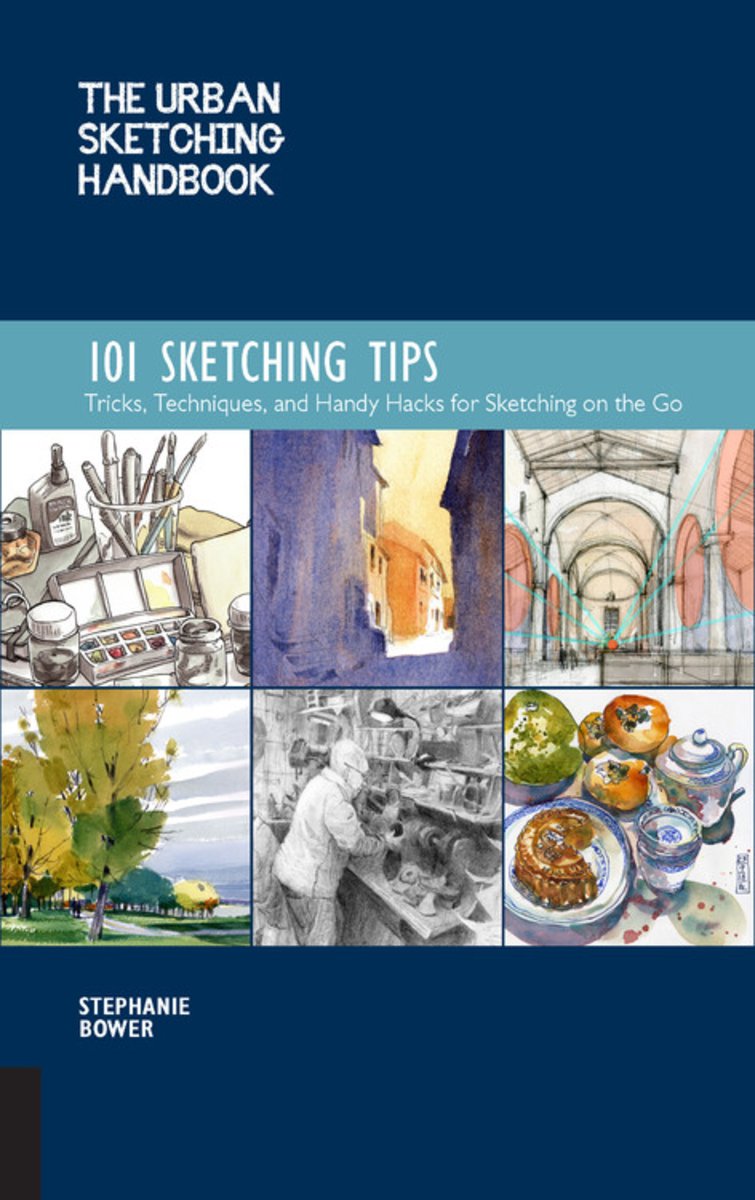
The Urban Sketching Handbook: 101 Sketching Tips
Bower trained as an architect and taught architectural drawing, and this is the tips volume — a hundred and one short entries you can flip to quickly. How to find eye level and why everything depends on it, how to check an angle with a pencil held at arm’s length, how to size a doorway to a person, how to fix a drawing already going wrong, when to stop. Each tip gets a page or a spread with her own sketches showing the right and wrong version. Perspective is the spine of it. My favorite of the series.

The Urban Sketching Handbook: Architecture and Cityscapes
This is the buildings volume and the one that fixes the most common glitch. It’s all about perspective, finding eye level, one and two vanishing points, how to draw a street that runs uphill, how to fake a crowd of windows without counting every one. Then texture — brick, glass, corrugated iron, wet asphalt — and how to decide what to leave out, which is a lot of it. The chapters are short, with his sketches next to sketches from other urban sketchers, and a lot of before-and-after showing where a drawing went wrong and why.
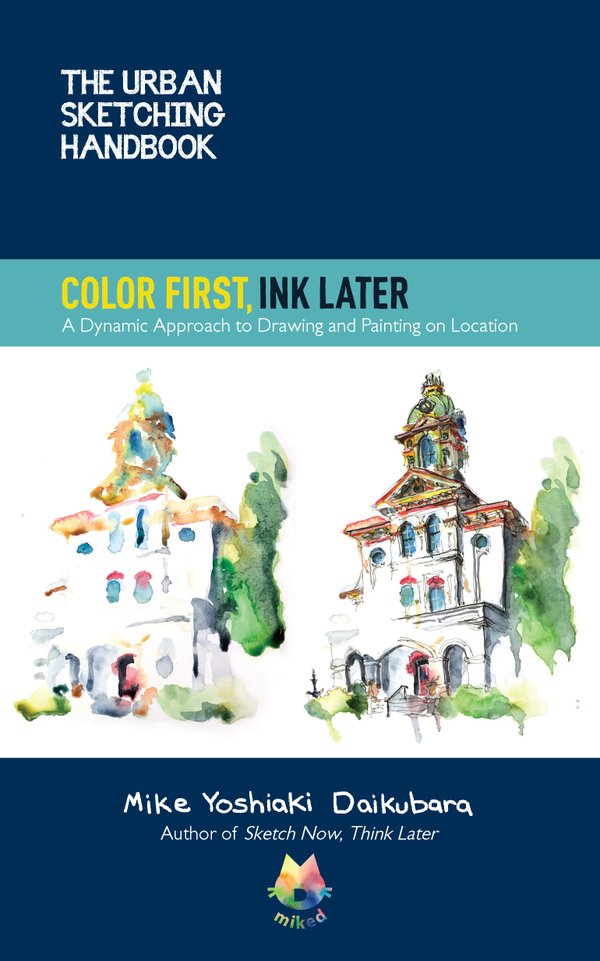
The Urban Sketching Handbook: Color First, Ink Later
Everybody draws the lines and then fills them in. Daikubara does it backwards — watercolor down first, loose and fast, shapes and values with no outline, then ink on top once it’s dry, and only where it’s needed. The advantage is speed and looseness and the fact that the ink stops being a coloring-book border. He works small and quick, often on a lunch break, and the book is built around demonstrations that show each stage.
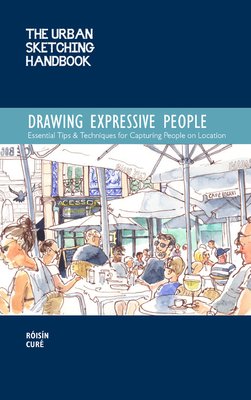
The Urban Sketching Handbook: Drawing Expressive People
People are the thing that stops most sketchers cold. They move, and everybody already knows what a person is supposed to look like, so the errors show. Curé’s fix is to start with proportion and then get you drawing fast — how to catch a pose in a few seconds before it changes, how much face you actually need for an expression to read, what to do with hands and feet, how to handle a small group and then a crowd. The geology degree shows in how methodically she breaks it down. There’s a checklist of challenges at the back: draw feet, draw people on their phones, draw five heads of hair in colors nobody has. (Yes, I have the whole series.)
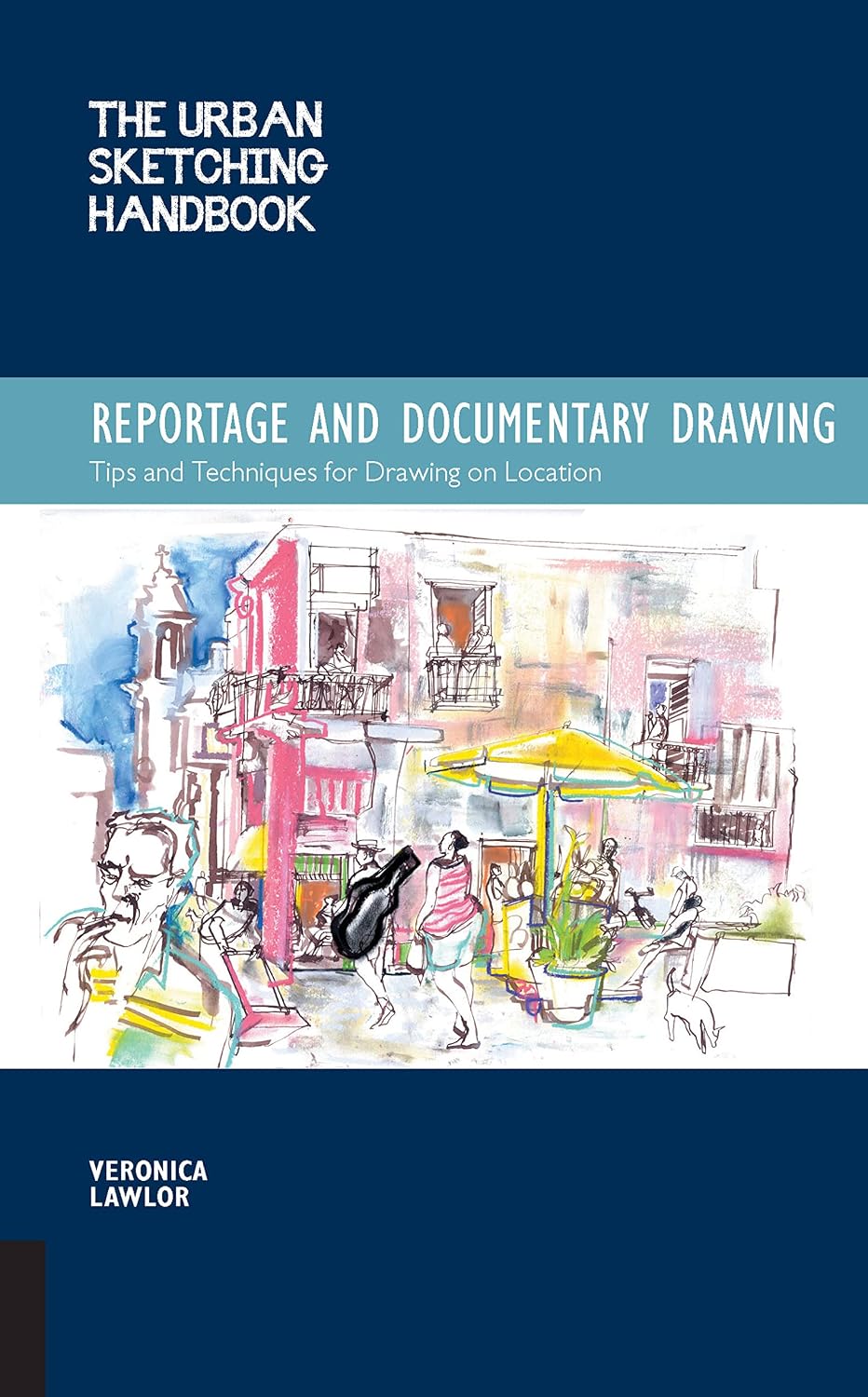
The Urban Sketching Handbook: Reportage and Documentary
Lawlor drew the aftermath of September 11 on the streets of Manhattan, and this is the volume about drawing as journalism — going to the event and reporting it in line. Courtrooms, protests, disaster zones, political conventions, ordinary meetings. She covers working fast, getting the essential gesture in a few seconds, note-taking alongside the drawing, ethics and access, and how a drawn record does something a photograph can’t, especially where cameras are banned. Includes work from other reportage artists and a short history of the tradition going back to the war artists.

The Urban Sketching Handbook: Spotlight on Nature
The volume about sketching the parts of a scene that won’t hold still and don’t have straight lines. Hein and Wong work through trees as masses rather than leaves, foliage in different seasons, water and reflections, rock and cliff, skies and clouds, and the way light changes everything about a landscape in twenty minutes. Then how to fit natural elements into a built scene.
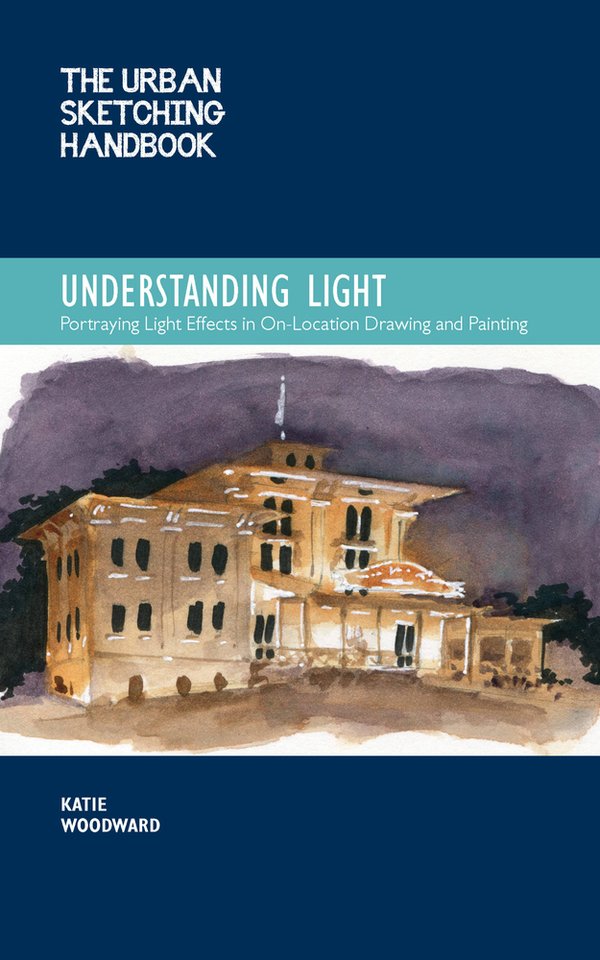
The Urban Sketching Handbook: Understanding Light
Light is what makes a sketch read, and this is the volume about it. Woodward works through value structure first — squinting to reduce a scene to three or four tones — then the direction and quality of light, cast shadows and how to get their angles right, backlight, the reflected light bouncing into a shadow that keeps it from going dead, and how the same street looks at four different hours. Watercolor and mixed media demonstrations, side-by-side comparisons of the same subject lit differently. The most useful volume in the series for anybody whose drawings look flat.

The Urban Sketching Handbook: Working with Color
Blaukopf teaches in Montreal and sketches a lot of wet streets and bare trees, and this is the color volume of the handbook series. It’s pocket-sized and built around one idea: A tiny palette, mixed well, beats a big box of tubes. She works from a limited set of pigments, shows the mixes, and spends most of the book on the problems you actually hit on location — gray days, green summer foliage that goes to mush, snow, brick, night scenes, skies changing while you paint. Lots of her own sketches with notes on what she used and where she went wrong.
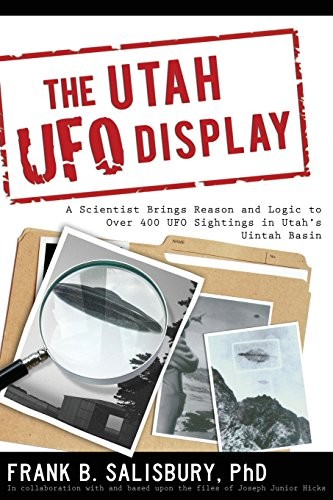
The Utah UFO Display
Salisbury was a plant physiologist at Utah State — a serious scientist with NASA contracts — who spent years in the late sixties and early seventies documenting sightings in the Uintah Basin, mostly from the Ute reservation and the ranching towns around it. Working with a local schoolteacher, Joseph Junior Hicks, who had been collecting reports for decades, he interviewed hundreds of witnesses and treated the whole thing as a data problem: Who saw what, when, from where, and what else could explain it. It was published in 1974 and reissued since, and it’s one of the very few field studies of a sighting cluster done by somebody with a lab. For UFO aficionados only, and Utah ones at that.

The Vaster Wilds
A servant girl runs out of the Jamestown fort in the winter of the starving time, with a hatchet, a stolen pewter cup, and two pairs of stockings, into a continent she knows nothing about. That’s the whole book — one girl walking north, foraging, freezing, hiding, sick, with her past in the colony and in London coming back in pieces. Groff writes the physical detail exactly: What a body does without food, how cold gets in, what a fire costs. Underneath is an argument about what the colonists brought with them and why it couldn’t survive contact with the actual land. After this, I’m ready to tee up everything Groff has written.
The Voice of the Desert
Krutch was a New York drama critic and Thoreau scholar who moved to Tucson in his fifties and became one of the great desert writers. This is his naturalist’s year: The spadefoot toad that waits underground for the one right rain, the saguaro and its slow arithmetic, roadrunners, tarantulas, the moth and the yucca that cannot live without each other. He keeps stopping to argue philosophy — against the idea that animals are machines, against a purely economic reading of nature — and does it in prose from a man who wrote for a living for forty years before he got here.

The Wall
Sea level rose, and Britain has ringed the entire island in concrete. Every citizen serves two years as a Defender on the wall, twelve-hour shifts staring at cold water, and the rule is simple: If Others get past you, you go over the side and into the sea in their place. Kavanagh starts his tour bored and freezing and hating the older generation who caused all this and won’t say so. Lanchester writes the cold better than almost anything, and the middle third turns into something much harder than the setup suggests. This one got under my skin. I kept picturing a mashup of the Wall at the northern border of the Seven Kingdoms in Game of Thrones and Pink Floyd’s wall.
The Water Knife
The Colorado River has been cut down to nothing and the states have gone to war over what’s left, legally and otherwise. Nevada has water knives — Angel Velasquez is one — men who show up with a court order and a crew and shut a town’s supply off for good. Phoenix is dying and full of Texas refugees nobody wants. A journalist named Lucy is documenting the collapse, and a Texan girl named Maria is trying to survive it, and all three converge on a rumor about senior water rights old enough to override everybody. The plumbing in it is real, which is what makes it land. It’s a much pulpier treatment than his The Windup Girl—it has dystopian screenplay written all over it.
The Way Around: A Field Guide to Going Nowhere
This is a book about walking in circles, and the obvious question is “why would you walk in circles?” The answer, in the deeply considered view of author Nicholas Triolo, is profound: because it will change your relationship with the world and yourself, and perhaps heal both. An ultrarunner in a family of high-achieving athletes, Triolo was dissatisfied with outdoor recreation’s linearity, peak bagging, and ethos of mountain conquest. After a global circumnavigation post-high school and a CV that included ultras like Western States, he set himself on the path of circumambulation, or circular walks that arise from a long tradition of spiritual and meditative action. In his exploration of how the shapes we follow shape us, pursuit turns out to be as provocative as the prey.
The Way Home: Tales from a Life Without Technology
Irishman Mark Boyle does nothing halfway. Exhausted by industrialized, well, everything, he lived without using money for three years. Craving an even more elemental life, he bought land near Knockmoyle, hand-built a cabin, and spent a year with no modern technology of any kind (electricity, plastic, transport, nada). Thoreau might come to mind, but Boyle’s mom wasn’t around to do his laundry: The “way home” meant living with dirt, shit, blood, deer brains (to tan leather), and backbreaking work. His move cost him dearly in relationships, and small things still nagged him, like the mass production behind the pencil he used to write (next time: a quill and mushroom ink). Romance? Not a lot, but he remains thrilled with his choice and more committed than ever.
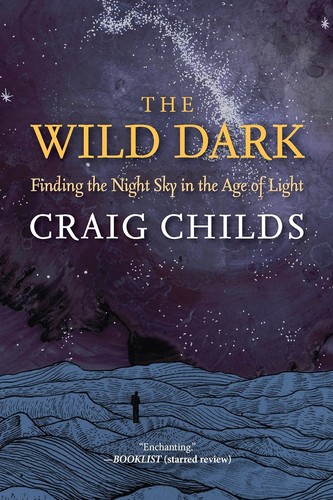
The Wild Dark: Finding the Night Sky in the Age of Light
Eighty percent of Americans can’t see the Milky Way from home. Childs goes looking for what’s left of the actual night — sleeping out in the desert without a light, tracking how animals use darkness, sitting with astronomers and with people fighting to keep the sky over their towns dark. He’s good on what artificial light does to migrating birds, to insects, to us, and better on what happens to your own head after a few nights with no screen and no moon. The dark reads as a place in this book, one that’s being paved, and one you can still get to if you drive far enough.
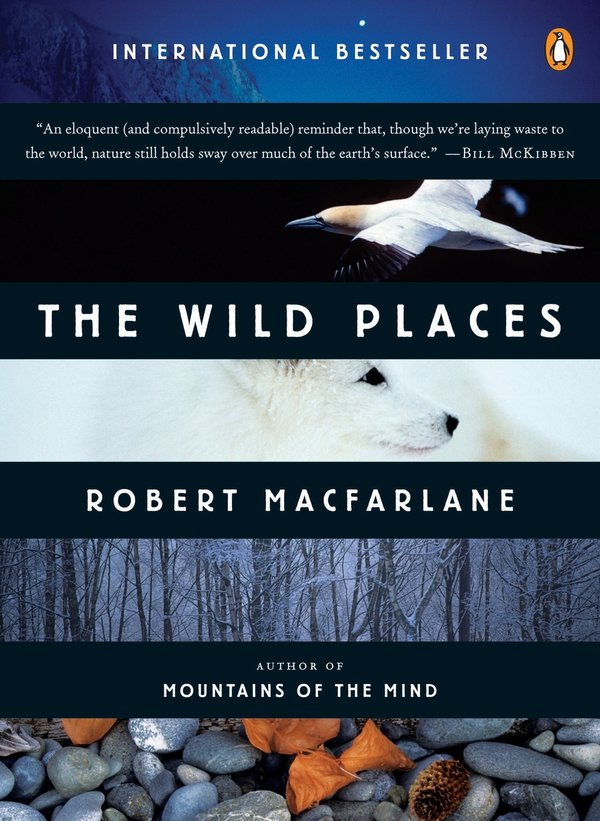
The Wild Places
Macfarlane set out to find what wildness is left in Britain and Ireland, expecting remoteness — islands, summits, moors — and slept out in fifteen of them over a year. Then Roger Deakin, his friend, kept pointing him back toward the hedgerow and the holloway, and the book turns partway through: The wild isn’t only up north, it’s in the verge and the storm drain and the beech wood outside town. Deakin died while he was writing it and the last chapters carry that. The chapter on the storm-beach at Coruisk and the one on the holloway are the ones people remember.
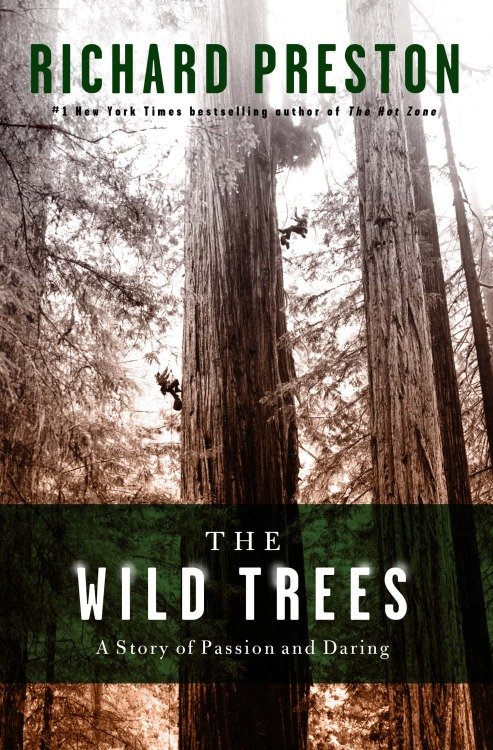
The Wild Trees
A handful of amateurs discovered in the 1980s that nobody had ever been to the top of a redwood, and that the canopy three hundred feet up is a whole ecosystem — soil, huckleberry bushes, ferns, salamanders that live their entire lives without touching the ground. Preston follows Steve Sillett, Marie Antoine, and Michael Taylor as they learn to climb the tallest living things on earth, find the record-holders in unmapped groves, and eventually get taken seriously as scientists. Preston learned to climb so he could go up with them, and the vertigo comes through the page. A friend was so inspired, she assembled a crew to search for the hidden tallest, which is why it’s on my shelf.
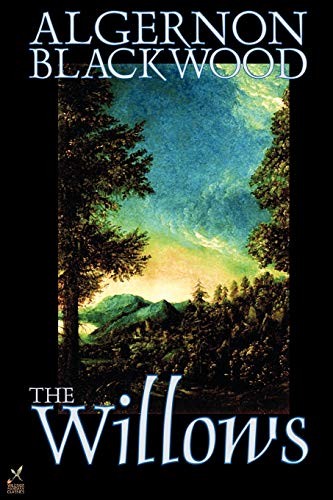
The Willows
Two men in a canoe run the Danube in flood below Vienna and camp on a sandy island in a wilderness of willow scrub. The river is eating the island under them. The willows move when there’s no wind. Things happen that are almost nothing — a shape in the sky, a humming, a hollow pressed in the sand, gear that goes missing — and Blackwood never explains any of it. His idea is that the pair have blundered across a boundary into a region where something enormous and entirely indifferent is aware of them. Lovecraft called it the finest supernatural story in English and built half his career on it. I was creeped out, legit creeped out, which I wasn’t expecting from a century-old novella.
The Wind-Up Bird Chronicle
Toru Okada is unemployed and boiling spaghetti when the phone rings. Then the cat disappears. Then his wife does. What follows involves a psychic prostitute, a teenage neighbor, a politician brother-in-law with something badly wrong in him, and a man who tells the story of what happened to a Japanese soldier at Nomonhan on the Manchurian border in 1939, including a skinning. Toru spends a good stretch of the book sitting at the bottom of a dry well in a vacant lot, on purpose. It’s his biggest and strangest novel and the war material at its center is the thing that stays with you. This was my first Murakami book—after this one, the rest were Kansas.
The Windup Girl
Oil is gone, the seas came up, and the world runs on calories — which means the agribusiness companies that own the seed patents own everything. Thailand has held out, protected by seawalls, a ruthless Environment Ministry, and a hidden seed bank of genes nobody else has. Into that come a company man searching for the seed bank, a Chinese refugee scraping by after his community was slaughtered in Malaysia, and Emiko, a Japanese-engineered woman abandoned in Bangkok and treated as property. Everything is powered by giant springs wound by genetically built elephants. It won the Hugo and the Nebula.
The World Atlas of Coffee
Hoffmann won the World Barista Championship, and the first third here is the practical part — how coffee grows, what varietals are, the difference washed and natural processing makes in the cup, how roast level actually works, and brewing methods with ratios that will fix most people’s coffee immediately. The rest is the atlas: country by country, region by region, with maps, altitudes, harvest seasons, and what to expect in the cup from each. It’s the reference to keep next to the grinder, and it’s written by somebody allergic to mystique.

The World of Urban Sketching
Less a how-to than a survey of where the movement went. Urban Sketchers started as a Flickr group in 2007 and turned into a global thing with chapters in hundreds of cities, and Bower gathers work from sketchers across those chapters — different countries, tools, and approaches, from tight ink-and-wash architecture to loose gouache to iPad drawings. Each artist gets space to say how they work and why. What comes through is how differently people solve the same problem of a street with too much in it, and that the community part, going out and drawing with strangers, is most of the appeal.
The World Without Us
Weisman asks what happens if every human disappears tomorrow, and reports it out with the engineers and biologists who know. New York floods in two days once the pumps stop; the subways go first, then the streets collapse into rivers. Houses go in fifty years, bridges in a few hundred. Farm fields return to forest, Manhattan back to hardwood. Plastics and PCBs last essentially forever, and the ceramic and bronze and the Chunnel outlast everything. He uses the Korean DMZ, Chernobyl, and Białowieża as places where a version of this is already running. I know it’s weird, but as I imagined a world turning to a post-human state, I found the book strangely comforting. I’m not anti-human, but if we can’t clean up this mess, we don’t deserve to be here.
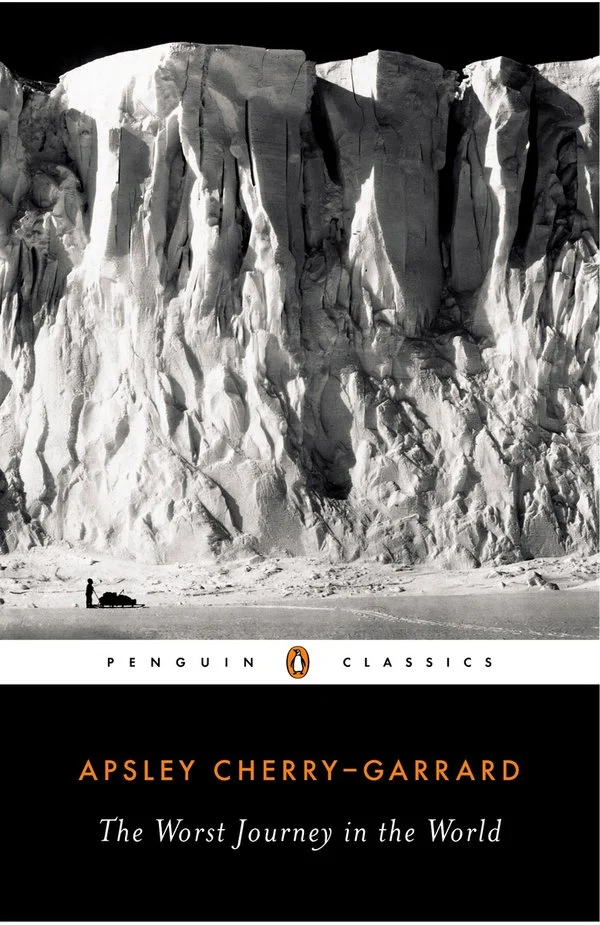
The Worst Journey in the World
Cherry-Garrard was twenty-four, half blind without his glasses, and paid to join Scott’s last expedition. The title journey isn’t the pole. It’s the winter trip he made with two others to Cape Crozier to collect emperor penguin eggs, five weeks in total darkness at seventy below, teeth cracking from chattering, the tent blown away, sleeping bags frozen solid. They got the eggs. Then he was one of the party that found Scott’s tent the following spring, eleven miles from the depot. He wrote it a decade later, angry and precise about how the whole thing was organized.
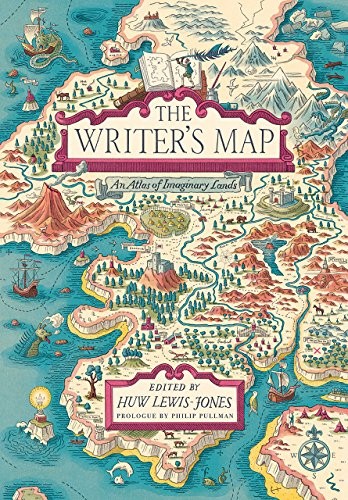
The Writer’s Map: An Atlas of Imaginary Lands
Maps of places that don’t exist and essays by the writers who made them. Treasure Island, Middle-earth, Narnia, Earthsea, Winnie-the-Pooh’s Hundred Acre Wood, Discworld, and plenty more, reproduced large. Philip Pullman, Robert Macfarlane, Frances Hardinge, Cressida Cowell, David Mitchell, Joanne Harris and others write about the maps that shaped them and about drawing their own — several admit they can’t write a world until they’ve drawn it. Lewis-Jones threads in the history of imaginary cartography. It’s a gorgeous object and a treatise on how invented places get made.

Then I Am Myself the World
Koch spent decades at Caltech hunting the neural correlates of consciousness with Francis Crick, and this is his case for integrated information theory — the idea that consciousness is a measure of how much a system’s parts inform each other and that it can in principle be quantified. Which means, on his account, that a cerebellum with more neurons than the cortex has almost no consciousness, that some animals have plenty, and that a digital simulation of a brain would have none no matter how good the simulation. He also writes about a psychedelic experience and a near-death moment, which most neuroscientists probably wouldn’t.
Theory of Water
Simpson is Michi Saagiig Nishnaabeg, a writer and musician, and this book thinks with water rather than about it. She starts from a Nishnaabeg story about a woman and a flood and works outward through ice, rain, tributaries, and the physics of the water cycle, arguing that water’s behavior — moving, changing state, refusing containment — is itself a theory and one that runs against how states and corporations treat land. It’s part essay, part poetry, part personal, and the Peterborough, Ontario-area lakes and rivers she grew up on are throughout.
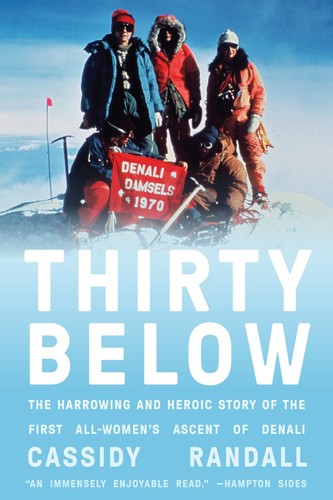
Thirty Below: The Harrowing and Heroic Story of the First All-Women’s Ascent of Denali
Yes, gender is critical to the story of the 1970 Denali Damsels expedition on North America’s tallest summit. The six women just wanted to climb mountains, and in the late 1960s they had to fight male misogyny and suspicion to do so. But Thirty Below is a gripping tale of human striving, where combustible personalities face off at high altitude, with life and death at stake. Author Cassidy Randall skillfully weaves the traditional elements of an alpine epic—the shredded tents, the frozen toes, the dank snow cave—with the more fascinating account of radically different people trying to form a team (maybe) to get what they want, in one of the world’s most inhospitable environments, where true selves are exposed in the wind.

This Land Is Our Land: How We Lost the Right to Roam and How to Take It Back
Ilgunas walked the Keystone XL route across the Plains, most of it on other people’s land, and came out with a question: When did Americans lose the run of their own country? His answer is that they had it and handed it over. Before the 1860s you could cross a farmer’s field and shoot a bird on it — that was custom, and in some states it was law. Then came trespass statutes, barbed wire in 1874, and the posted sign. Now about two-thirds of the country is private, and in the East it’s nearly all of it. Meanwhile Sweden has allemansrätten, Scotland lets you camp almost anywhere, and England opened its moors after five men went to jail for a mass trespass on Kinder Scout in 1932.
This Land: How Cowboys, Capitalism, and Corruption Are Ruining the American West
Ketcham spent years reporting on the four hundred fifty million acres the federal government holds in the West and came back angry. The core of it is livestock grazing on public land — how few operators there are, how little they pay, what it does to streams and soil, and how much killing of coyotes, wolves, prairie dogs, and bears is done by a federal agency on their behalf. He also goes after the Forest Service’s timber math, oil and gas leasing, and the environmental groups he thinks have gone quiet in exchange for access. It’s a polemic and it doesn’t pretend otherwise, and the reporting is documented down to the receipt. It’s angry book that sparked anger in me—and frustration because I don’t know how to solve the problems. Still, I’d rather know than not.
This Story Might Save Your Life
Tiffany Crum’s debut mystery is about Benny Abbott and Joy Moore, best friends who host a hit podcast built on “against all odds” survival stories — near-death experiences told with a lot of gallows humor. Their show is on the verge of a huge business deal, managed largely by Joy’s husband. Then Joy vanishes, leaving blood and broken glass behind, and Benny becomes the prime suspect. Told in two braided timelines, half whodunit and half the long unresolved love story between the two friends. I found the progression muddled, the dialogue unrealistic, and the tone strangely peppy, and I dropped it after the first few chapters.
Through Two Doors at Once
Recommended by a friend of a friend who’s a working physicist. You know the experiment. Shine light through two slits and it makes an interference pattern, like waves. Fire it one particle at a time and the pattern still builds up, which means each particle went through both. Watch to see which slit it used and the pattern disappears. Ananthaswamy builds the whole book on that, running from Young in 1801 to labs firing molecules of eight hundred atoms and getting the same result. Around it, he lays out what people think it means — Copenhagen, many worlds, pilot waves, collapse — without picking a winner, because nobody has. There’s almost no math, which means even I can understand it. Mostly.
Thru-Hiking Will Break Your Heart: An Adventure on the Pacific Crest Trail
The Pacific Crest Trail, 2,660 miles, told as the daily blog she actually kept — which is why it reads nothing like a reflective memoir. It’s feet, water carries, hunger, weather, town stops, and the trail family that forms and breaks apart. She’s honest about the parts hikers don’t write down: The obsessive food math, the crying, the way you start to need the trail more than you like it. Self-published and word-of-mouth famous, and it’s the book most PCT hikers hand each other.
Time’s Arrow
The book runs backward. It opens with a man dying in America and moves the wrong way down his life, narrated by a consciousness riding inside him that can’t control anything and doesn’t understand what it sees. So doctors take healthy people and injure them. People pull food out of their mouths and put it back on plates. Money comes out of the till. Then the movement reaches Europe and the war, and the reversal turns a death camp into a place where the dead are assembled and given families and sent home. Amis makes you do the translation yourself, which is the entire point.

Tiny Worlds of the Appalachian Mountains
With luck, Tiny Worlds will trigger FOMO—and point you toward the miraculous web of beauty seen at foot level and strolling speed. Plagued by chronic migraines as a teenager, West Virginia watercolorist Rosalie Haizlett started taking long walks in nature at the suggestion of her doctors. For the first time, she saw and appreciated “even the littlest of details,” instead of chasing the “grandiose.” The move was life-changing and led, among other things, to a six-month road trip up the Appalachians, chronicled with love and attention in this cheerful book. It’s a mix of field guide, trip report, journal, and art book, infused with personal warmth and dedicated to the overlooked, forgotten, and right-there-under-our-noses.
To Catch a Spy
Toby Peters is a broke Los Angeles private detective in the 1940s whose specialty is doing quiet jobs for movie stars. In this one the client is Cary Grant, being blackmailed with a photograph and tangled up in wartime counterintelligence work he was actually doing. Kaminsky wrote dozens of these and they run on affection for old Hollywood — the Farraday Building, the dentist Toby shares an office with, the wrestler sidekick, and a real celebrity per book. Light, fast, and much better on period Los Angeles than it has any obligation to be.
To the Bright Edge of the World
In 1885, shortly after the Alaska Purchase from Russia and before the gold rush, the U.S. Army’s Lieutenant Henry T. Allen was ordered on a twelve-hundred-mile expedition to map the Copper and Tanana rivers of Alaska’s interior. Little was known about the uncharted region at the time, other than frightening legends and a few true tales of previous adventurers who never returned. To the Bright Edge of the World, a novel by Pulitzer Prize finalist Eowyn Ivey, reimagines the journey through fictionalized newspaper clippings, letters, and vintage art and photos, navigating the reader back and forth from actual history to the realm of magical realism. As she carefully reconstructs the wilderness of the late nineteenth century northern frontier, Ivey also twists the usual Western expedition narrative with a leading female character and an emphasis on First Nations culture. Suspenseful, absorbing, and at times darkly mythical, this is a book made for winter cabin reading.

Tomorrow, and Tomorrow, and Tomorrow
Sam and Sadie meet as kids in a hospital game room in Los Angeles, fall out, and meet again in a Cambridge subway station in the nineties. They make a video game together in a borrowed apartment over one summer and it makes them famous at twenty-two, and the next thirty years is what that does to them — with Marx, the producer who loves them both and keeps the whole enterprise standing. It’s a novel about collaboration and about work as the deepest form of love.
Touching the Void
Simpson and Simon Yates climbed the west face of Siula Grande in the Peruvian Andes, the first ascent, and on the way down Simpson shattered his leg. Yates lowered him a thousand feet at a time until Simpson went over an overhang and hung in space, unable to be raised, slowly pulling Yates off the mountain, at which point Yates cut the rope. Simpson fell into a crevasse and then crawled and hopped for three days back to base camp with no water. Both men tell their halves. It’s the most argued-about decision in mountaineering and the book makes it impossible to condemn. I read the book in one night, then read it again slower, then read it again.
Travels in Siberia
Frazier caught what he calls Russia-love and spent years going back, culminating in a nine-thousand-mile drive across Siberia in a used van with two Russian guides who argued the whole way. The book is that trip plus the whole history stuffed in around it: The Decembrists, the exile system, the Trans-Siberian, Genghis Khan’s route, the camps, and the ordinary business of getting gas and finding a place to camp among the mosquitoes. He’s the funniest travel writer going and the digressions are the point. He also went back in winter, on purpose.

True Color: The Strange and Spectacular Quest to Define Color
Kory Stamper spent decades writing dictionaries at Merriam-Webster, and she kept getting stuck on the color entries in Webster’s Third, which are gloriously nuts. Begonia is defined as a deep pink that’s bluer than fiesta and stronger than sweet william. What in the world does bluer than fiesta mean? Chasing that question, she found the people behind it. Irwin Priest, a physicist working in the brand-new field of measuring color, took the job for the second edition. Then Isaac Godlove, who spent a career trying to nail down a language for something the eye never quite agrees on, and after he died, his widow Margaret and the color scientist Dorothy Nickerson finished the work. Webster’s Third came out in 1961, got savaged, and was never replaced, so those definitions are still the ones we use. Along the way, you learn that puke was once a fashionable shade of reddish brown. It’s a book about color, and underneath that it’s about what happens when people try to force a slippery thing into a fixed system.
Turner
J.M.W. Turner was the son of a Covent Garden barber, sold his first drawings out of the shop window, got into the Royal Academy at fourteen, and became the most radical painter in England — and stayed a rough, secretive, unsociable man his whole life, with two daughters he barely acknowledged and a mistress nobody in the art world knew about. Moyle uses newly available material to fill in the private life, and she’s good on the working method: The tours on foot with a sketchbook, the varnishing days where he’d finish a painting in public, and the late work that went so far toward abstraction that critics thought he’d lost his mind.
Twist: A Novel
Anthony Fennell, an Irish journalist and failing novelist, gets an assignment about the undersea cables that carry the internet, and joins a repair ship off the west coast of Africa. The chief of mission is John Conway, a freediver and cable engineer, precise, private, and hard to read. When a cable breaks and the world goes partly dark, they sail out to lift it and splice it. Then Conway disappears. McCann uses the whole thing as a figure for connection and its failure, and the cable-ship material — how a broken thread three miles down actually gets found and repaired — is the best reporting in the book.
Two Old Women: An Alaska Legend of Betrayal, Courage and Survival
During a harsh winter, a nomadic tribe makes the difficult decision to leave two elderly women behind. At first the women are devastated, but they come to realize they don’t have to give up on life without a fight. To read Two Old Women is to stumble in the snowdrifts of Arctic Alaska, smell the sweet scent of birch woodsmoke, and fear the sharp twinges of starvation. Based on an oral Athabaskan legend, it’s a story rooted in Gwich’in culture, handed down to author Velma Wallis by her mother. And Wallis, who grew up in the six-hundred-fifty-person village of Fort Yukon, knows a thing or two about survival. As a teenager in the 1970s, she moved into her father’s remote trapping cabin, where she spent nearly a dozen years living off traditional subsistence skills. This short novel is a vital and classic tale, carrying embers from an ancient campfire onward into the night.
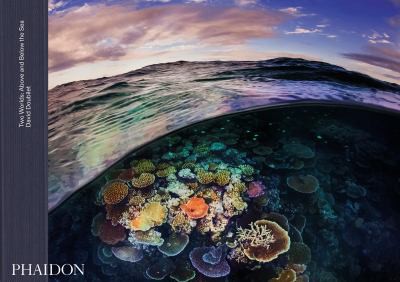
Two Worlds: Above and Below the Sea
Longtime National Geographic photographer David Doubilet has spent more than twenty-seven thousand hours underwater, often in pursuit of the images that have become synonymous with his name: over/unders, above and belows, or, as he calls them, half-and-halfs. Enabled by domed water housings, this technique offers the ability to be in two environments at once, and his first major book in twenty years, Two Worlds: Above and Below the Sea, shows those environments to be stunning in their beauty and fragile beyond compare. A whale shark yawns below fishermen, hoping for a krill handout. In the Caymans, a stingray glides as gracefully as the sailboat above. Tiny and vulnerable, a loggerhead turtle hatchling shelters in tangled golden sargassum. Like many photojournalists, the New York native began as a documentarian and was forged a conservationist by the changing planet. Two Worlds offers one hundred twenty-eight pages of lushly printed photographs, an afterward by astronaut Kathryn D. Sullivan, and Doubilet’s well-earned and plainspoken message: Take a look at all this, and act.
Two Years Before the Mast
Dana was a Harvard student whose eyes gave out, so in 1834 he shipped out of Boston as a common sailor rather than a passenger, rounded the Horn, and spent two years working the hide trade on the California coast when California was still Mexican and San Francisco was a few buildings. He describes the work exactly — curing hides, the ports, floggings he witnessed and could do nothing about — and published it in 1840 partly as an argument for sailors’ rights. It’s the first honest account of the sea from below decks, and the closest thing we have to a photograph of pre-Gold Rush California. Dana Point is named for him.
UFOs
The 2010 book that changed the conversation, subtitled “Generals, Pilots, and Government Officials Go on the Record,” and that’s literally the structure. Kean got firsthand accounts from people with names and ranks: A Belgian air force general, an Iranian fighter pilot, a Peruvian air force officer, the head of France’s space agency, the Japan Airlines captain over Alaska, the military police at Rendlesham air force base. Then the documented incidents — Belgium 1989, Phoenix 1997, O’Hare 2006 — and the history of official evasion. She takes no position on origin and insists throughout on the difference between unexplained and explained. I find her tone toward her sources too solicitous, but facts are facts and these are some mind-bending facts.
Underland
Rob Mac tackles what’s under foot, in three parts: what we shelter, what we yield, what we dispose of. He peers into a dark matter lab under a Yorkshire hill, the wood wide web and the fungal networks trading sugar between trees, catacombs beneath Paris entered through a manhole. And more: A blue glacial moulin in Greenland. Prehistoric handprints in a Norwegian sea cave. And the nuclear waste repository in Finland, being built to warn people who won’t speak any language we know. His question all the way down is what we are leaving behind for deep time, and the answer isn’t flattering.
Up on Cove Mountain
Virginian Earl Swift loves the Appalachian Trail. As a young man, he kept moving closer and closer to it, as if inching toward a girl he wanted to know, eventually leasing “a goddamn eyesore” apartment because it was located at an AT trailhead. In early 1990, he took the big swing and hiked south from Maine. His fellow thru-hikers, the trail magic, the simplicity—it was a revelation. And so, Swift was particularly spun out when a pair of hikers, Geoff Hood and Molly Larue, were murdered a few days behind him on the trail. He spent the next thirty years haunted by the violence, and in 2024 returned to hike the AT for answers. Part true crime, part trail memoir, Cove Mountain’s search leads back to what Swift loved most about the AT: its people.
Urban Sketching: An Artist’s Guide
Confession: I have an absurdly large collection of urban sketching books and spend more time admiring their artwork than actually drawing. That’s okay. This is a beginner’s book, and right up my alley. Andreu sketches around Newbury in England and runs workshops, and she starts at the actual beginning — what pen, what paper, how to hold the thing, where to sit, how to pick a scene out of a street that has too much in it. Then composition, line, adding color, and short exercises meant to be done fast so nobody freezes over a blank page.

Urban Watercolor Sketching
Scheinberger’s watercolor book, and it’s aimed at people who’ve been told watercolor is difficult and precious. He isn’t. It’s color theory taught quickly, a small palette, the mechanics of wet-on-wet and glazing, how to keep whites, how to fix a mess, and how to work fast enough to finish before the scene changes. There are lots of his own loose, bright sketches, most made on location in a book on his knee. It makes the same argument as his drawing book: The sketchbook is yours, there is no wrong way to fill it, and the water doing something you didn’t plan is often the best part of the page.
Villa Coco
The writing in this book is anguished from the first page: It’s precious, far too self-aware, awkward, and twee. It set me on edge. I pushed through another or ten or so pages and gave up. I might return for another try to see what all the press fuss is about, but probably not. Here’s the framework: A young American with an archivist’s training and no plan takes a job in the Tuscan hills cataloguing the contents of a crumbling villa. That turns out not to be the job. The villa belongs to Lisabetta, a baronessa of ninety-two whom everyone calls Coco, still flamboyant, still running her own show, and what she actually wants from him keeps shifting. He becomes her assistant at whatever she decides assisting means. Summer turns to autumn, the house gives up its secrets, and the farce settles into something warmer about coming of age at twenty-two and at ninety-two at the same time.
Wanderlust: A History of Walking
This is walking as a subject with a history. Solnit runs from bipedalism through the peripatetic philosophers, the invention of the country walk as recreation, Wordsworth and the Romantics, pilgrimage, the labyrinth, mountaineering, the flâneur, protest marches and the Suffragettes, and the way suburbs and cars have made walking difficult or suspicious in most of America. There’s a hard chapter on walking while female and what a woman alone at night is assumed to be. It’s a book of connections and the connections are the pleasure.
Waterlog: A Swimmers Journey Through Britain
You’ll never regret plunging into the “wild swimming” world of British environmentalist Roger Deakin, who lived in a moated farmhouse. Yes, a moat. You’re already charmed, right? Inspired by a short story, Deakin decided to swim throughout Britain in as many bodies of water as possible, often diving into places that hadn’t seen a human swimmer in years. From lochs to ponds, from rivers to the sea, through farm runoff and past alarmed beach guards, Deakin stroked and kicked. Part amphibious adventure memoir and part right to roam manifesto, beneath Waterlog’s delightful quirk lies a serious treatise on public access and the belief that swimming is intrinsically transformative, for “when you enter the water, something like metamorphosis happens.” First published in 1999, this book has been a word-of-mouth bestseller with a fervent fan club, and the new Tin House edition with a foreword by Bonnie Tsui is subversive reading of the highest order.

Waves and Beaches: The Powerful Dynamics of Sea and Coast
What The Joy of Cooking is to home cooks, Waves and Beaches has been to sea lovers for nearly sixty years. The comprehensive tome is part fundamental instructional and part voluminous love letter to the alchemy of where land meets the sea. Willard Bascom, an engineer, adventurer, photographer, scientist, and cinematographer who pioneered a number of ocean technologies, including being one of the first to suggest neoprene as a wetsuit material, wrote the book in 1963. When Bascom died in a car accident in 2000, oceanographer Kim McCoy, Bascom’s friend and protégé, inherited the beloved manuscript. This third edition reflects both authors and their seventy years of experience on shorelines on all seven continents, as well as an update devoted to the history and effects of climate change. Four hundred pages stuffed with physics illustrations, encyclopedic text, and gorgeous photography make for essential reading that belongs on the bookshelves of all coastal explorers.

Wayfinding: The Science and Mystery of How Humans Navigate the World
“I had forgotten that my phone knew nothing of whether humans can fly, or the seasonal flow of the Rio Grande, that it had no actual experience because it had never been born, only programmed by someone who might never have set foot in New Mexico.” Winding up far off-route after trying to find a hot spring, science journalist M.R. Connor wonders at the extent GPS technology has commandeered our natural sense of direction, and she then heads out to investigate traditional techniques of human wayfinding with master navigators in the Canadian Arctic, Australia, and the South Pacific. She also ventures deep into modern psychology and the science behind why our brains need to free range; for example, a lack of natural spatial exercise can shrink the hippocampus, increasing risk for depression, PTSD, and Alzheimer’s. Combining a travel narrative with fascinating research, Wayfinding makes a captivating case for reconnecting with our senses and the journey rather than the destination.
We Are Unprepared
Ash and Pia leave Brooklyn for rural Vermont wanting a simpler life, and then the forecasts start describing a superstorm months out — big enough that the government begins issuing guidance and the town begins picking sides. Pia throws herself into prepping and a charismatic local survivalist. Ash tries to stay reasonable. Their neighbors split between people stockpiling and people refusing to believe it, and the marriage comes apart faster than the weather does. Reilly worked in the Obama White House on climate messaging, and the book is really about how a community behaves in the waiting.
We Survived the Night
NoiseCat’s father, a Secwépemc and St’at’imc carver, left when he was young, and NoiseCat grew up with his non-Native mother in the urban Native community in Oakland, spending time on the Canim Lake reserve in British Columbia. The book is him going back — to his father, to the reserve, and outward across the continent. It’s built as a Coyote story, the trickster who is both revered for his wit and mocked for wrecking himself, and it runs from the first Native cabinet secretary to the Lumbee in North Carolina to hauling herring roe with the Tlingit at Sitka. He also directed Sugarcane, and this is the book beside that film.
Werner’s Nomenclature of Colours
Before color charts, naturalists had no shared vocabulary, so a German mineralogist named Abraham Werner built one and the Scottish painter Patrick Syme expanded it in 1814 — 110 colors, each with a hand-painted swatch and three references: A mineral, a plant, and an animal that show it. Verdigris green is the tail of a small long-tailed green parrot. Darwin took a copy on the Beagle and used it for five years to describe everything he saw. The reissue reproduces the whole thing. It’s a working tool, a beautiful object, and a window into how people saw before photography.

Whalefall
Jay Gardiner is seventeen and diving alone off the California coast to recover his father’s remains — the father was a legendary diver who walked into the ocean to die of cancer, and the two of them had said unforgivable things to each other. Then a sperm whale takes him, and he is inside it with about an hour of air. That’s the book: A boy in the dark in a stomach, doing the math on his tank, remembering everything, with the biology worked out in exact and horrifying detail. Kraus researched the anatomy hard enough that the improbability stops mattering.

What an Owl Knows
Owls are hard to study — night, silence, no interest in being watched — so most of what people believed about them was folklore. Ackerman goes out with the researchers finally cracking it. Feathers with a comb on the leading edge that break up turbulence so the bird arrives without a sound. Ears set at different heights so the world arrives in stereo top to bottom. Faces shaped as dishes to funnel noise. She sits with people banding saw-whets on migration routes nobody knew existed, follows burrowing owls living in prairie dog towns, and gets into why so many cultures decided this particular bird meant death.
What It’s Like to Be a Bird
Sibley drew the definitive field guides, and this is the opposite of a field guide: A big book of large paintings with the answers to the questions people actually ask. Why do birds stand on one leg. How they sleep with half a brain at a time. What a feather does mechanically. Why crows mob hawks. How a hummingbird’s tongue works, how far a chickadee has to eat every day in winter, why so many birds are eating grit. Ninety-six species get a spread each and the short essays run alongside. It’s a browsing book and the paintings are as good as anything he’s done.

What We Can Know
The year is 2119, most of Britain is under water and reduced to an archipelago, and an academic named Thomas Metcalfe has built his career on a lost poem — read aloud once at a dinner party in 2014, never published, and possibly the last great work of the old civilization. He’s reconstructing that evening from emails, phone data, and diaries, obsessed with the poet and more so with the poet’s wife. Then he finds the poem. The first half is the future looking back; the second half is 2014 itself, and it doesn’t match what he built. McEwan’s subject is what the record leaves out. This book got a lot of attention—it’s deserved.
When the Forest Breathes
Suzanne Simard’s When the Forest Breathes indicts modern logging practices as starkly as Rachel Carson’s Silent Spring indicted pesticide use. Her research in British Columbia forests shows that logging machines devastate the forest floor and carbon stored there. In a moment that reads like a scene from a disaster movie, during a Zoom call, she and her research partner discover their data shows a shocking sixty-one percent decrease in stored carbon—five times the amount seen in previous studies. “Holy shit,” writes Simard. Indeed: More carbon is stored in soils and forest floors than all the world’s trees and atmosphere combined. It’s a stunning finding, with profound consequences for the climate. Solutions exist—hand-cutting, Indigenous practices, reciprocity—and there’s little time to waste.

When We Cease to Understand the World
Five linked pieces that start as history and slide into fiction without telling you where the line is. Fritz Haber pulls nitrogen out of the air, feeds the world, and invents chemical weapons. Schwarzschild solves Einstein’s equations in the trenches and finds the black hole waiting inside them. Grothendieck goes so far into mathematics he stops speaking. Heisenberg works out matrix mechanics alone on an island while half blind with hay fever, and Schrödinger writes his equation in a sanatorium. Labatut’s argument is that the deepest scientific insight and the loss of your mind may be the same road, and the further in you get the less of it is verifiable.
Where There Is No Dentist
Okay, I do a little prepping and this book is part of it. Published by the Hesperian Foundation, the outfit behind Where There Is No Doctor, and written for health workers and villagers with no dentist within a day’s travel. It teaches how to examine a mouth, spot decay and gum disease early, clean and fill a cavity with hand instruments, extract a tooth safely, handle an abscess, and know when a case is beyond you. Illustrated line by line so it works across languages and literacy levels. Half the book is prevention and teaching others — sugar, brushing, fluoride, running a village dental program. Now in its twenty-first edition.

Where There Is No Doctor
Okay, I do a little prepping and this book is part of it. It’s a village health care manual, first published in 1970 out of work in the Sierra Madre of Mexico, and still the most widely used health book in the world — translated into a hundred-odd languages and used by health workers everywhere with no clinic in reach. How to examine a patient, recognize the common diseases, deliver a baby, set a bone, dose and store medicines, dig a latrine, and know what you can’t treat. Illustrated so it works past literacy and language. Werner’s stance throughout is that ordinary people can do most of this, and that withholding the knowledge is the actual danger.
White Fur
It’s New Haven, Connecticut, in 1986. Elise Perez is twenty, mixed race, out of the projects, squatting in the house next door to a Yale senior named Jamey Hyde, who has an heir’s trust fund and a family that will not tolerate her. They fall into each other, move to New York, and the whole apparatus of his class begins working to end it. Libaire writes the sex and the eighties city with real heat, and the novel is a Romeo and Juliet where the feud is money. Her prose is the reason to read it — image after image that seems like it shouldn’t work and does.
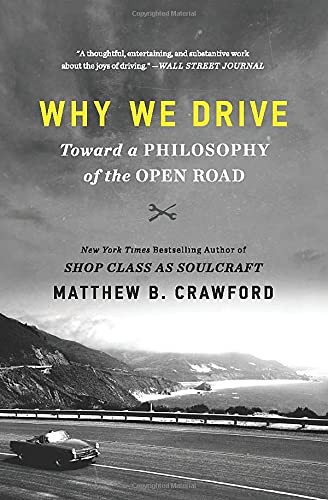
Why We Drive: Toward a Philosophy of the Open Road
Matthew Crawford devotes Why We Drive to an anonymous couple he sees running down a wooded trail, pretending they’re riding motorcycles, making vrooming noises and playfully leaping over roots. It’s this eye for the small but uniquely human details that helped make his first book, Shop Class as Soulcraft, so popular. As in Shop Class, Crawford uses Why We Drive to consider and argue for fundamental pleasures, motivations, competencies, and the powers of manual skills. In a culture driven by corporations that would have us be “self-driven” passengers (and charge us a subscription for seat warmers), Drive is a stirring reminder of the power of a ribboning road, a distant horizon, and a basic vehicle to connect the two.
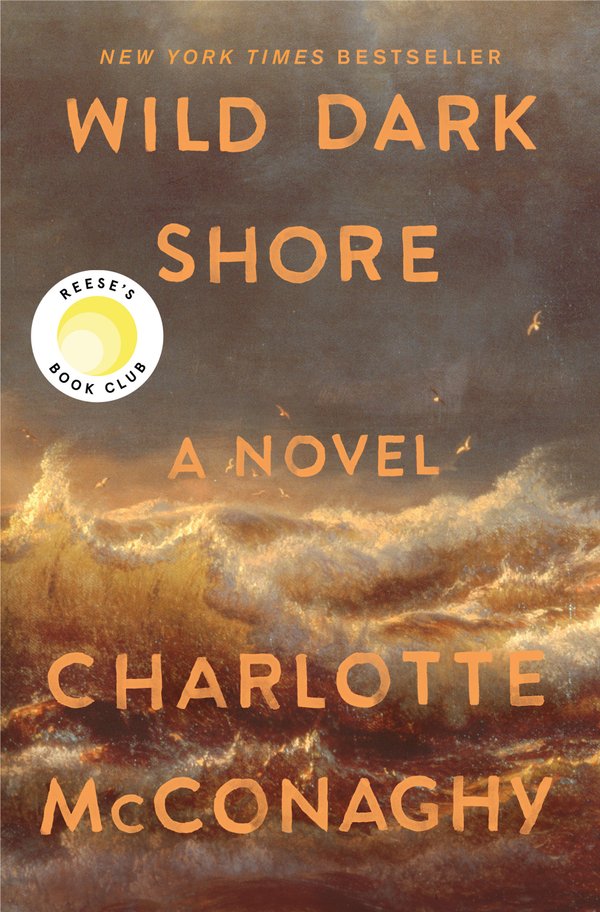
Wild Dark Shore
Set on a fictional and very, very remote island at the bottom of the world, Charlotte McConaghy’s third novel brings new meaning to Southern gothic: There are dark and stormy nights, melodrama, and a ruddy lighthouse keeper, but whales and penguins, too. Action commences when a shipwreck victim washes up in a tangle of kelp; she carries secrets and an air of mystery, but so do the widower and his three children tending the island, its abandoned research station, and its seedbank. Racing to save humanity’s foodstock—the seeds—from rising seas and flooding, patriarch Dominic and castaway Rowan circle each other warily, probing for answers while the reader wonders who, if anyone, will get off the island alive.
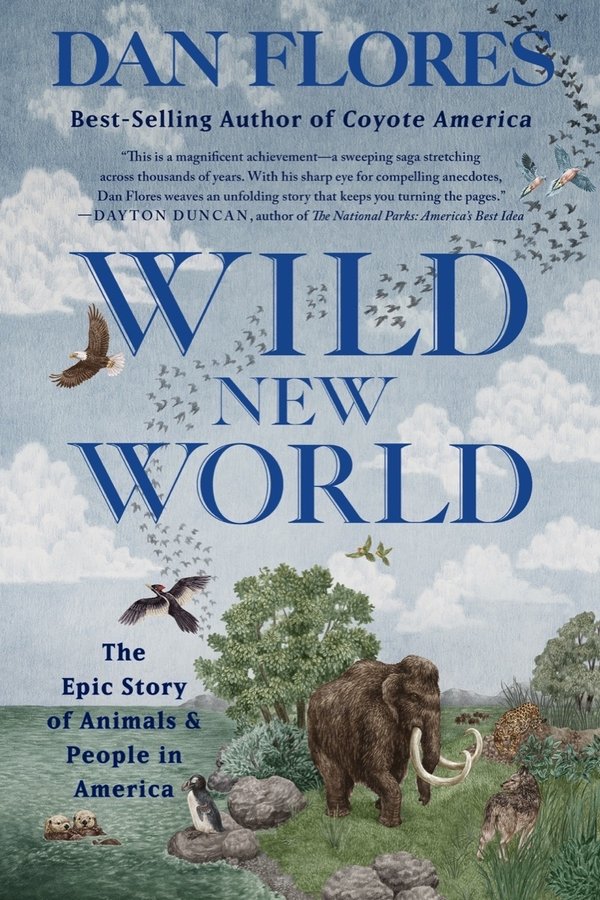
Wild New World
This is sixty-six million years of American animals in one book. Flores starts after the asteroid that killed the dinos and works forward — the strange menagerie that evolved, then the arrival of humans and the extinction of mammoths, horses, camels, lions, and the giant sloths, then the market slaughter of the 1800s that took bison, beaver, wolves, and passenger pigeons down inside a lifetime. He’s clear-eyed and doesn’t flatten anybody into innocence. The last stretch is recovery — how much has come back since the 1970s — and he treats that as the most interesting part of the story rather than a consolation.
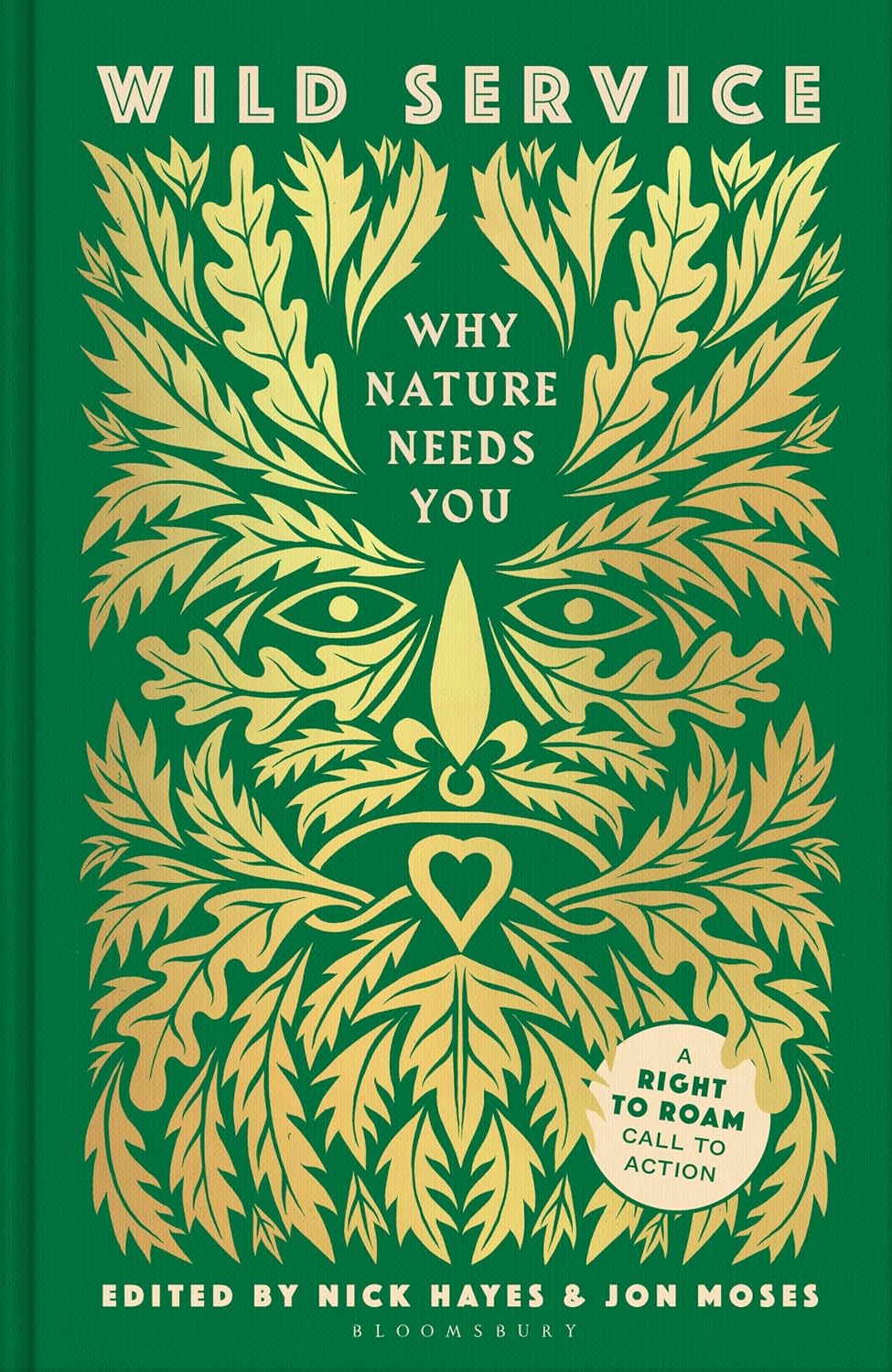
Wild Service
This is the follow-up to The Book of Trespass and it moves from manifesto to action plan. Hayes and a dozen contributors argue that the English are locked out of ninety-odd percent of their own country and the answer isn’t just a right to walk but a right to participate — foraging, coppicing, fishing, swimming, planting, caring for a place you don’t own. There are essays from people already doing it: community woodland, urban foraging, wild swimmers who won river rights, a Dartmoor camping fight. Hayes’s woodcuts run through it. The title comes from a tree, the wild service tree, that used to be a marker of ancient woodland.
Wilderness and the American Mind
This is the book that helped found environmental history as a field. Nash traces what Americans have meant by wilderness — first a wasteland to be conquered, a place of moral danger, then, once it started running out, a national treasure and a spiritual necessity. He runs from the Puritans through Thoreau, Muir, the Yosemite Hetch Hetchy fight, Aldo Leopold, and the Wilderness Act of 1964. Later editions add the criticism his framing has attracted, particularly that wilderness as an idea required pretending the land was empty when people had been living on it for millennia.
Wind in the Rock
Here are five canyons on Cedar Mesa in Southeast Utah — Grand Gulch, Slickhorn, Johns, Fish, and Owl — walked and camped and described by a naturalist who was also a fine draftswoman. Zwinger addresses the geology and the plants and the seeps, and the Ancestral Puebloan sites she comes on in the alcoves, and she does it without the swagger the canyon-country genre often carries. Her drawings are throughout. The book came out in 1978, before the crowds, and it reads now as a record of what walking that country was like when it was easy to go a week without seeing anyone. Which you still can, but I’m mum as to where.
Wind, Sand and Stars
Frenchman Antoine de Saint-Exupéry wasn’t just the writer of The Little Prince, he was a pilot who helped pioneer postal aviation in the 1920s, when planes barely had instruments (he lamented that pilots of later, more-advanced planes were little more than accountants). Wind, Sand is his masterpiece of memoir and an ode to the romance of flying in its earliest days. Saint-Exupéry crashed many times, including in the Sahara (a gripping account), but the book flies highest when he rhapsodizes about the joys of the sky. “The airplane has unveiled for us the true face of the earth,” he wrote, and in this case it has unveiled the true face of the man.
Winter Pasture: One Woman’s Journey with China’s Kazakh Herders
“Later, when I found myself hoisting thirty pounds of snow, tottering across the desert huffing and puffing like an ox, I couldn’t help but sigh: bad idea.” So notes eighty-eight-pound Li Juan in her surprisingly humorous memoir about a winter living with nomadic Kazakh herders. Who knew wrangling camels could be laugh-out-loud funny? Li, from northwestern China’s Altai Mountains, struggles to find anyone willing to take her on their journey to the remote and windy tundra. But her mother remembers a family that owes them money, and they quickly agree: Supporting Li for the winter will square the debt, and they’ll get an extra pair of hands in the bargain. Li will be free labor and an easy way to cancel the debt. With several hundred camels, sheep, horses, and cows, together they venture by foot and horseback into the frozen steppes, where the night temps dip beyond twenty below and shelter is a tiny underground burrow. Li is a charming guide, and she writes candidly, evoking the beauty and harshness that comes with this close-to-the-earth way of life. A bestseller in China translated into English, Winter Pasture is delightful.
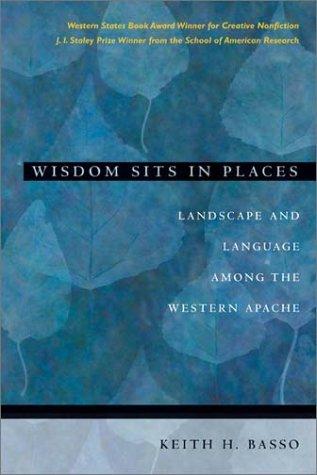
Wisdom Sits in Places
Keith Basso spent decades at Cibecue, Arizona, and the idea for the book sparked when an elder asked him to make a map with the real names on it. Apache place names turn out to be whole sentences — water flows down over a succession of flat rocks — and each one carries a story about somebody who went wrong there. People drop the names into ordinary conversation and the listener knows exactly why. The title is a teaching Basso got from a man named Dudley Patterson: You drink from places. Sit with the names and the stories long enough that they run in your head on their own, and your mind goes smooth and steady. That is what wisdom means here — not knowing more, but a mind that holds.
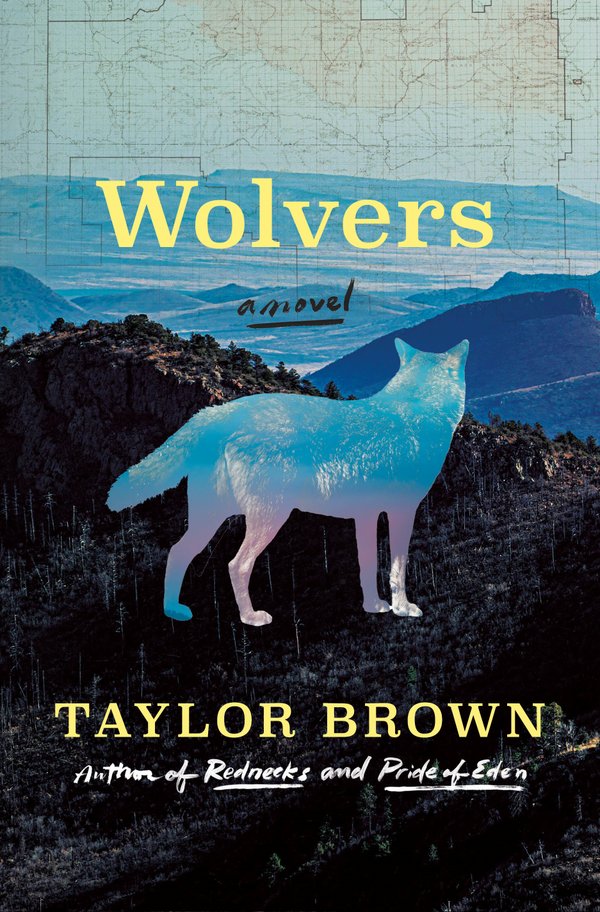
Wolvers
Trace Temple’s family lost their New Mexico ranch after somebody shot an endangered wolf, and now he’s living out of his truck, broke and pissed at the government. A secretive militia offers him money to kill One-Eleven, the she-wolf leading the Dark Canyon pack in the Gila wilderness. He’s good at backcountry travel, but she’s better. Brown gives her long stretches of the book from her own side without turning her into a person, and after Trace nearly dies dragging himself out of a canyon with a bear trap on his ankle, he changes sides. Then the militia sends a professional assassin after both of them. The book is completely implausible — there’s an improbable romance, a strange wildman character, a tweaker, a massive wildfire — but it makes for a fun, pulpy, high-tension romp through some of the Southwest’s most untamed lands.
Woolgathering
Patti Smith wrote this in her forties, a short book about being a child in southern New Jersey — the fields behind the house, the woolgatherers she imagined moving through them at dusk, a slaughterhouse, a cloud museum, her brother and sister, and the moment she understood she was going to be an artist. It runs a little over a hundred pages and reads like a prose poem, with her own photographs. She wrote it during a period when she was out of public life, and it’s loose and enchanted.
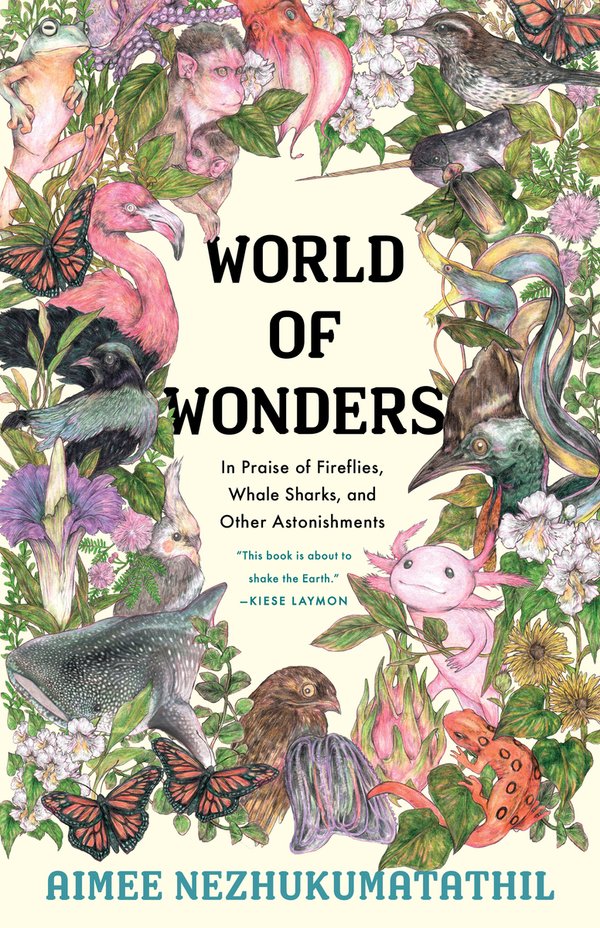
World of Wonders: In Praise of Fireflies, Whale Sharks, and Other Astonishments
These are bite-sized essays, one animal or plant each, illustrated by Fumi Nakamura. Nezhukumatathil is a poet, and each piece runs the natural history alongside her own life — Indian and Filipino parents, a childhood moving between Arizona, Kansas, and New York, being the only brown kid in the room, and later teaching her own sons to look. It’s warm and short and hard to put down. After reading it, I got in touch with Aimee to see if she wanted to interview/have a conversation with Robin Wall Kimmerer for Adventure Journal. She was down for it, but their schedules never aligned. One that got away. Sigh.
Writers and Their Notebooks
I’m a confessed notebook, sketchbook, and journal nerd, so I consume books like this like a bottomless barrel of gummi bears. It’s twenty-six writers on what they actually do with a notebook. Sue Grafton, Dorianne Laux, Kim Stafford, John Dufresne, Kyoko Mori, Ilan Stavans, and a bunch of others, all working the same question from different angles — what goes in, what the thing is for, which pen, which paper, whether anybody else ever gets to read it. There are several print journal entries alongside the finished work that came out of them, so you can see the raw material and what it turned into. Phillip Lopate’s foreword notes the notebook is where you get to write badly on purpose, to be unfair and clumsy and stupid with nobody watching. Except I think, as I scribble in my A5 pages every day, can you be assured nobody’s watching?
Yellow Pine
This is Watkins’s fourth book. Rose of Sharon — named for the Grapes of Wrath character — is a Sierra Club fundraiser living in a cinder block cabin in the Mojave, her daughter living with an ex on the East Coast for the school year. She’s fallen in with the misfits at Yellow Pine, Nevada, who are fighting a planned industrial solar farm and what Rose sees as a green energy gold rush eating the desert. Then Miles, a charismatic old flame, calls out of nowhere. What she wants from him and from her forties is another child, and the book becomes a bawdy, furious, midlife accounting of how to live decently in a landscape being consumed.
Yesteryear
This might have been the most talked-about book of 2026, and it brought the term tradwife to the consciousness of the many thousands of people who had no idea. Natalie Heller Mills is an influencer who sells the pioneer life to millions of followers — raw milk, farm eggs, five kids, a husband, a ranch in Idaho, all of it shot beautifully and none of it done by her, since there are nannies and hands and a producer off camera. Then her husband sleeps with the producer, Natalie hits her, and the whole brand goes up in flames. But then she wakes up cold and filthy in 1855, in a pioneer version of her own family, who will not let her leave the ranch. Is she going crazy? Was she always crazy? Did she enter a wrinkle in time? Does she have even one redeeming trait? I enjoyed the book immensely, but read it mostly horrified as I thought about real-world influencers and the repugnant economy that makes them possible. Also, I have notes on the ending, but won’t spoil it.
Yosemite Falls: Reckoning with California History and the Gospel of John Muir
Yosemite Falls is my favorite Daniel Duane book, and that’s saying something from the man who wrote Caught Inside. It’s a memoir of a Sierra boyhood spent worshipping in the Muir way—backpacking, skiing, climbing granite with a father who cast a long shadow—braided with the harder history behind the postcard: the dispossession, the erasures, the great men who turn out to be human. What’s energizing is that Duane never stops loving the place even as he reckons with its darker moments. He climbs the same rock, hauls his daughters up it, keeps the faith even as he tries to correct it. His writing is fast, funny, salty, self-implicating, and generous, and he’s smart enough to land the ending without a tidy redemption.
You’re Not Listening
I can’t claim to be a good listener, but I’m a better one after reading this book, which I revisit once a year for a refresher. Murphy is a reporter and listening is her job, and for this project she found people who are better at it than she is. A CIA agent. A bartender. A focus group moderator. A priest. An air traffic controller. The top furniture salesman in the country. The most useful thing I learned is what she calls the shift response versus the support response. Somebody tells you something and you either shift it toward yourself — same thing happened to me, here’s what you should do — or you support them and ask them to keep going. Most of us shift to ourselves constantly and don’t ever notice. Murphy backs it all with neuroscience and sociology, spends a chapter on how phones changed things, and ultimately makes the convincing case that listening is the active position in a conversation, not the passive one. Can you hear me now?